
NASCAR faced renewed criticism after a late-race crash during the Chicago Street Race failed to prompt an immediate caution flag, reigniting tensions around officiating decisions. Tyler Reddick addressed the controversy, offering a defense of NASCAR’s judgment despite widespread fan frustration over inconsistent calls.
Officiating Incident Highlights Tensions at Chicago Street Race
The incident at Turn Six during the final lap of the Grant Park 165 involved Cody Ware crashing into the tire barriers. Despite the severity of the crash, NASCAR delayed waving the caution flag for 45 seconds, allowing Shane van Gisbergen to cross the finish line under yellow and claim victory. This decision sparked outrage among fans who expected a quicker response after a similar multi-car crash earlier in the race.
Many fans drew parallels to February 2025’s races at Atlanta, where officials immediately called a caution in the Cup Series finish awarding Christopher Bell a win but controversially refrained from doing so for a comparable incident in the Xfinity race just one day before. These discrepancies have fueled ongoing debates about NASCAR’s late-race officiating standards.
Tyler Reddick Offers a Reasoned Perspective on the No-Call
Tyler Reddick, who finished third at Chicago, provided insight when discussing the no-call with Jerry Jordan of Kickin’ the Tires. He emphasized the difficulty for race officials to accurately gauge incidents from their vantage point on the track.
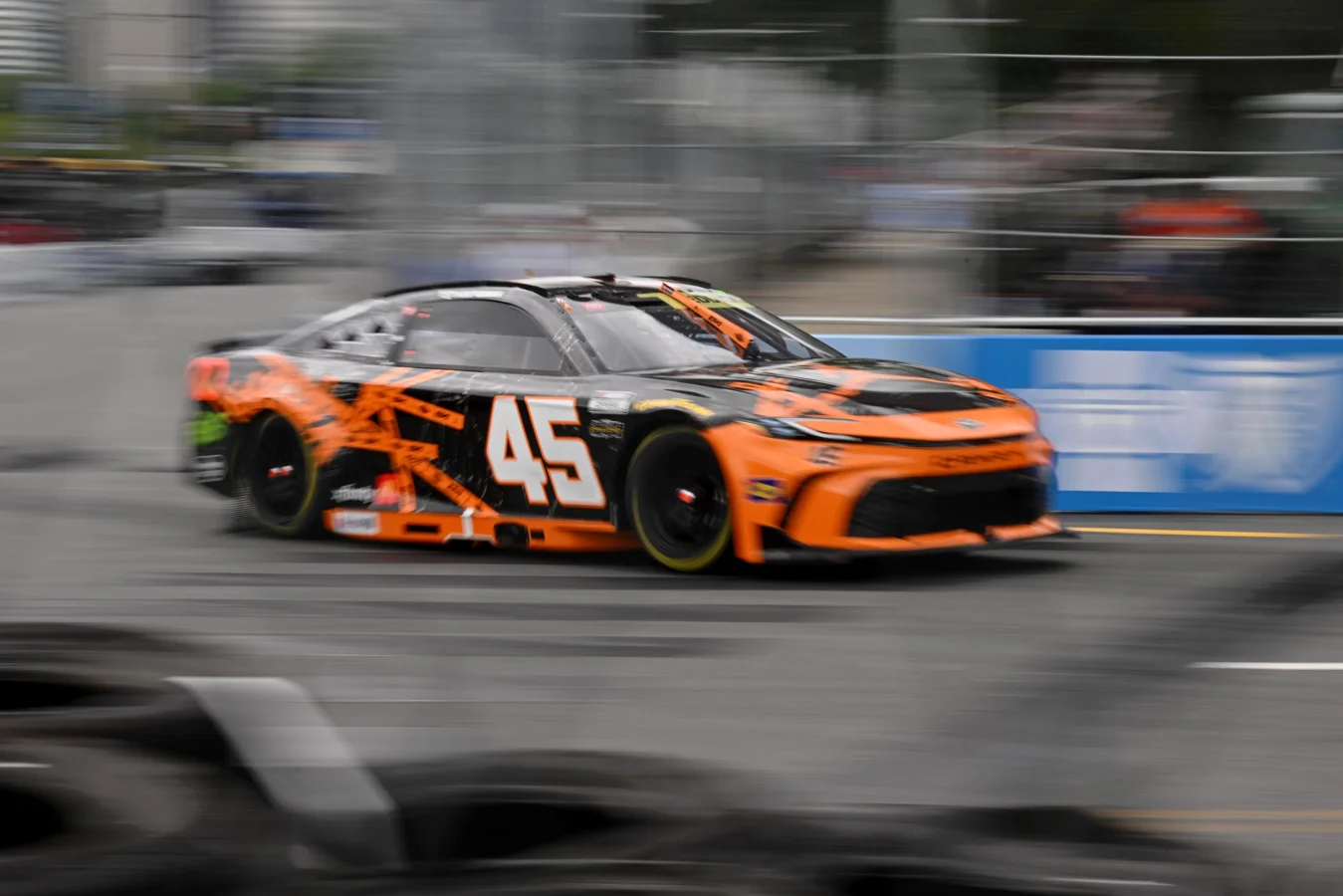
“I mean, it’s just a tough situation. I can’t see what’s going on over there in turn six. NASCAR controls got to decide all that.”
Speaking further on the challenge faced by race officials, Reddick explained:
It’s a tough spot for them to be in because if they throw the yellow flag before we get to the white, it could totally change the outcome for the top 10, the top 20 in the race.
—Tyler Reddick, NASCAR driver
He also recognized the potential chaos a late caution restart could generate, particularly for drivers running outside the top positions.
“And drivers 10th on back would have been really aggressive for two laps. Us on our fresher tires, we would have been able to be very aggressive as well on those two laps. So, it’s just tough deal. It’s racing. It’s sometimes just how it goes.”
So, it’s a tough spot for them to be in for sure, but I think it definitely would have opened up Pandora’s box, if you will.
—Tyler Reddick, NASCAR driver
Ty Gibbs Reflects on Potential Impact of a Caution Flag
Second-place finisher Ty Gibbs also weighed in, reflecting on how an earlier caution might have altered the race’s outcome. Matching his career-best performance from Darlington, Gibbs acknowledged the unpredictable nature of a last-minute restart. When questioned about the timing of the caution, he responded with humor:
I would have been all for that (yellow caution) 100%. But I think that 51 was like underneath the K rail over there, so I don’t know. It’d have been awesome, though. (It) Would have worked in my favor.
—Ty Gibbs, NASCAR driver
NASCAR Officials’ Explanation and Race Winner’s Viewpoint
According to Fox Sports reporter Bob Pockrass, NASCAR officials indicated they initially underestimated the severity of Ware’s crash and were monitoring to see if the driver could continue before deciding on a caution. Officials also confirmed that weather conditions played no role in their delayed call.
Shane van Gisbergen, who secured the win, admitted expecting a late caution and possible overtime but ultimately secured the victory once the yellow flag was waved after he crossed the white flag. His victory sealed the race without a final restart, further intensifying fan debate over race control’s judgment.
Ongoing Debate Over NASCAR’s Late-Race Officiating
The controversy surrounding NASCAR’s handling of the Chicago Street Race incident adds to a string of similar concerns residents have about inconsistent caution calls at critical moments. Fans and drivers alike remain divided, balancing safety concerns with the competitive drama that late-race cautions and restarts create.
Tyler Reddick’s defense highlights the complex position race officials hold, caught between influencing race outcomes and maintaining fairness amid chaotic conditions. The Chicago episode underscores the challenges NASCAR faces as it seeks to fine-tune its officiating practices while managing fan expectations and driver safety.
The debate is likely to persist as NASCAR approaches future events, with close attention on how race control manages late-race incidents and the impact those decisions have on competition and fan trust.
Our Reader’s Queries
Q. Why did Tyler Reddick get 0 points?
A. On May 16, NASCAR took away 10 owner and driver points from the No. 45 team. This was because they used unapproved ballasts while being checked before qualifying at Darlington. During the playoffs, Reddick claimed victory in Kansas, which helped him move ahead to the Round of 12. He did not make it past the Round of 8.
