
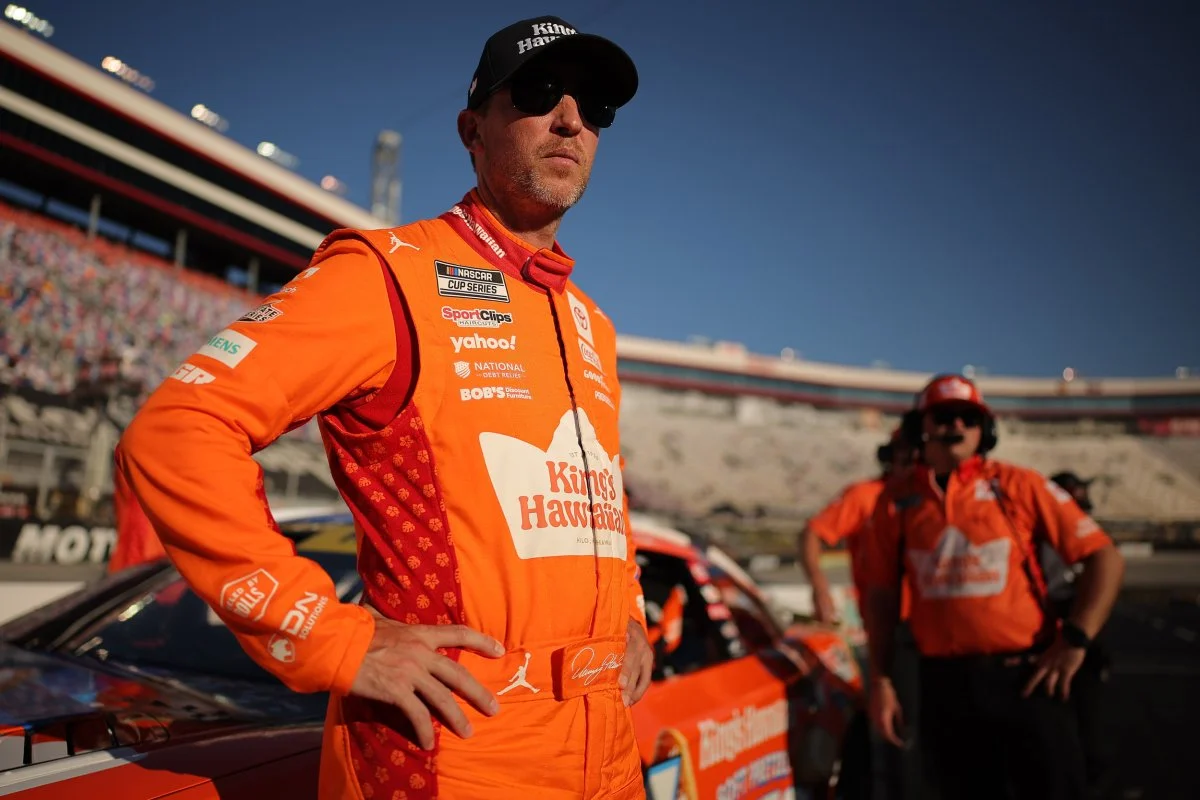
Denny Hamlin’s No. 11 Toyota team opted to delay the suspensions of key crew members following a penalty issued after the Bristol Night Race in the 2025 NASCAR Cup Series. This decision, made in late September 2025, reflects a strategic response to NASCAR’s updated penalty enforcement rules, allowing teams to defer non-behavioral suspensions, which heavily impacts team readiness during the playoffs. Hamlin’s move to shift the penalty timing highlighted the challenges teams face when penalties intersect with critical race schedules.
NASCAR’s Updated Deferral Rule and Its Impact
In 2025, NASCAR instituted rule changes concerning how suspensions for non-behavioral infractions are handled. Previously, teams often appealed immediately, automatically deferring the suspension but sometimes retracting the appeal later, creating inefficiencies for NASCAR’s administrative process. The revised guideline now authorizes teams to defer serving suspensions for one week without lodging an official appeal. This modification addresses logistical difficulties, especially when penalties occur mid-week and replacement crew members must be arranged on short notice.
Bob Pockrass, a prominent NASCAR journalist, clarified the rationale behind this shift, stating,
“Starting this year, for any non-behavioral suspension, teams can defer suspension for a week. In past, they’d file notice of appeal so suspension then deferred. NASCAR then arranged panelists, their travel and appeal defense — and then teams withdrew appeal, wasting NASCAR time.”
This update streamlines operations, reducing wasted resources while providing teams with greater flexibility in managing workforce availability during crucial playoff moments.
Pockrass further remarked on the practical benefits for teams confronted with late-week penalties,
“Allowing the deferral without needing to decide whether to appeal also helps teams when suspensions are issued Wednesday or Thursday, which for some races can be tough when arranging replacements (especially in Xfinity and trucks where not as easy to fill roles).”
For Joe Gibbs Racing (JGR), Hamlin’s team, this meant avoiding disruptions during pivotal stages of the season, enhancing their ability to maintain competitive performance without unnecessary operational strain.
Significance of the Deferment for Hamlin’s Playoff Campaign
The deferment was especially critical for Hamlin as it preserved the availability of two essential pit crew members: front tire changer Austin Maloney and jackman Joel Bouagnon. Both play pivotal roles in pit stop efficiency, a decisive factor in race outcomes. Hamlin openly acknowledged the importance of timing in this decision, stating,
“It’s obvious the timing mattered. Losing them at this moment would hit us harder than at a later race.”
The emphasis on retaining experienced personnel during key playoff events reflects the strategic balancing act teams undertake between penalties and race performance.
Furthermore, the enhanced focus on upcoming races at New Hampshire Motor Speedway and Kansas Speedway underscores Hamlin’s preference to defer these penalties closer to less impactful events, such as the road course race at Charlotte. Hamlin elaborated on this strategic consideration, commenting,
“Especially on the ROVAL, the pit crew’s execution can make or break your track position. We needed them at full strength.”
This reveals how track characteristics and competitive stakes influence decisions around crew member availability, emphasizing the high stakes during NASCAR’s playoff rounds.
Timing of Penalty Servicing and Future Implications
By leveraging the deferral rule, Denny Hamlin’s team ensured that the suspensions would not affect their opening race in the Round of 12 at New Hampshire Motor Speedway. Instead, the penalties will be served during the follow-up events at Kansas Speedway and Charlotte Motor Speedway. This scheduling maneuver allows JGR to maintain an experienced pit crew for one of the most vital stages of the championship, preserving operational stability and race-day efficiency.
This deferment tactic highlights a broader trend within NASCAR where timing and resource management have grown increasingly vital. Teams are now empowered to plan suspensions around their competitive calendar, minimizing disruption during high-pressure playoff contests. Hamlin’s approach serves as a case study in adapting to evolving league policies while maximizing performance potential.
Broader Effects on NASCAR Enforcement and Team Strategies
The penalty and deferment episode involving Hamlin illustrates ongoing tensions within NASCAR regarding penalty enforcement. Teams have long grappled with the challenge of immediate suspensions imposed during competitive windows, which complicate personnel replacements and race preparation. The introduction of the deferral rule attempts to soothe these conflicts by allowing teams breathing room to manage penalties strategically without the administrative pitfalls of formal appeals.
Moreover, the situation sheds light on the operational complexities within NASCAR’s playoff framework, where margins for error are thin and team composition exerts a pronounced influence on outcomes. This rule adjustment and its exploitation by Hamlin’s team raises questions about how rules may continue to evolve and how teams might further leverage administrative processes to their advantage in the future.
The 2025 season, marked by multiple enforcement examples affecting team setups, is pushing NASCAR and its competitors into a new phase of penalty strategy and counterstrategy. How these dynamics play out could shape future rulemaking and the balance between fair enforcement and competitive integrity in the sport.
Starting this year, for any non-behavioral suspension, teams can defer suspension for a week. In past, they’d file notice of appeal so suspension then deferred. NASCAR then arranged panelists, their travel and appeal defense — and then teams withdrew appeal, wasting nascar time. https://t.co/Hbc1mPvwXh
— Bob Pockrass (@bobpockrass) September 21, 2025
