
Kyle Busch’s NASCAR legacy, built with record-setting speed and undeniable passion, still often draws comparisons to Jeff Gordon’s storied career. While both drivers achieved remarkable success, the ways their talents shaped team identities, determined championships, and created lasting influence expose why Busch could not quite replicate Gordon’s dominance at the top level of stock car racing.
Gordon’s Model of a Franchise Driver
During his career at Hendrick Motorsports from 1993 to 2015, Jeff Gordon set a new standard for what it meant to be a franchise driver. Winning four Cup Series championships—in 1995, 1997, 1998, and 2001—and achieving 93 career wins, Gordon raised the bar for clean racing, tactical intelligence, and organizational leadership. Under Rick Hendrick, Gordon became the team’s centerpiece, consistently lifting the entire group’s performance with his reliable discipline on and off the track.
Gordon’s approach combined aggressive driving with measured restraint, making him both a fierce competitor and a tactician capable of delivering in high-pressure moments. His ability to avoid costly errors and maintain focus in the closing laps of a race often differentiated him from his rivals, ensuring his place as one of NASCAR’s most effective leaders and consistent winners.
Kyle Busch’s High-Profile Arrival at Joe Gibbs Racing
When Kyle Busch joined Joe Gibbs Racing in 2008 at just 23 years old, expectations soared to the heights previously reserved for legends like Jeff Gordon. Busch had already captured the 2004 NASCAR Busch Series Rookie of the Year and the 2005 NASCAR Nextel Cup Series Rookie of the Year, with standout victories at venues such as Bristol and Phoenix highlighting his entrance to the sport.
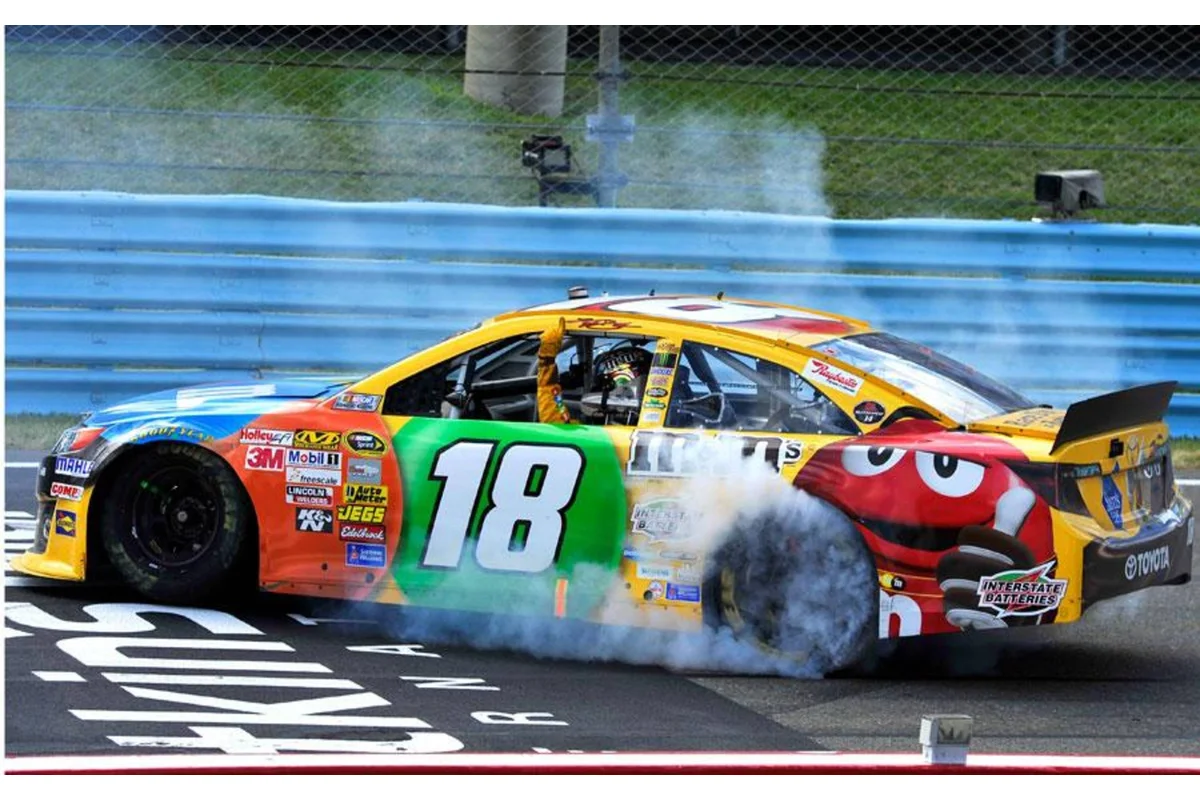
In his first year with Joe Gibbs Racing, Busch seized impressive wins at sites like Atlanta, Talladega, Dover, and Daytona. He finished the season ranked tenth, immediately proving his skill and establishing himself as a central figure within the organization. Over time, Busch would earn two Cup Series championships (2015 and 2019) and 63 career Cup victories, ranking among the top drivers in NASCAR history.
Despite this immediate impact, Busch’s tenure at Joe Gibbs Racing revealed a complicated pattern. His extraordinary raw speed was evident, but critical inconsistencies and high-stakes setbacks often kept him from turning his potential into the type of sustained, franchise-defining dominance that characterized Jeff Gordon’s legacy at Hendrick Motorsports.
The “Almost” Wins: A Record of Near Glory
One statistic that defines Busch’s career is not just his wins, but his second-place finishes. Among active NASCAR Cup Series drivers, Busch leads with 63 runner-up results, while others like Jimmie Johnson (46), Denny Hamlin (45), Kyle Larson (41), and Brad Keselowski (40) follow behind. These numbers showcase that Busch was frequently in contention, narrowly missing out on victories that, if converted, could have meant an even larger trophy haul and more championships.
If just a portion of those second-place finishes had become wins, Busch’s career win total might have rivaled or surpassed icons like Jeff Gordon and Dale Earnhardt Sr., and perhaps even opened distant conversations about Richard Petty’s once-unreachable 200-win record. The frequency with which Busch was nearly victorious is a testament to his competitive spirit, but also a reminder of opportunities that slipped away at crucial moments.
The Discipline Deficit: Why Busch Couldn’t Mirror Gordon
The main dividing line between Jeff Gordon and Kyle Busch was discipline when the stakes were highest. Gordon’s success came from his ability to balance raw speed with faultless execution—he rarely let high-stress situations alter his decision-making. His 93 total Cup wins, spread across years of sustained dominance and low-profile incidents, reflect this precision, which grounded Hendrick Motorsports year after year.
By contrast, Busch was known for taking greater risks. This high-adrenaline style was an asset in open-wheel and early stock car races, enabling him to pull off thrilling overtakes and surprise victories. But at the Cup level, this approach sometimes led to overdriving, lost opportunities, and pivotal crashes.
A defining example came at the 2015 Daytona Xfinity Series opener. With only laps to go, Busch’s aggressive maneuvering sent his car off track, slamming into an unprotected concrete wall and resulting in a broken right leg and fractured left foot. The injuries forced him out of both the following day’s Daytona 500 and the next six Sprint Cup races. This was not merely bad luck—Busch’s intense determination frequently led to moments where bravery overshadowed calculation, costing him both wins and critical race time.
His “Rowdy” reputation, earned by constantly pushing personal and technical limits, energized fans and intimidated rivals, but in the all-or-nothing world of Cup championships, repeated overextensions became a handicap. Although peers and fans respected his Hall of Fame-worthy drive, Busch didn’t develop into the stabilizing, rallying point for Joe Gibbs Racing in the same mold as Gordon for Hendrick.
Comparing Two Models of NASCAR Greatness
Kyle Busch and Jeff Gordon occupy their own unique places in NASCAR history, but their legacies reflect divergent paths to greatness. Gordon exemplified a methodical, disciplined approach—always ensuring the team operated at its best, and avoiding the kinds of errors that can derail championship bids. Rick Hendrick’s organization thrived with Gordon as its dependable leader, year after year.
Busch represented an opposite model: thrilling, aggressive, loaded with skill, but plagued by close calls and emotional highs and lows. This passion fired unforgettable moments and impressive victories, but it left him just short of becoming the symbolic core of Joe Gibbs Racing. While both drivers earned respect and belong among the sport’s elite, only Gordon’s legacy includes the distinctive combination of unwavering leadership and disciplined excellence that defined an era.
Ultimately, the gap between a world-class talent and an all-time franchise icon comes down to more than raw ability—it requires poise, restraint, and the capacity to embody a team’s identity. Kyle Busch’s NASCAR legacy, for all its excitement and achievement, never quite delivered that singular blend—and that, more than any statistic, separates his story from Jeff Gordon’s enduring legend.
