
Lewis Hamilton’s move to Ferrari shines a light on Michael Schumacher’s enduring legacy, as Hamilton attempts to succeed where other elite champions have struggled. The Lewis Hamilton Ferrari challenge offers a unique perspective on what separates Schumacher’s era from every generation that followed, highlighting why victory at Ferrari has become the ultimate measure of greatness in Formula 1.
Rivals After Schumacher: The Battle for F1 Supremacy
When Michael Schumacher stepped away from Formula 1, the landscape shifted dramatically. The next wave of talent—Fernando Alonso, Lewis Hamilton, and Sebastian Vettel—all sought to claim the mantle of undisputed champion. Alonso began this transition, dethroning Schumacher in the 2005 season before besting him in a direct contest in 2006.
Hamilton soon entered the scene, becoming the youngest world champion in history in 2008—a record that Vettel, dubbed “baby Schumi,” later eclipsed in 2010. After Schumacher’s final retirement in 2012, these three, along with new contenders, set out to leave their own marks on the sport. Alonso would eventually claim two world titles, Vettel four, and Hamilton would go on to become the most successful F1 driver ever.
Despite their accolades, none of these world champions have matched Schumacher’s triumph with Ferrari. Their pursuit at Maranello not only tested their skills but also cemented Schumacher’s place in F1 lore, as each failed to bring the Prancing Horse lasting championship glory.
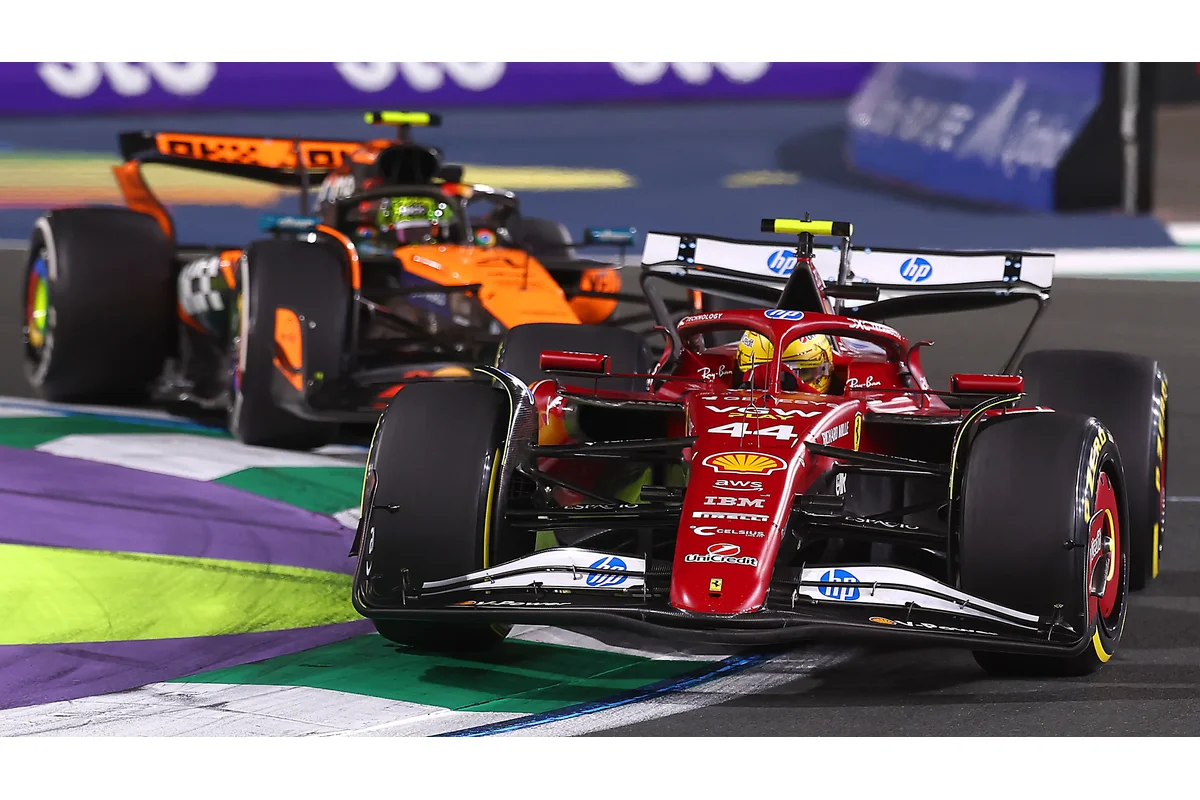
Ferrari’s Unique Challenge in Modern Formula 1
Ferrari stands apart in Formula 1, not only for its iconic red and storied history but also for the intense expectations from its passionate supporters. This level of prestige makes Ferrari the most coveted seat on the grid, yet it also comes with unparalleled pressure. Success has proven elusive for many top talents over the past 50 years, and the Ferrari drive is often remembered as a double-edged sword—desirable, but laden with obstacles.
Despite fierce competition to join Ferrari, winning with the team has become increasingly rare. The allure has never faded, but, as history shows, earning titles in Maranello is far from straightforward.
Examining Ferrari’s Track Record: The Schumacher Factor
Numbers reveal the extraordinary impact Michael Schumacher had on Ferrari’s legacy. Between 1976 and the present day, Ferrari secured:
- Driver Championships: 8
- Constructors’ Championships: 13
- Total Titles: 21
- Wins: 190
- Pole Positions: 175
- Podium Finishes: 630
During Schumacher’s tenure from 1996 to 2006, Ferrari won:
- Driver Championships: 5
- Constructors’ Championships: 6
- Total Titles: 11
- Wins: 87
- Pole Positions: 75
- Podium Finishes: 224
When his stint is removed, the team’s record in the last half-century reads:
- Driver Championships: 3
- Constructors’ Championships: 7
- Total Titles: 10
- Wins: 103
- Pole Positions: 100
- Podium Finishes: 406
This stark contrast demonstrates that Ferrari’s greatest era hinged on Schumacher’s leadership. Even world champions such as Alonso (2010-2014) and Vettel (2015-2020) could not replicate his achievements. With Hamilton now in the spotlight, there is intense curiosity around whether he can break this pattern or if the Ferrari challenge will prove insurmountable for yet another elite driver.
Legends Who Tried and Missed Ferrari’s Summit
Attempting to succeed at Ferrari has become a rite of passage for the sport’s top drivers—yet a daunting one. Between Schumacher’s exit and Hamilton’s present chapter, elite talents have all tried and failed to win championships with the team. The roster includes not only Alonso, Hamilton, Charles Leclerc, and Vettel, but also legends like Alain Prost and Nigel Mansell before Schumacher’s arrival.
All, except for Leclerc, boast at least one world title earned elsewhere. The reality that such esteemed drivers could not achieve the same with Ferrari only elevates Schumacher’s unique accomplishment and positions his run as the sport’s gold standard.
How Schumacher Redefined Success at Ferrari
Schumacher’s supremacy is not just a reflection of pure driving ability; it is also rooted in a strategic, methodical approach that set him apart. While he was the undisputed leader of his era, other champions—Alain Prost, Nigel Mansell, Alonso, Hamilton, and Vettel—also dominated the grid at various points.
The difference with Schumacher lies in the way he navigated the complexities of Formula 1. Triumph, he realized, hinged on building the right team and culture—not just driving fast laps. His victory at Ferrari was the outcome of deliberate choices well beyond his performance on the track.
The Schumacher Blueprint for Team Success
When Schumacher arrived at Ferrari in 1996, the team had endured more than a decade without major silverware and had developed a reputation for internal strife. Top-tier drivers had even declined offers to join. The departures of figures like Mansell and Prost signaled a toxic environment, regularly described as plagued by politics and instability. Schumacher studied where Ferrari had gone wrong and concluded that the path to success began with eliminating internal friction and fostering unity.
He reinvigorated the team by insisting that the organization revolve around the pursuit of victory, with a clear focus on building an environment where everyone’s attention was fixed on winning. Schumacher required assurances that his perspectives would direct key decisions and that he would be given absolute priority. This approach paid off, as evidenced by the period of dominance in which the team claimed 11 world titles while he led the roster.
Schumacher also replicated a successful formula from his previous team, Benetton, bringing influential figures such as Jean Todt, Ross Brawn, and Rory Byrne with him to Ferrari. This familiar inner circle formed the backbone of Ferrari’s transformation and enabled the squad to thrive quickly—a contrast to the adaptation challenges faced by later champions at the Scuderia.
Understanding Why Successors Struggled
Schumacher’s successors, despite their skill, failed to reproduce his success at Ferrari for several reasons. When Alonso joined the team after Schumacher’s departure, the need for a change in approach was underappreciated. Alonso attempted to recreate aspects of Schumacher’s model, advocating for a team structure that revolved around its lead driver, but did not secure adequate influence in every department.
Vettel, inspired by Schumacher, wanted to emulate his idol’s Ferrari feats. Yet unlike Schumacher, he did not impose his will or demand a leadership role within the organization, limiting his effectiveness to driving rather than directing. Hamilton, too, has encountered difficulties pushing for cultural and operational changes and has at times felt his efforts have not been heeded internally.
A further difference is that Schumacher brought his trusted group—his core team—into Ferrari, facilitating seamless adaptation and understanding. In contrast, Alonso, Vettel, and Hamilton all faced cultural or institutional hurdles without the benefit of a close-knit leadership support network. The result was a longer, more challenging adjustment period—and ultimately no titles.
The Importance of Replicating Past Success
The careers of Alonso, Vettel, and Hamilton highlight the significance of understanding and leveraging previous success. At Renault, Alonso thrived with a roster built entirely around him. Hamilton’s dominance at Mercedes was a result of a highly efficient, unified team working towards a shared goal. Vettel’s championship run at Red Bull flourished under the leadership of Christian Horner, whose focus and organization were instrumental.
None of Schumacher’s successors at Ferrari sufficiently adapted or replicated the models that had driven their earlier championship wins, exposing a critical weakness in their Maranello pursuit. By underestimating the importance of structure and influence, each ultimately fell short where Schumacher had shown the way.
The Need for Leverage and Authority
Schumacher was able to demand and receive complete backing upon joining Ferrari. His status as the sport’s preeminent driver gave him leverage to mold the team’s priorities around winning, ensuring everyone—or every resource—was focused on a single goal: making him world champion.
By contrast, none of the champions who followed entered with the same level of bargaining power or standing. Their roles were defined more narrowly, and the organizational priority shifted towards collective management. Historical performance over five decades reinforces a simple truth: when winning at Ferrari relies just on driving, even the greatest struggle to climb the “metaphorical Everest” that is F1 success with the Scuderia.
The Broader Impact: Schumacher’s Lasting Legacy at Ferrari
The Lewis Hamilton Ferrari challenge does more than add an exciting chapter to the sport; it reaffirms how Michael Schumacher forever changed the standards for excellence at Ferrari. His unique blend of talent, leadership, and strategic insight created a blueprint that remains a benchmark for future champions. Whether Hamilton ultimately succeeds or joins the ranks of greats who fell short, Schumacher’s accomplishments will continue to shape conversations about greatness and the true test of Formula 1 mastery.
