
William Byron expressed displeasure with Joey Logano after the Coca-Cola 600 held this past Sunday at Charlotte Motor Speedway, sparking a debate widely discussed across NASCAR circles. The focus keyword William Byron Joey Logano Charlotte Motor Speedway debate captures this conflict that unfolded during one of NASCAR’s crown jewel events.
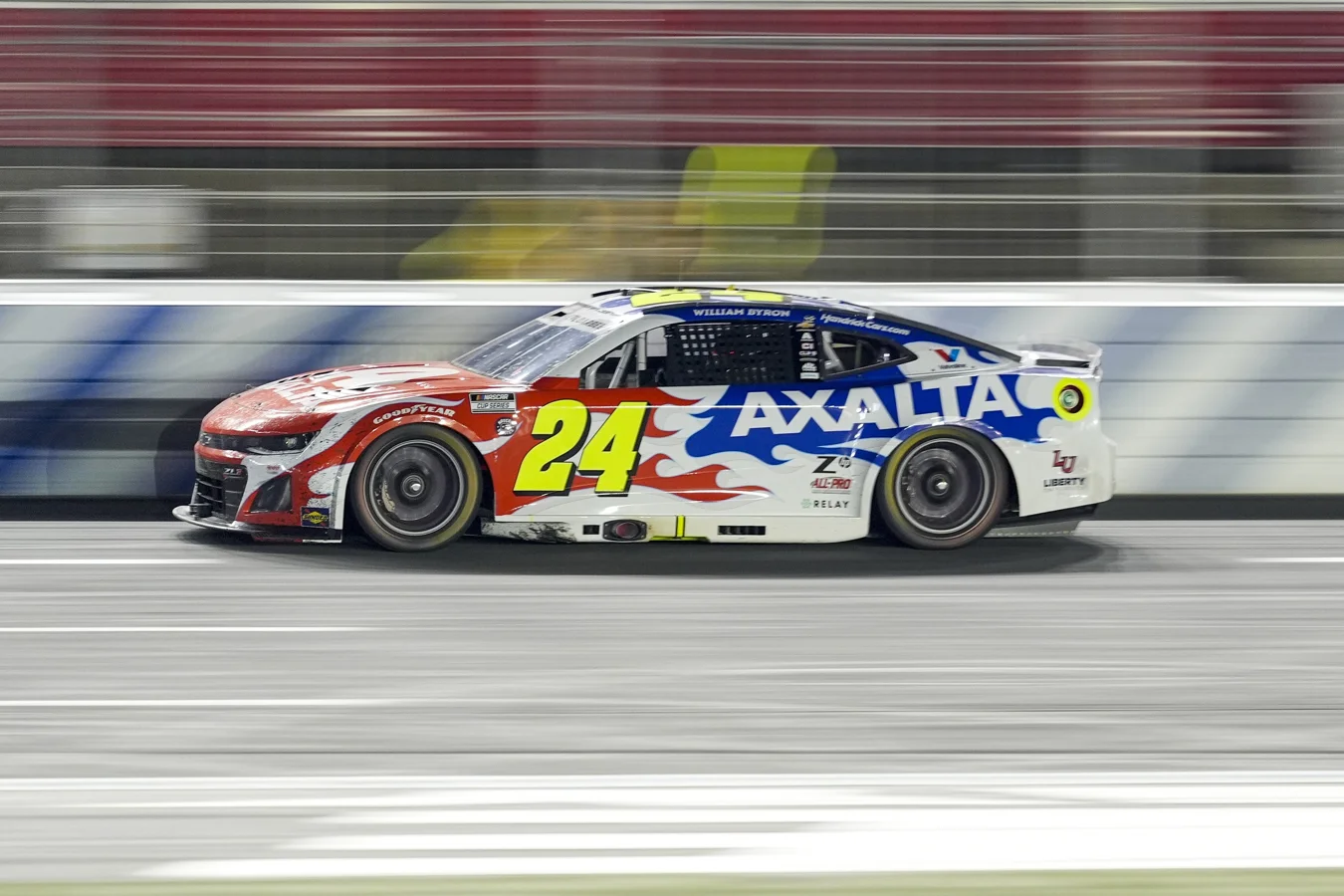
The Charlotte native led a dominant 283 of the 400 laps but ultimately lost the race to Ross Chastain. Byron’s challenge intensified as he navigated lapped traffic, particularly while contending with Logano, a three-time champion who complicated Byron’s attempt to maintain his lead by aggressively moving around the track. This defensive driving by Logano allowed Chastain to seize a crucial advantage coming out of Turns 3 and 4, taking the winning pass on Lap 395.
Byron’s Criticism of Logano’s Racing Style
Following the race, Byron openly suggested that Logano impacted his chances of victory. He stated,
“He [Logano] was doing the usual,”
and added,
“What I didn’t like was he just kept moving around [Turns] 3 and 4. I don’t know what he was doing. Really, I think, was in traffic a lot that run. The 45 [Tyler Reddick] was running hard, and we lost a chunk there. It all just kind of added up.”
This commentary revealed Byron’s frustration with Logano’s approach in traffic, implying that the aggressive maneuvers hindered his rhythm and contributed to losing ground in the final laps.
Larry McReynolds Defends Logano’s Racing Tactics
Larry McReynolds, a respected NASCAR personality and former crew chief, responded sharply to Byron’s remarks, emphasizing the legitimacy of hard racing on the track. McReynolds urged Byron to understand the realities of competitive driving, especially when drivers fiercely defend their position to avoid falling laps behind.
He declared,
“You don’t want to get me started on this. I’ll take you off the air and I’ll have to come back next week,”
explaining that his perspective may stem from his old-school experience working with legendary drivers like Davey Allison, Dale Earnhardt, and Ernie Irvan. McReynolds expressed,
“I have zero tolerance when I hear a driver talk about another driver racing him hard.”
The Role of Track Position and Strategy in the Final Laps
McReynolds provided insights into why Logano behaved the way he did during the closing stages of the race. The three-time champion was aggressively fighting to stay on the lead lap, knowing that a timely caution could allow him to pit for fresh tires and improve his finishing position.
He explained,
“Really, he raced you hard? That’s a shame, he shouldn’t do that, should he? Joey Logano did nothing wrong. He was trying to stay on the lead lap because you know what? If the caution comes out, then he’s able to come in, get four fresh tires and he maybe can get a much better finish than he had.”
McReynolds also pointed out that others, like Denny Hamlin, were similarly involved in close racing situations with Byron and Logano near the end of the event.
“Remember, Denny Hamlin was in the mix too, because he came out right in front of William. He was right there with Joey Logano. With that said, Joey Logano did nothing wrong. But the next time somebody’s out front of Joey Logano in the same situation, I don’t want to hear Joey Logano complaining about it,”
he said.
Implications for Future Rivalries and Byron’s Perspective
The heated exchange highlights the ongoing tensions when competitive stakes hit their peak, especially at high-profile tracks like Charlotte Motor Speedway. McReynolds underscores that aggressive tactics are a normal part of racing and should be accepted rather than criticized.
Byron’s remarks were made in the immediate aftermath of losing a major race, reflecting a raw emotional response. McReynolds views this as an opportunity for Byron to learn from seasoned experience and adjust his mindset for future competitions.
As cooler heads prevail, it will be worth watching how Byron navigates similar situations with Logano and other top contenders going forward, particularly in traffic-heavy challenges where split-second decisions can alter race outcomes.
