
At Daytona International Speedway on August 23, 2025, William Byron‘s No. 24 NASCAR Cup Series team faced a significant setback before the race even started due to a violation during pre-race inspection. The team’s crew chief, Rudy Fugle, was ejected following a breach of NASCAR’s strict car impoundment rules, resulting in a penalty that affected Byron’s early race position.
The incident began while the cars were preparing for track activity, as all teams were required to undergo NASCAR’s thorough inspection process. Byron’s team failed the first inspection attempt, though they passed the OSS laser inspection on their second try. However, after the car moved toward the shock station for shock installation, officials noticed unauthorized adjustments had been made.
NASCAR Detects Rule Violation After Unauthorized Car Adjustments
Officials instructed the No. 24 team to remove the shocks installed on one side of the car and subjected the vehicle to the OSS inspection again. This time, the team failed. NASCAR considered this a serious infraction because the car had already been impounded for the race weekend, and tampering with it violated established protocols.
As a result, crew chief Rudy Fugle was immediately ejected from the event. The team was also barred from qualifying due to rain washing out the session, forced to serve a pass-through penalty at the race’s start, and lost their pit stall selection. These penalties caused Byron to fall a lap behind shortly after the race commenced.
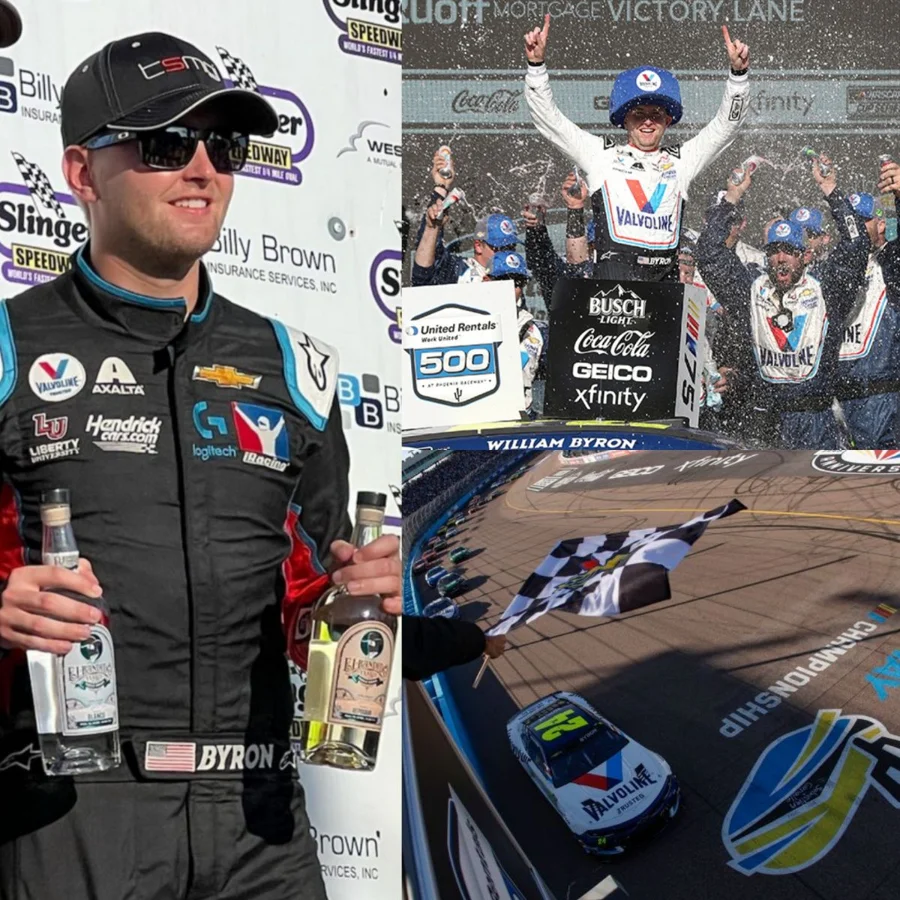
Official Explanation of the Penalty from NASCAR Leadership
Brad Moran, NASCAR Cup Series Managing Director, addressed the situation during SiriusXM’s ‘The Morning Drive,’ explaining the sequence of events that led to the penalty. He confirmed that while the car initially passed the OSS inspection the second time, something clearly changed afterward.
“It’s not the first time this has happened in our inspection process,”
—Brad Moran, NASCAR Cup Series Managing Director
“The No. 24 car was going through for his second time. It did clear the OSS. Which means it would have passed and it was ready to put shocks on.”
—Brad Moran, NASCAR Cup Series Managing Director
“Unfortunately, one of our officials spotted something we didn’t like that was done to the car in the process of going from the OSS to the shock station.”
—Brad Moran, NASCAR Cup Series Managing Director
“At that point, we re-installed the struts on the one side. Because it just started to get the shocks installed.”
—Brad Moran, NASCAR Cup Series Managing Director
“We ran it threw to see if what the official witnessed actually happened to the car. And, again this has happened in the past. It doesn’t happen that often. But, we run it through.”
—Brad Moran, NASCAR Cup Series Managing Director
“Sure enough, it was different than when we ran it through just 10 minutes ago and the car failed. At that point, that’s basically messing with a car that’s already been impounded.”
—Brad Moran, NASCAR Cup Series Managing Director
“We don’t take kindly to that. We have all our rules in place to keep parity and keep the cars all the same as we start the event.”
—Brad Moran, NASCAR Cup Series Managing Director
“After that, we ejected the crew chief, Rudy, who does a great job. Congratulations for winning the regular-season.”
—Brad Moran, NASCAR Cup Series Managing Director
Impact of the Penalty on Race Performance and Future Implications
The strict enforcement of pre-race inspection rules and the resulting penalty for Byron’s team highlight NASCAR‘s commitment to fairness and competition parity. The ejection of Fugle and the loss of key race advantages significantly hindered the No. 24 team’s performance at Daytona.
Byron’s early setback underscores how crucial strict compliance with inspection rules is, especially at major events like Daytona. Moving forward, teams are likely to be even more vigilant to avoid penalties that could drastically affect their chances during critical races in the NASCAR Cup Series season.
