
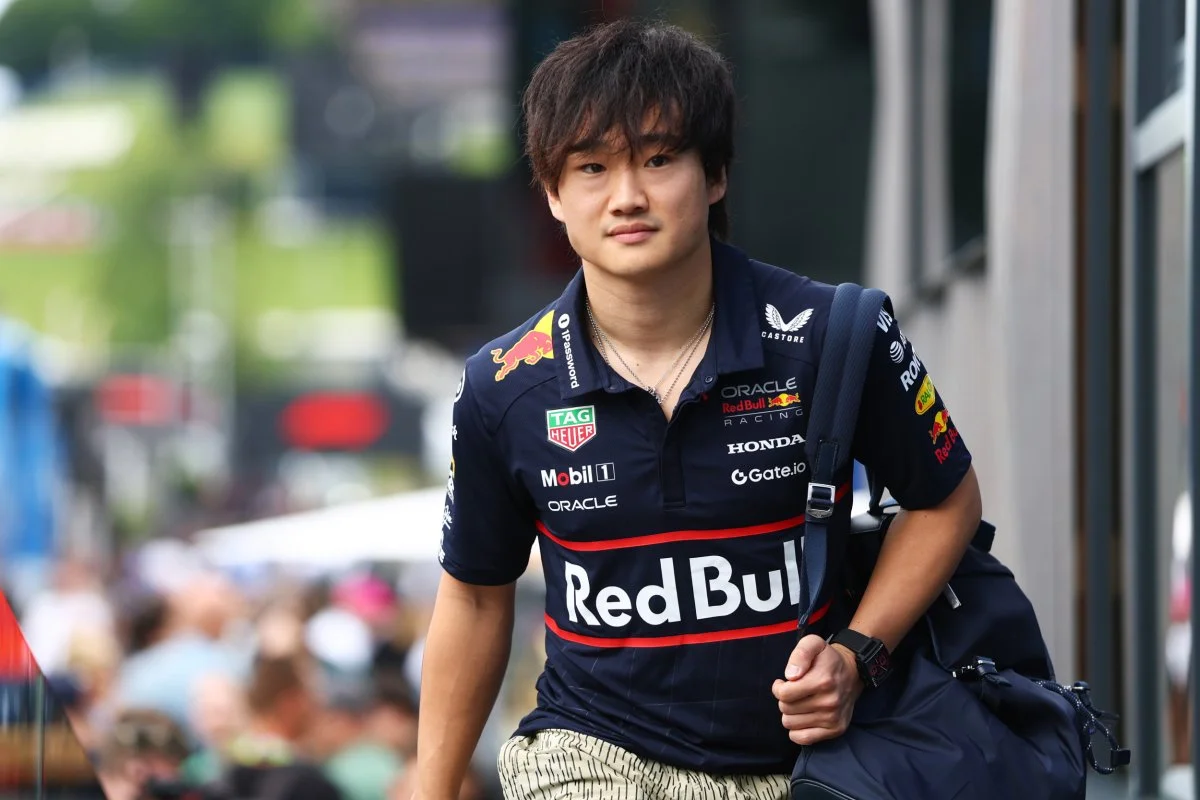
Red Bull Racing’s daring choice to fit Yuki Tsunoda with the latest car floor at the Belgian Grand Prix sparked a breakthrough moment for the Japanese driver, propelling him to a remarkable seventh place in qualifying. This development marked a turning point in Tsunoda’s challenging Formula 1 campaign.
Since replacing Liam Lawson, Tsunoda had struggled to adapt to the RB21 car, managing only seven points across ten races while trailing far behind teammate Max Verstappen’s commanding performances. Red Bull, currently fourth in the constructors’ championship, was under pressure to improve the driver’s results.
The Struggles and Setbacks Leading to the Upgrade
Tsunoda’s difficulties were highlighted by his crash in Imola during qualifying, which caused damage to key components and widened the performance gap between him and Verstappen. Red Bull’s focus on Verstappen’s car had left Tsunoda with fewer resources, contributing to his inconsistent performance. The team’s strategic support unquestionably favored their lead driver.
Nevertheless, following the sprint event at the Belgian GP, Red Bull took a calculated risk by fitting Tsunoda with a spare floor, a significant technical upgrade, ahead of the qualifying session. This decision paid dividends as Tsunoda entered Q3 and earned his best qualifying position for Red Bull—seventh on the grid—just mere tenths behind his teammate.
Significance of the Upgrade and Team Confidence
Though a seventh-place start may not stand out for a team like Red Bull, offering Tsunoda the latest floor upgrade represented a clear vote of confidence, particularly as he reached the milestone of his 100th grand prix entry. This support signals the team’s commitment to developing him as a competitive driver within their roster.
Tsunoda himself acknowledged the team’s dedication in preparing the upgraded car, praising the mechanics’ precision. He attributed his improved pace to the new floor and expressed optimism about future upgrades boosting his ability to score points on a regular basis.
Support from Mekies and Momentum for Upcoming Races
The emotional impact of this breakthrough was amplified by the presence of Mekies, a known supporter and ally of Tsunoda within the team, who welcomed the strong qualifying result. Mekies highlighted the driver’s progress over the race weekend and specifically recognized how last-minute upgrades had helped enhance his performance.
Red Bull’s bold decision not only lifted Tsunoda’s qualifying outcome but also suggested a potential momentum shift for the young driver. With rising confidence and a more competitive car, Tsunoda could become a pivotal figure for Red Bull as the Formula 1 season continues.
“Tsunoda expressed his gratitude for the team’s effort, acknowledging the precision and dedication of the mechanics in preparing the upgraded car.” —Yuki Tsunoda, Driver
“Mekies praised Tsunoda’s progress throughout the weekend, highlighting the impact of the last-minute upgrade on his performance.” —Mekies, Team Supporter
Our Reader’s Queries
Q. Did Yuki Tsunoda ever win a race?
A. Yuki Tsunoda started his journey to Formula One in 2016 at the Suzuka race in the Japanese F4 championship. In that series, he claimed victory in 10 races and stood on the podium 18 times. He also secured 12 pole positions and recorded the fastest lap in five races.
Q. Has Yuki Tsunoda won a race?
A. Tsunoda came second in the first race at Paul Ricard and finished third in the Pau Grand Prix. He then won his first championship in the second race at Hockenheim.
Q. Who is the shortest F1 driver? While some drivers tower over the grid, Yuki Tsunoda confidently holds the title of the shortest driver in Formula 1, standing at just 1.59 meters (5 ft 3 in). That makes him a full 27 centimeters shorter than the tallest drivers—Alex Albon and Esteban Ocon.
A. Which F1 driver is the shortest in height?
