
During the initial 2026 Formula 1 preseason testing at Bahrain International Circuit, Aston Martin’s AMR26 revealed alarming performance issues, trailing frontrunners by approximately 4.5 seconds. The car, affected by problems ranging from engine malfunctions to aerodynamic inefficiencies, struggled to complete laps, casting doubt on its competitiveness under the new regulations.
Drivers and team members alike expressed frustration. Lance Stroll described the performance gap as a “chasm” after completing just 36 laps on Day 1, halted by a Honda power unit data fault. For a team counting on Adrian Newey’s renowned aerodynamic expertise to push them into championship contention, this disappointing debut spotlighted fundamental flaws needing urgent attention.
Testing in Bahrain Lays Bare Critical Flaws in the AMR26
The Bahrain International Circuit, known for its demanding surface and high temperatures, was intended as Aston Martin’s moment to prove their progress. Instead, the testing exposed multiple weaknesses. The AMR26, Adrian Newey’s first major project since joining Aston Martin from Red Bull in March 2025, arrived late due to developmental setbacks, missing the majority of initial Barcelona track time.
Over three testing days (February 12-14, 2026), Fernando Alonso and Lance Stroll combined for just 206 laps, well below rival teams like McLaren, which completed over 300 laps. The fastest lap time recorded was 1:38.165 by Stroll on soft tires, more than four seconds slower than Mercedes’ top benchmark. Data highlighted frequent wheel lock-ups during braking and erratic handling, forcing drivers to constantly fight instability. Additionally, the car’s overweight chassis compromised downforce in corners, further limiting performance.
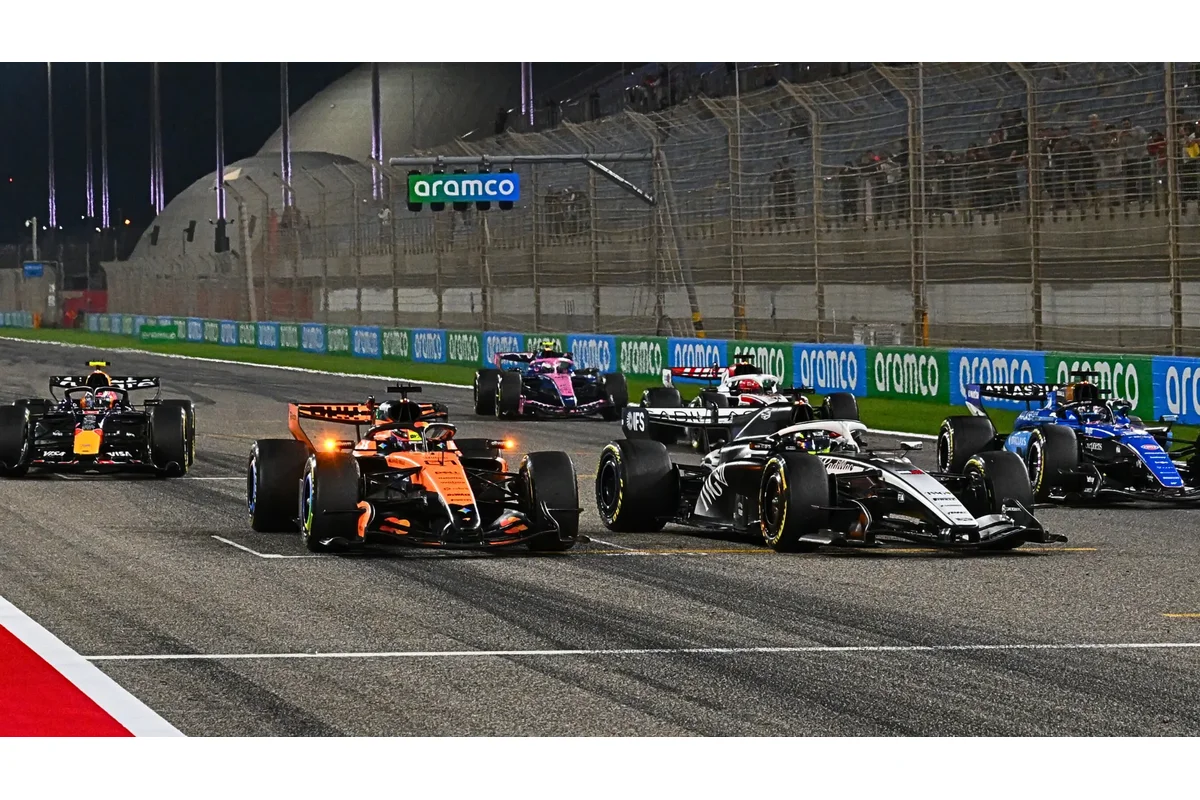
Several issues converged to create these deficits. The new Honda power unit partnership, revived after an extended R&D pause following Honda’s 2021 exit, fell short in both power and efficiency. Aston Martin’s first-ever internally designed gearbox, aerodynamic inefficiencies not fully compatible with the new Aramco sustainable fuels, and tire difficulties compounded the problems. As Adrian Newey summarized, “it’s a bit of everything.” Team owner Lawrence Stroll reportedly expressed frustration with the engineering squad, while Pedro de la Rosa admitted the team was
“behind schedule and not where we want to be.”
The AMR26 ranked 10th on the performance chart, trailing behind Audi and barely ahead of Cadillac’s rookie car. For a team that has invested heavily in its Silverstone base, the results were far from the expected breakthrough, turning what should have been a green light into a green nightmare.
Adrian Newey’s Personal Challenges and Candid Reflections
For Adrian Newey, the celebrated 67-year-old engineer with a record 12 constructors’ titles, the AMR26 launch carried deep emotional weight. At the Saudi livery reveal shortly before Bahrain testing, Newey was visibly moved as Lance Stroll rolled out the prototype, unfinished and unpainted due to time constraints. Newey described the experience as
“a long, emotional journey of passion and a lot of hard work,”
and praised the AMR Technology Campus as a unifying environment fostering teamwork.
However, the mood shifted sharply after testing. In a frank team-wide discussion, Newey admitted,
“Right, I know this is not working at the moment… it is partly the Honda engine, it is a bit of the gearbox, it is a bit of aero, it is a bit of tires.”
Sky Sports reporter Ted Kravitz conveyed the atmosphere following the test: Newey was “really direct and positive,” determined to rally his team with a promise to
“haul them out of this mess,”
avoiding blame and focusing on fixing the complex, interconnected problems that challenged the AMR26.
Strategic Steps for Immediate and Gradual Improvements
Although specific solutions remain confidential, insiders describe Newey’s approach as a careful, orchestrated effort now fully under his control after a four-month delay caused by his late arrival. Newey is guiding the team to prioritize critical fixes, such as optimizing battery charging for the 300kW MGU-K unit, which has been limited by braking issues, refining aerodynamic mapping to regain lost downforce, and adjusting energy deployment tactics to make up for power deficits.
Focus will also be placed on “low-hanging fruit.” Achieving representative long runs and tire testing—tasks hindered at Bahrain—could restore crucial seconds to lap times. Fernando Alonso expressed cautious optimism ahead of the second round of winter testing (February 18-20). Newey highlighted the considerable progress in team cohesion fostered at the Silverstone complex, emphasizing the facility’s world-class capabilities.
The introduction of new 2026 regulations, including active aerodynamics, sustainable fuels, and enhanced battery design, presents significant avenues for rapid car development. By the time Formula 1 reaches Melbourne for the season opener on March 16, the car’s performance level could improve markedly, potentially leaving the initial test results appearing outdated.
Aston Martin’s Path Forward Amid a Competitive and Unpredictable Grid
Despite the difficult start, Aston Martin’s situation is not yet dire. Other leading teams, including Mercedes, enjoyed cleaner test runs, but the grid remains unsettled by sweeping regulatory changes. Lance Stroll’s sober assessment,
“we have a lot of work to do,”
reflects a team in the midst of damage control rather than defeat.
With Adrian Newey at the helm—the engineer responsible for landmark cars like the RB7 and RB20—the team’s fortunes hold promise. Historical precedents such as Red Bull’s difficult beginnings in 2010 that culminated in championships offer a hopeful parallel. As the AMR26 awaits its chance in the upcoming Bahrain Test 2, Newey’s plan could transform this struggling machine into a competitive contender. The battle for relevance in 2026’s reshaped Formula 1 season has only just begun for Aston Martin.
