
At the opening race weekend in Thailand, Alex Marquez and the Gresini team faced difficult conditions due to rain but managed to secure the sixth fastest time in pre-qualifying, granting them direct entry to Q2. Although this was a decent start, Marquez was still 0.85 seconds behind the leader, Marco Bezzecchi, highlighting that there is room for improvement in his MotoGP setup.
Progress Made Despite Discomfort
Marquez admitted that he felt uneasy during the morning sessions, but adjustments made in the afternoon helped the team make some headway. He recognized that they had underestimated the impact of the approaching rain and struggled with maintaining calm during crucial moments.
“I didn’t feel very comfortable in the morning, but in the afternoon we understood a few things and made some progress, which is the important thing. We didn’t come up with the best plan seeing that the rain was coming. Especially me, I wasn’t as calm as I should have been to make sure everything went perfectly. We lacked a bit of calm, but we took a small step forward,”
he said, emphasizing the need for further work on the bike.
Focusing on specific performance issues, Marquez explained,
“I’m losing out mainly in traction, which was my strong point last year, but I’m not too worried about that because I think it’s something we can fix quite easily. I’m entering the corners very well, and that’s where we need to try to get the most out of it, because I think we have room for improvement.”
More Complex Setup Options Than Last Year
The start to the 2024 season differed significantly from the previous year as Marquez and the team faced a wider array of setup choices. He noted that this increased complexity meant the team couldn’t focus sufficiently on the core setup during testing.
“It’s different because we have many more options with this package, and I think the potential is better, but it will take time to work on it. We tried many elements and many different things in the pre-season tests. The bike was different in every outing, and we didn’t have time to focus on the most important aspect, which is the basic setup. That’s why we’re a bit less ready than last year. We have prepared less for the first races and we will need some time to extract the potential, but I think we are on the right track,”
Marquez reflected on the situation.
Looking ahead, he was uncertain about how quickly they could fully optimize the setup, saying,
“We are approaching tomorrow with a thousand doubts. I think we’ll need some time, I don’t know how much. I don’t know if we’ll need another practice session or another race to better understand everything we have, because having to try so many new things over the weekend and not being able to work on the setup makes the difference between arriving prepared or not.”
Adjusting to Changes and Understanding the Bike’s Potential
When asked whether the loss of traction and gains in other areas were related to the new Ducati machinery, Marquez was unsure but emphasized the importance of understanding the bike’s setup rather than blaming the bike itself. He explained,
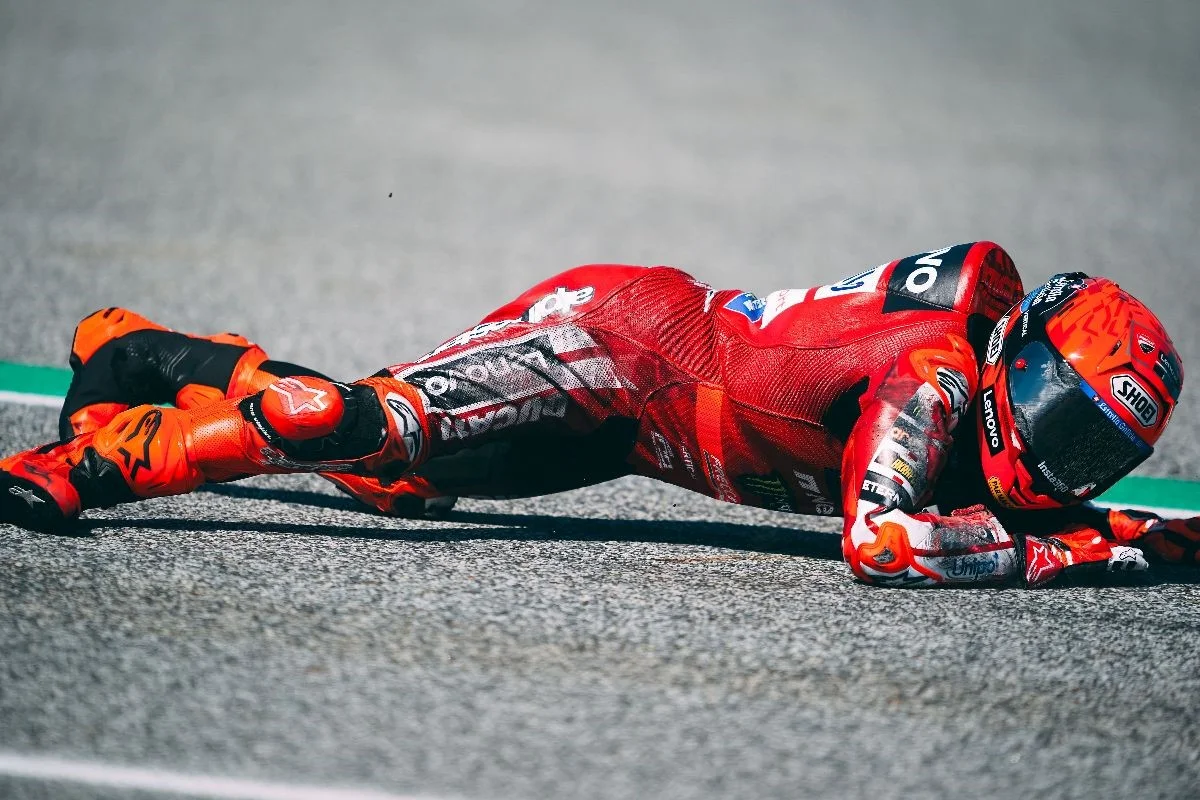
“I don’t know, we’re trying to understand, because last year I used the throttle in a very natural way, that’s where I always made the difference, while now it’s a bit the opposite. I don’t think it’s so much a question of the bike as it is of the set-up and understanding the potential a little better in order to make the most of it.”
Marquez also pointed to the advancement of other riders as part of the explanation for his current challenges, stating,
“I think the difference compared to last year is due to the fact that everyone has taken a step forward, it’s not that the bike has gotten worse. I believe the potential is greater, we need to understand how we can extract it and put together everything that works, without getting confused. We just need a little stability on the bike: we mustn’t try things but focus on the package, to extract its potential.”
Staying Composed Despite Competitors’ Stronger Pace
The performance of Aprilia riders during pre-season testing has raised the bar, but Marquez intends to maintain his composure.
“The situation here doesn’t surprise me. Obviously, we would like to be much closer to Bezzecchi and be better prepared. I don’t think we are very far off in terms of pace, as for the single lap, he did a great one today. So, we have to stay calm in that regard. It’s only the first race: if they are stronger here, then better races will come,”
he stated.
When asked if Bezzecchi seemed unbeatable, Marquez remained optimistic, saying,
“Bezzecchi is out of reach? It’s always possible to beat the riders in front, even if it will obviously be difficult. As I said, if we can’t be faster than him, we won’t panic. We have 21 races ahead of us, it will be a long season. There will be tracks where Aprilia will do better and others where we will have to take advantage of the fact that we also have the potential.”
Similar Equipment with a More Complex Approach
Marquez also addressed comparisons to last year’s setup, highlighting that the bike itself has not changed significantly, especially in aerodynamics, which remains the same.
“The bike hasn’t changed much. The thing that can change a bike the most is the aerodynamics, and we’re using the same ones as last year. So, it hasn’t changed my life much,”
he said. However, he noted the increased number of options available now has a double-edged effect.
“The thing is, now I have more possibilities to explore on the bike, and that’s something that can be positive, but it can also complicate our lives a bit. So, we have to manage ourselves a bit better in that respect.”
Weather Conditions Adding Complexity at Thailand Circuit
Marquez concluded his analysis by commenting on the unpredictable weather conditions in Thailand, which have complicated the team’s efforts.
“It’s quite difficult to understand the conditions here because there are flags signaling rain everywhere, but it’s not wet. There’s just a little water. It can be dangerous because you can find the whole track dry and then get to the fourth sector and find the track completely wet. It’s dangerous, but it’s our job,”
he remarked, underscoring the added challenges the riders face as they try to optimize performance in changing track conditions.
