
Aston Martin revealed its AMR26, the new car for the 2026 Formula 1 season, during a private shakedown at the Circuit de Catalunya in Barcelona. This launch underscores Aston Martin’s commitment to innovation in the sport, with the car designed under the keen eye of famed designer Adrian Newey, aiming to redefine F1 aerodynamics and performance.
Early Track Testing and Initial Challenges
The AMR26 made a delayed track debut late on the fourth day of pre-season testing, with Lance Stroll completing only five laps before a mechanical issue prompted a red flag. These initial laps prioritized system checks rather than outright speed, but already showed a car that seems more polished than many early-season rivals. Following this, Fernando Alonso took over driving duties, maintaining a positive outlook despite the earlier interruption.
The delay in the AMR26’s debut was due to discrepancies identified by Newey during the summer, between the simulator data and wind tunnel results. This cautious approach reflects Newey’s precision and insistence on design accuracy before final approval.
Revolutionary Aerodynamic Features of the AMR26
The AMR26 introduces a radical aerodynamic package, departing from many norms in current F1 design. At the front, it sports a simple yet aggressive front wing featuring pillars attached to the second flap, enabling active aerodynamic elements. The nose includes a distinctive pelican-shaped underside to enhance airflow, a unique feature attributed solely to Newey’s vision.
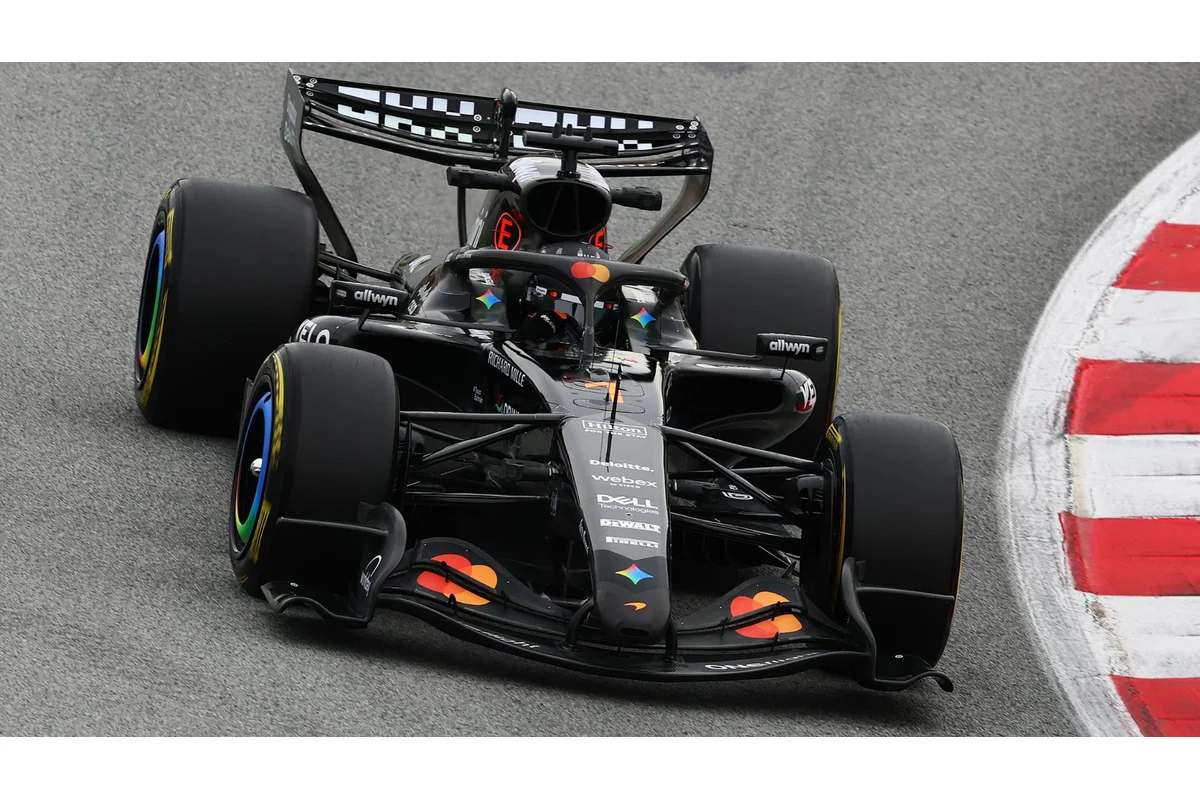
The sidepods are notably slim, adopting an underbite form with floating, downwash configurations supported by intricately shaped vanes near the mirrors. These mirrors are compact and sharply contoured, forming an extreme Coke-bottle silhouette. Additionally, the air intakes have shifted to upward-facing periscope-style funnels, moving away from traditional letterbox designs.
Behind the cockpit, the engine cover shows sizable vents placed forward, alongside a triangular air intake patterned after Ferrari concepts and adorned with twin winglets. A long shark fin extends nearly to the car’s rear, while a narrow rear section includes a second skin layer around gearbox components for improved efficiency.
Innovative Suspension and Design Collaborations
The suspension architecture features pushrod setups front and rear, incorporating multi-link designs. Particularly noteworthy is the rear suspension’s upper wishbone, where the rear arm sits well below the front arm to enhance anti-squat behavior—an approach even more extreme than McLaren’s recent solutions. This double-pushrod layout aligns with 2026 regulatory trends and facilitates improved handling predictability and packaging under the new rules, which alter diffuser size and ground effect.
Newey’s influence extends through the car’s silhouette, from a wide, rounded nosecone to sharply angled sidepods, creating a smooth, unified airflow that minimizes external disruptions. However, Enrico Cardile’s input is apparent in collaborative details, such as the cobra-style winglets around the halo and mid-funnel outlets on concave bodywork, blending Newey’s legacy with fresh engineering perspectives.
Industry Reactions and Expert Analysis
Industry voices have met the AMR26 with fascination mixed with cautious questions. Formula 1 analyst Martin Brundle praised Newey’s inventive interpretations of the 2026 regulations, emphasizing the car’s strong potential to exploit the new ruleset effectively. Yet, Brundle expressed concerns about whether Aston Martin has fully aligned its wind tunnel data to Newey’s design and whether the team’s personnel is prepared to execute his complex vision.
Brundle also noted Newey’s well-known dedication to delaying design sign-off to perfect every aspect, contributing to the AMR26’s late track appearance. With Newey not acting as team principal, Brundle questioned if leadership dynamics could affect the car’s development pace. Nevertheless, he remains optimistic that the AMR26 will be competitive as the season advances.
Comparative Context Among F1 Competitors
The AMR26’s front wing reveals similarities to Mercedes’ recent approach, while its sidepod design narrows compared to Aston Martin’s 2024 model, recalling historical elements such as the Toro Rosso STR06. Unlike Ferrari’s more reserved evolution with their ‘A-spec’ update, Aston Martin’s vehicle integrates several intricate aerodynamic features, including an elaborate front floor deflector array and a “mouse hole” within the diffuser to enhance airflow and performance.
Looking Ahead to Bahrain and the Impact on Aston Martin’s Future
As pre-season testing transitions to Bahrain, all eyes will be on how the AMR26 performs in more demanding conditions. Team principal Adrian Newey described the car as “innovative and original,” suggesting the extended development phase was justified by the breakthroughs incorporated. Honda’s engine integration remains a critical focus, given its recent resurgence after a hiatus.
With drivers Lance Stroll and Fernando Alonso eager to exploit the car’s capabilities, Aston Martin aims to position itself for a transformative season. Although questions remain about reliability and team cohesion, the AMR26’s bold design has already made waves throughout the F1 paddock, promising a potentially seismic shift in competition as the 2026 season unfolds.
