
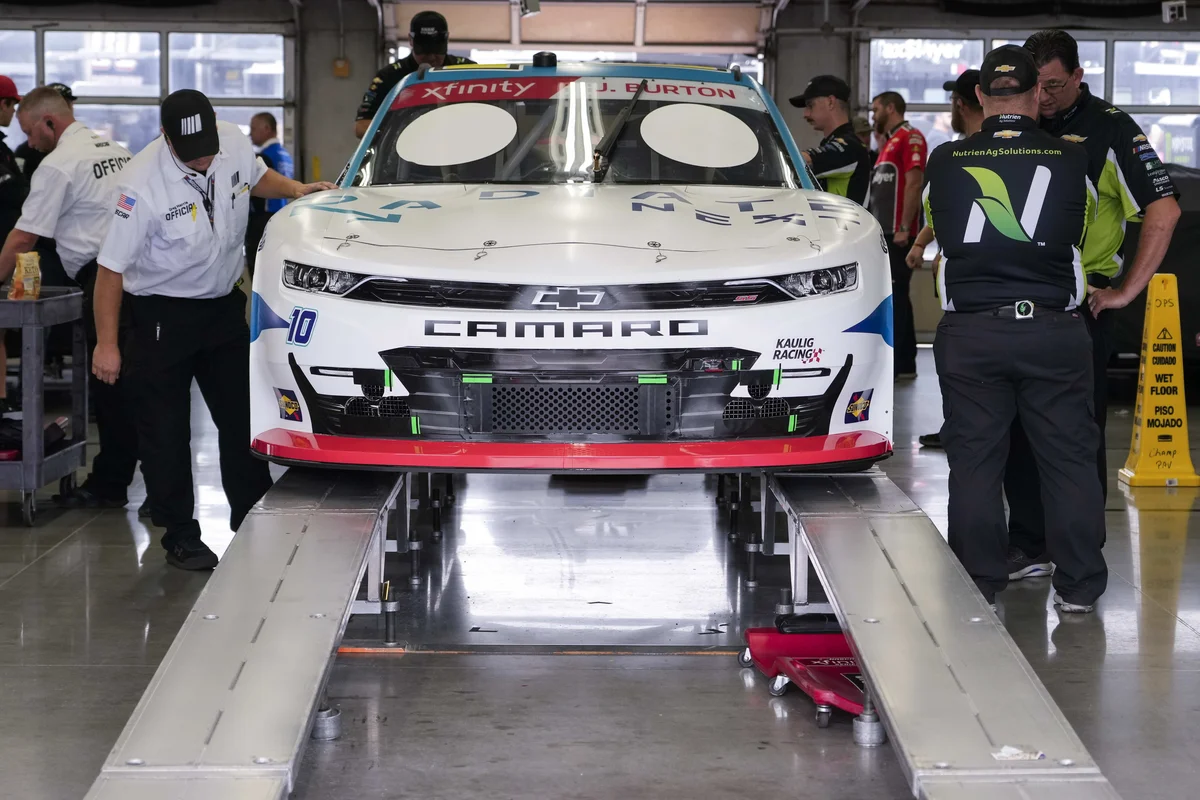
At the start of the NASCAR Cup Series weekend held at EchoPark Speedway, both Austin Dillon’s No. 3 Richard Childress Racing Chevrolet and B.J. McLeod’s No. 78 Chevrolet were penalized for failing pre-race inspection twice on Friday. These failures prompted officials to remove their car chiefs for the remainder of the event, while also revoking their pit stall selection privileges. The inspection process ensures that all vehicles meet NASCAR’s technical regulations by examining aspects such as body fit and setup prior to practice and qualifying sessions.
Given Atlanta’s challenging 1.54-mile high-banked layout, which places strong emphasis on track position and strategic pit stops, these penalties were significant, increasing pressure on both teams as they prepared for the race weekend.
Impact on Austin Dillon’s Team After Second Inspection Rejection
NASCAR confirmed that Ryan Chism Overstreet, the car chief for Austin Dillon’s team, was ejected following the vehicle’s second inspection failure. Despite this setback, crew chief Richard Boswell will continue to lead the pit box operations. Losing a key team member, however, hampers the team’s ability to make necessary adjustments and maintain oversight during garage work and pit road activities.
Bob Pockrass of FOX Sports shared relevant updates on social media:
Cup tech update: ADillon car failed twice and will lose car chief and pit selection. The rest of the field is good except McLeod’s car needs to go through on its second attempt.
?Bob Pockrass, Reporter
He later provided further clarification about the final inspection outcomes:
NASCAR confirms ADillon car chief ejected and will lose pit selection. McLeod’s car also failed twice, had the car chief ejected, and will pit selection. ADillon car passed on the third attempt; McLeod car will be inspected in the morning on its third attempt.
?Bob Pockrass, Reporter
NASCAR’s stepped penalty system outlines that a first failed inspection results in a warning and an opportunity to re-inspect. A second failed attempt leads to the removal of the car chief and forfeiture of the preferred pit stall choice, which is usually assigned based on the qualifying order.
Atlanta’s revised track configuration, introduced in 2022, features steeper banking and narrower racing lanes. This redesign highlights the importance of aerodynamic precision and clean air flow, making adherence to inspection regulations critical before teams hit the track.
B.J. McLeod’s Team Also Faces Penalties After Inspection Issues
B.J. McLeod’s No. 78 Live Fast Motorsports Chevrolet experienced the same difficulties by failing inspection twice. As an owner-driver operating with generally fewer resources than larger teams, McLeod now faces the weekend without his car chief and the disadvantage of not controlling his pit stall selection.
At drafting tracks like Atlanta, pit stall location plays a key role. Stall positions near the pit exit or those with clear space ahead allow drivers quicker entry and exit from pit road, helping avoid congestion and enhancing race strategy.
Other Teams Pass Inspection as Focus Shifts to Atlanta Competition
Aside from Dillon and McLeod, NASCAR successfully cleared the remainder of the 38-car field through inspection, enabling those teams to concentrate on qualifying and race-day setups. This event serves as the second points race of the 2026 Cup Series season following Tyler Reddick’s win at the Daytona 500.
Forecasts suggest mild weather conditions with a slight chance of rain during qualifying. The race is scheduled to commence at 3 p.m. ET on Sunday, marking the start of the competitive action at EchoPark Speedway.
For Austin Dillon and B.J. McLeod, penalties related to inspection failures place them at an early disadvantage this weekend. Both teams must adapt their strategies while managing without their car chiefs and contending with less favorable pit selections, making it more challenging to gain or maintain track position once the race begins.
Cup tech update: ADillon car failed twice and will lose car chief and pit selection. Rest of field is good except McLeod car needs to go through on its second attempt. @NASCARONFOX
— Bob Pockrass (@bobpockrass) February 21, 2026
NASCAR confirms ADillon car chief ejected and will lose pit selection. McLeod car also failed twice and had car chief ejected and will pit selection. ADillon car passed on third attempt; McLeod car will be inspected in the morning on its third attempt. https://t.co/8skd0yfeE8
— Bob Pockrass (@bobpockrass) February 21, 2026
