
NASCAR driver Brad Keselowski endured excruciating pain during his recovery from a broken leg that made him think about drastic measures, including seemingly wanting a hacksaw to relieve the agony. The injury occurred in mid-December after Keselowski slipped on ice while on a family ski trip, causing a broken femur that demanded surgery and months of rehabilitation ahead of the 2026 Cup Series season.
During media day at Daytona International Speedway, Keselowski compared his suffering to the brutal conditions faced by soldiers in the Civil War, explaining the severity of his pain helped him understand why soldiers might have resorted to amputations.
“What was going through my mind was like, ‘Oh my God. Think about the soldiers in the Civil War,’”
Keselowski remarked, as reported by Mark Long of the Associated Press.
“They just would cut their leg off right here. And I understood why they would do it because it hurt so bad. It was by far the worst pain I’ve ever went through. I get why they would bring out the hacksaw. There was part of me that’s like, ‘That might actually feel better.’”
Details of Injury and Recovery Process
Keselowski suffered the broken femur about eight weeks prior to the Daytona 500, forcing him to miss races such as the Clash at Bowman Gray Stadium in Winston-Salem, North Carolina. Recovery from such an injury is expected to take approximately six months, yet Keselowski was medically cleared to compete in the Daytona 500, driving the No. 6 Ford for RFK Racing at the official 2026 season opener.
He described the distinct nature of breaking a femur compared to other leg injuries, emphasizing the complexity of healing such a large bone with critical nerves and blood vessels running through it. Unlike fractures below the knee, a femur break cannot be easily stabilized with a cast and requires enduring substantial pain during recovery.
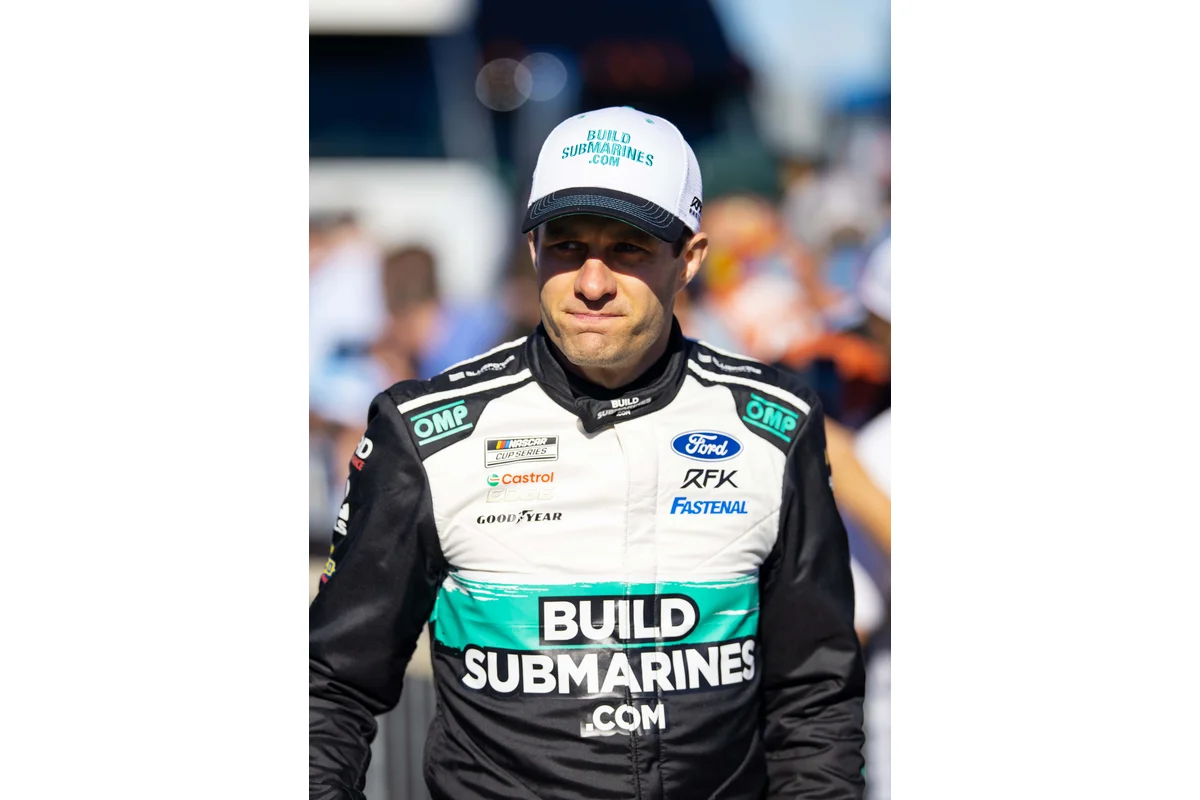
“It’s hard to explain to people that have never broken their femur before what it’s like,”
Keselowski said, noting the use of a cane for mobility during media day.
“It’s not the same as breaking your leg below your knee. Your femur is the biggest bone in your body. It’s got a lot of things running through it, and it has to heal. You can’t really cast it. You can’t do any of those things. You just kind of have to tough it out.”
Uncertainty Ahead of Daytona 500 Qualifying
The 41-year-old driver acknowledged lingering uncertainties about how much his injury and ongoing pain would impact his performance on the track. Until recently, Keselowski even doubted whether he would be able to walk again, let alone race at high speeds.
“I’m eight weeks in, and until about three-to-five weeks in, there was a question if I was going to walk again, let alone drive a race car,”
he admitted.
“Those were the thoughts that were going through my mind. I was confident I was going to put the work in, and I was going to own whatever result there was. There were certainly a lot of moments where you’re like, ‘Ooh, this isn’t a layup.’ … But until you get in a race car going 190 miles an hour, you don’t know. You don’t know how it’s going to feel.”
Keselowski’s determination to return despite the physical and mental challenges highlights the demanding realities faced by athletes recovering from serious injuries. His ability to compete at Daytona will be closely watched by fans and officials alike, as it may influence his stamina and performance throughout the season while managing significant leg pain.
