
Brad Keselowski has raised serious concerns about the tire situation ahead of this Sunday’s Richmond Cup race, warning that the current Goodyear option tire is wearing out much faster than expected. With RFK Racing fighting to secure a playoff spot in the final races of the season, Keselowski’s Richmond tire warning has sparked anxiety among teams and fans alike about how the softer, faster-degrading tire will affect race strategy and performance.
Concerns Over Tire Durability at Richmond
RFK Racing is entering a critical phase with only two races left to earn a playoff berth for one of their drivers. Ryan Preece has shown promise by clinching the pole position for Richmond, but Keselowski, the team owner and driver of the No. 6 Ford, has expressed alarm about the tires provided by Goodyear for this event. The tires, designated as the softer option compound, are reportedly wearing out within 50 laps, raising the prospect of multiple tire changes and complex pit strategies that could disrupt teams’ plans.
Keselowski described the situation plainly, emphasizing the challenge ahead:
“We’re in trouble. The tire’s supposed to be the option tire, it doesn’t look like the option tire, it doesn’t drive like the option tire. It’s going to be harder to run more than 50 laps on it.”
His statement highlights the unexpected performance issues that threaten to compromise drivers’ ability to manage long runs effectively.
Insufficient Tire Allocation Poses Additional Risk
A key issue that compounds Keselowski’s worry is the limited number of tires allocated for the race, which may not be enough to compensate for the tire’s rapid wear. He pointed to the discrepancy between the tire life needed and the supply available, noting,
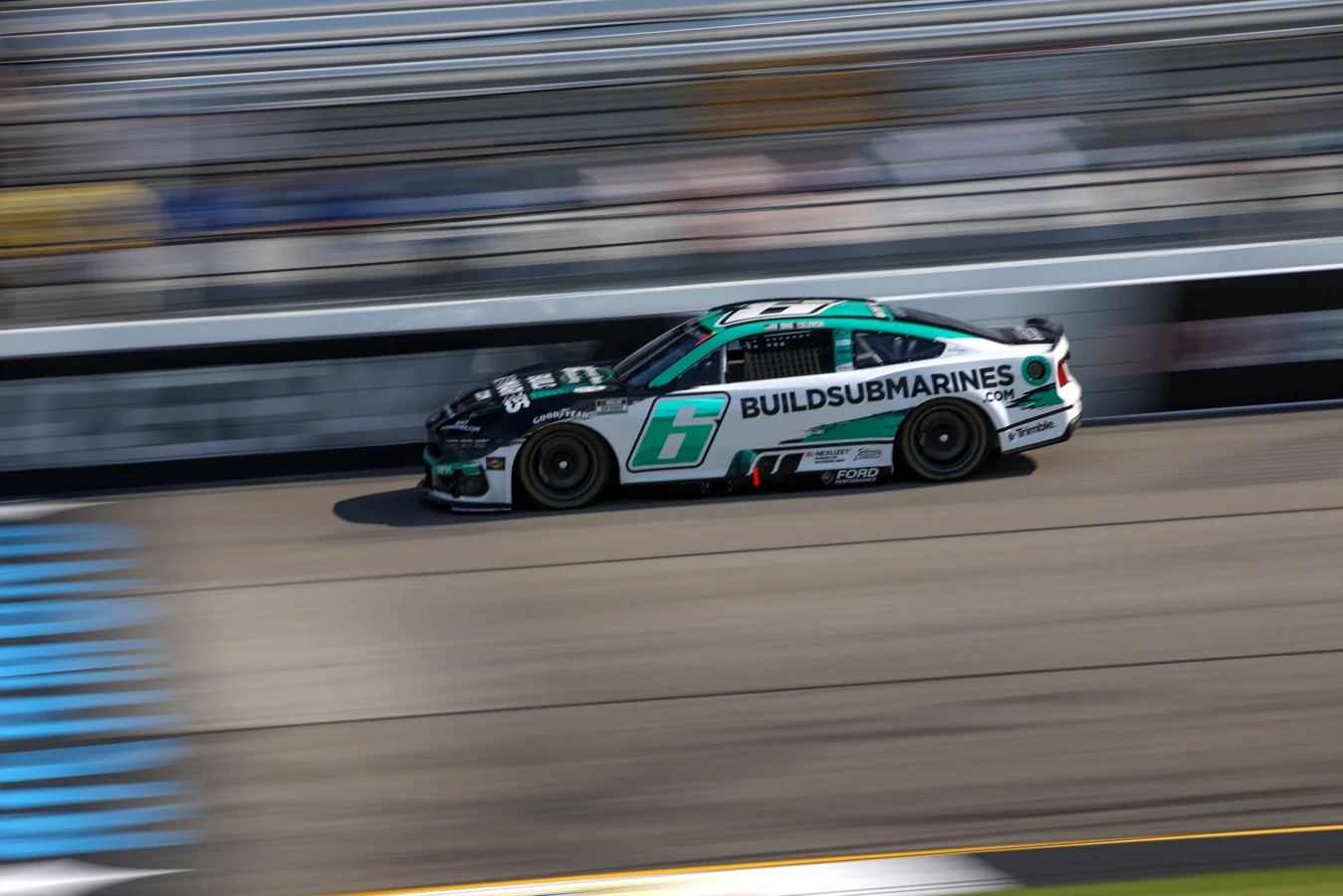
“If you look at the amount of tires we have, we have enough tires to go, I think it’s like 45 laps a set. Rough math. Not enough. The math ain’t mathing.”
This suggests that teams may face difficult decisions during the race as they try to stretch sets of tires beyond their optimal lifespan.
The concern is particularly pressing given the strategic uncertainty that comes with a tire compound behaving differently than anticipated. Blake Harris, crew chief for Hendrick Motorsports driver Alex Bowman, reportedly requested additional tires but was turned down, leaving teams to navigate the potential tire depletion with limited resources.
Potential Impact of Nighttime Conditions on Tire Performance
Despite the bleak forecast, Keselowski acknowledged a glimmer of hope that track conditions during the race could improve tire longevity. He stated,
“I might be wrong. Maybe something will change and we’ll get into nighttime and the tires will extend their life cycle more than what we’ve seen in practice. But right now, it does not look good.”
This suggests that cooler evening temperatures could reduce tire heat and wear, potentially easing some of the pressure on drivers and crews.
However, the uncertainty surrounding this possibility only adds to the tension teams are facing in finalizing their setups and strategies before race day.
Goodyear Stands Behind Tire Performance Despite Criticism
While drivers and team executives have voiced frustration, Goodyear officials remain confident in the tire design and performance. Rick Heinrich, the product manager for Goodyear tires, addressed the issue by assuring that the tire’s degradation rate was intended. According to Heinrich, the performance aligns with planned parameters to promote more dynamic racing through tire management challenges.
Heinrich explained,
“They’ve really performed spot-on because we’re seeing that kind of fall-off. We’re not seeing people showing that they can’t go as far as they’re going to have to go (Saturday) night. You’re going to have to put at least 37 laps on a set of tires to able to make the math work. We’re seeing people go well beyond that.”
His comments underline Goodyear’s belief that the tire will enable competitive racing without forcing premature failures.
Implications for Richmond and Upcoming Races
The contrasting views between Keselowski and Goodyear spotlight a critical tension in the lead-up to Richmond’s Cup event, where tire management could become a defining factor for the race outcome. The way these tires perform could also influence decisions for future events at Martinsville and Phoenix, where similar compounds are expected.
Keselowski’s warning, coupled with Goodyear’s confidence, makes the Richmond race an important test case for tire strategy across the sport. It remains to be seen which teams will adapt best to these conditions and whether the softer tire will allow for the exciting battles on track that <a href="https://www.big14news.com/nascar/”>NASCAR and fans hope for, or if it will lead to increased pit stop chaos and strategy headaches.
As the weekend unfolds, attention will be on how star drivers like Keselowski, Ryan Preece, and others manage their tire wear and whether the “math” will ultimately add up in their quest for playoff advancement.
