
William Byron prepares to race in the Daytona 500 this Sunday with the opportunity to make history by winning three consecutive titles, a feat that no driver has achieved in the 67 years of this prestigious event. After his last two victories, the Hendrick Motorsports driver is again among the favorites, but the challenge of a “three-peat” remains daunting in NASCAR’s most significant race.
Byron addressed the enormity of the task ahead, acknowledging his hope to succeed again after back-to-back wins in the past two years. His recent performances have elevated expectations, yet the unpredictability of the race looms large.
Insights from the Clash and the Challenge of the Triple Win
Following their finishes in the recent Clash exhibition event, Ryan Blaney and Byron exchanged banter about the upcoming race. Blaney teased Byron, saying,
“Try to see if we can make William not win one,”
while Byron responded, “You’re pretty good there.” Blaney shot back,
“You won the last two. Shut up.”
This friendly rivalry underlines the unique pressure Byron faces this weekend.
Despite the jest, Byron cannot avoid the spotlight on his attempt for an unprecedented third straight Daytona 500 title, which no other driver has ever done. This adds a rare intensity to his preparation and mindset going into the race.
Byron’s Learning Curve and Approach to the Daytona 500
Byron did not have early success at Daytona, with no top-20 finishes in his first six Daytona 500 starts before claiming victory in 2023 and defending it in 2024. He does not consider himself an expert on winning this race, noting that each year unfolds unpredictably.
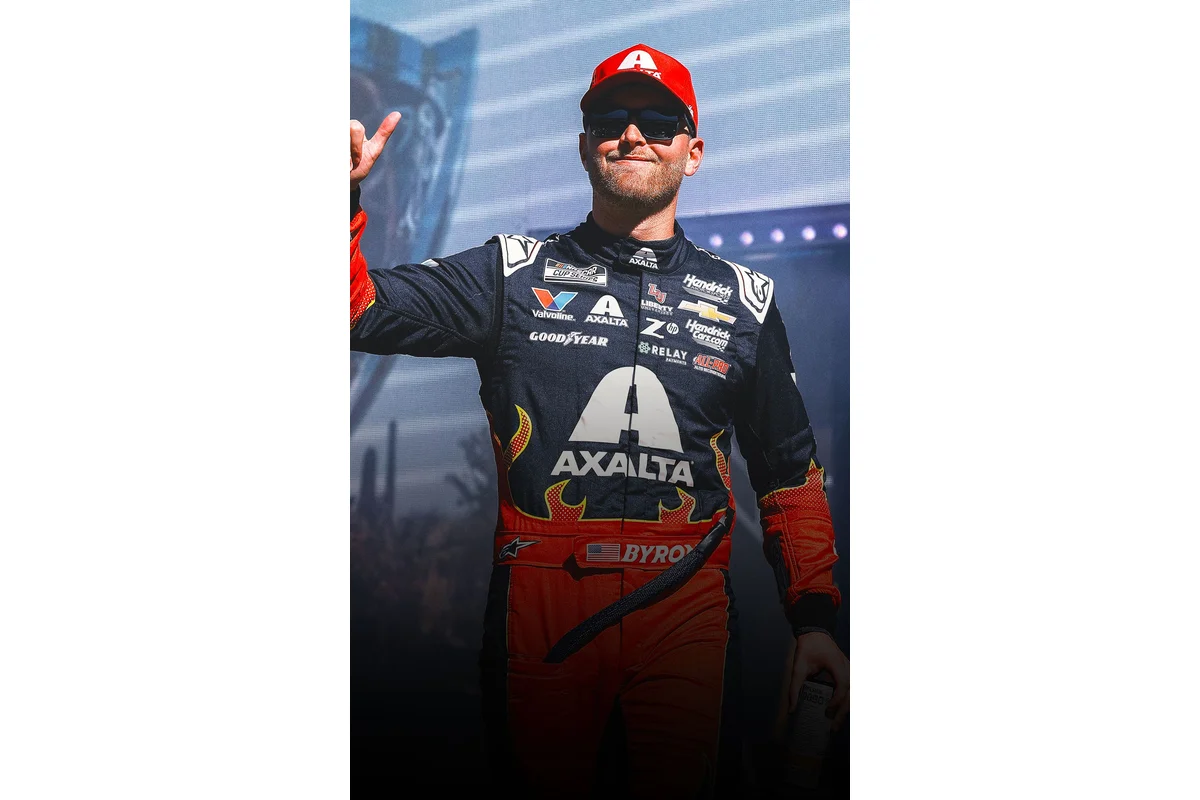
Reflecting on his previous win, Byron explained how fortune played a role on the final lap when he was ninth and the leaders crashed ahead, allowing him to advance and seize an unexpected victory. His strategy, rather than relying on past lessons, focuses on adapting quickly during Speedweek and race day.
Byron remarked,
“I don’t know that I’ve watched the 500s back because it just plays out the way it does,”
highlighting the event’s chaotic nature.
Preparing for the Superspeedway Tactics and Drafting Techniques
As part of his routine ahead of Daytona, Byron concentrates on learning and adjusting to drafting strategies and car handling in pack racing. He specifically cited lessons from Talladega last fall where race positioning became crucial. The draft remains a dynamic challenge as the Cup car’s aerodynamics evolve.
Daytona, along with Talladega and Atlanta, employs horsepower restrictions to maintain safety by reducing speeds from typical levels to around 550 horsepower. Cars race in tight packs, and the airflow dynamics make timing and positioning essential to gaining an advantage.
This constant battle for the ideal push can significantly impact race outcomes, and Byron acknowledges the need to be strategic about when to assist teammates or make his own move.
Race Strategy: Balancing Individual Victory and Team Success
Some argue that Byron, with his two Daytona 500 trophies, could assist a teammate’s bid for a win if his own chances diminish. Byron confirmed his flexible approach, stating,
“I’m going to do whatever is the smartest decision on the track. If they’re in front of me, and I don’t have really a better move to kind of get myself in a position, then you’re going to push them forward and try to win the race for them.”
He added,
“It just kind of depends. I feel like in drafting, you have to just kind of position yourself and sometimes the best move is just to push.”
This reflects a pragmatic mindset essential for the variable and fast-paced nature of Daytona’s superspeedway racing.
Byron’s Career and Relationship with the Daytona 500 Trophy
Even with 16 career victories, including his two Daytona 500 wins, Byron maintains a low-pressure attitude toward the race. He emphasized wanting to perform well but claims past wins do not alter his mindset:
“I never feel like I put too much pressure on it anyways, but I always want to go down there and have a good showing and everything like that. [Having two wins] doesn’t change anything.”
Interestingly, Byron’s trophies from the race are kept in the same room but not displayed prominently, as he mentioned,
“A lot of my trophies … I just kind of put away where I don’t see them a lot… They’re in the same room, but they’re not next to each other. They’re not like a shrine that I look at every day, that’s for sure.”
This reveals a modestness despite his achievements.
Impact of Chevrolet’s New Body Style and Playoff Format Changes
This year brings changes that could influence Byron’s performance, including Chevrolet’s updated body design intended to enhance drafting ability. Byron expressed optimism about this development, saying,
“I hope it’s better for us pushing. We’ve needed that for a while. We’ve been more of the weak link on superspeedways for a little bit now. So hopefully that helps us get a little bit better, and hopefully we can just push better.”
He is aware that NASCAR’s revised playoff format means winning the Daytona 500 no longer grants automatic playoff entry. Hence, consistent performance and accumulating points remain critical for postseason qualification.
Byron reflected on last year’s learning curve:
“The first time around, we were kind of struggling for a month and trying to find our footing and never felt like we’re going to and then we were able to win a race… Especially this year with the new format, it’s not going to mean that you’re in the playoffs or anything like that, so you’ve just got to keep pushing.”
Managing Post-Victory Demands and Looking Ahead
Winning the Daytona 500 brings intense media attention and a whirlwind of activities immediately following the victory. Byron acknowledged this challenge, explaining,
“It’s kind of a whirlwind, which is fun because you just won a huge race. So that adrenaline, those emotions, kind of carry you through, but you’re behind. So you have to get caught up and make sure your team’s ready for the next race and ready for the next month.”
Having navigated the post-win atmosphere successfully last year en route to the regular-season title, Byron seems prepared to face the physical and mental demands again. The race at Daytona not only tests speed and strategy but also endurance and focus across the entire season.
Outlook for Byron’s Quest at Daytona
William Byron’s attempt to secure a third straight Daytona 500 victory remains one of the most compelling storylines in NASCAR this season. His balanced approach, combining hope, strategic intelligence, and adaptability, will be critical against a field of highly skilled competitors on a track notorious for unpredictability.
The combination of factors—new car configurations, evolving playoff criteria, and the pressure of chasing history—means Byron’s performance at Daytona will be closely watched. Whether he can achieve this unprecedented triple crown could set a new standard in NASCAR history or serve as a testament to the enduring challenges of superspeedway racing.
