
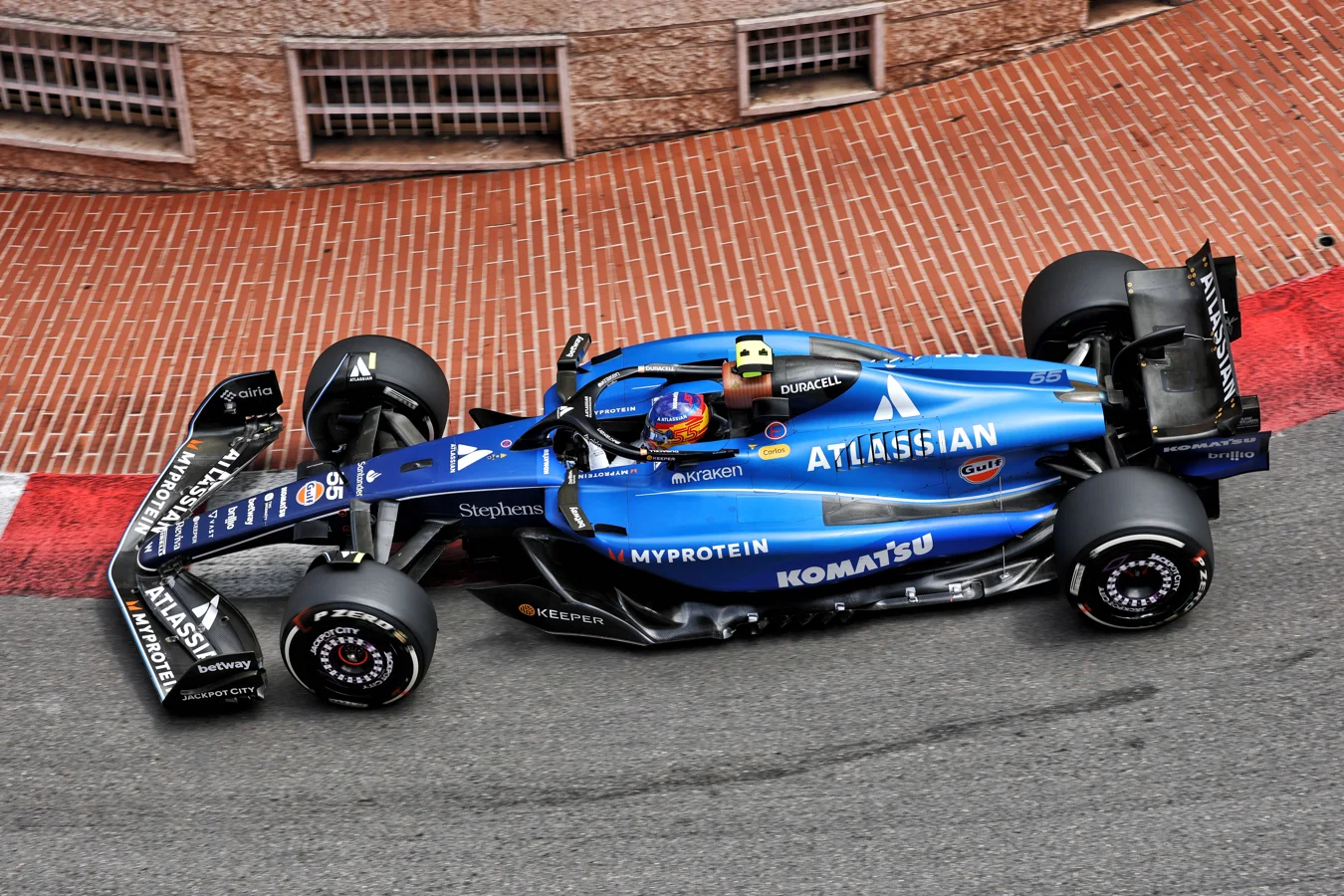
Carlos Sainz, the Williams driver, has expressed doubts about the expected disruption in Formula 1 caused by the FIA’s new clampdown on flexi-wings, stating that the effect on team performance will likely be minimal despite widespread speculation. The updated static load tests on front wings, starting with the Spanish Grand Prix in Barcelona, aim to curb excessive flexing that affects aerodynamic efficiency.
The change requires all teams to introduce revised front wing designs to comply with the stricter rules, marking a significant regulatory moment ahead of the 2025 season. Though many have predicted that the clampdown could lead to notable shifts in competitive balance—particularly spurred by comments from Sainz’s team principal James Vowles suggesting front-runners might suffer most—Sainz believes these concerns are overstated.
He emphasized the limited performance swing that can be expected from stiffer front wings, suggesting only minor gains or losses.
“There has obviously been a lot of talk regarding this,”
Sainz said.
“I don’t think it’s gonna affect teams and people as much as the people think or tend to be made up about this change of regulation. It’s still a front wing. Obviously, it will run a bit stiffer and it will not flex as much as it did. I wouldn’t expect more than one-tenth swing up or down through the field for each team depending on how much you were flexing or not. I don’t think it’s going to be a lot in it.”
Marginal Timing Differences and Their Impact in Qualifying
When acknowledging that even a tenth of a second can alter grid positions by several spots, especially within the midfield, Sainz accepted the point but remained composed about its overall ramifications.
“That is true actually, especially in our midfield area,”
he remarked, underlining how tightly packed the competition is but implying it will not drastically reorder the hierarchy.
He further pointed to the advanced tools available to teams that help manage car balance and adapt to new constraints. Sainz noted,
“Nowadays we have a lot of tools, mechanically and aerodynamically to tune these cars,”
adding,
“So even if it’s going to be more of a challenge we still have three practice sessions to see where the car is at in FP1 and to take steps to fine-tune it and get back to our decent place.”
He estimated that teams have already simulated the effects extensively, increasing readiness for the new regulations.
“These days F1 teams are too well prepared in this sense to counter this kind of change,”
he concluded.
McLaren’s Lando Norris Unworried About New Flexi-Wing Limits
McLaren, who were involved in last year’s ‘mini-DRS’ controversy in Baku and were compelled to alter their design following FIA intervention, also appear unfazed by the flexi-wing clampdown. Monaco Grand Prix winner Lando Norris was clear in his reaction when questioned on potential consequences for car balance or race strategy.
“No, not at all,” Norris straightforwardly replied, dismissing concerns. When pushed further about the possibility of subtle effects on car setup, he stated,
“There are little tweaks here and there. But no, nothing that will change how we have to do anything.”
Looking Ahead as Teams Adapt to Regulation Changes
The introduction of the stricter flexi-wing regulations in Barcelona signals a defining shift for Formula 1 aerodynamics, intended to reduce the ongoing debate and ensure fair competition. Given Sainz’s perspective and Norris’s dismissal of significant disruption, teams appear confident in managing the technical challenge without major upheavals.
This measured response suggests the clampdown will result in incremental rather than transformational change, with engineering departments relying on simulation tools and practice sessions to maintain competitive performance. As the field adjusts to the revised rules, observers will watch closely for any notable shifts during the Spanish Grand Prix and beyond, shaping the outlook for the forthcoming seasons.
