
The recent Atlanta Cup race has ignited tensions within the NASCAR community, largely due to Carson Hocevar’s aggressive racing tactics. During the overtime segment, Hocevar’s No. 77 Chevy made a forceful move that led to Christopher Bell’s No. 20 Toyota crashing out, costing Bell a chance at the win. The collision has drawn widespread attention because of the intense competitive style displayed by Hocevar.
Following the incident, Carson Hocevar notably declined to communicate or apologize to Christopher Bell, which surprised many fans and commentators, especially after Hocevar publicly apologized to 2023 champion Ryan Blaney. On the Gluckcast podcast, Hocevar explained his decision, emphasizing that expressing regret would likely not prevent any retaliation on the track.
“I feel like we’re racing. I don’t know what me saying anything would do for him. I don’t really like the conversation stuff. I feel like if he has to race me harder, me saying anything is not really going to change that. … I feel like everything is on the racetrack, and the rest is just noise.” Carson Hocevar said via the Gluckcast podcast.
Christopher Bell Responds with Reserved Comments
Before the Circuit of the Americas (COTA) race, Christopher Bell was questioned about the ongoing friction with Hocevar and gave a measured response. Bell acknowledged that both drivers have differing perspectives on the event and suggested that each will handle the fallout in their own way during upcoming races. His remarks hinted at an unresolved conflict that may continue to unfold in future competitions.
“Yeah, certainly I’ve gone back and looked at it. So, I’ve got my perception of what happened, and he has his, so that’s it. Everyone handles situations and conflicts differently, and I have my ways of going about it and he has his ways of going about it, so that’s what I’ll say on that.” Christopher Bell told The Athletic’s Jeff Gluck.
Hocevar Embraces New “Hurricane” Nickname Amid Mixed Reactions
Over the past two weeks, Carson Hocevar has earned a new nickname, “Hurricane,” reflecting his aggressive and forceful racing approach. Initially skeptical about the label catching on, Hocevar shared on the Gluckcast that he did not expect commentator Leigh Diffey’s nickname for him to gain traction so quickly.
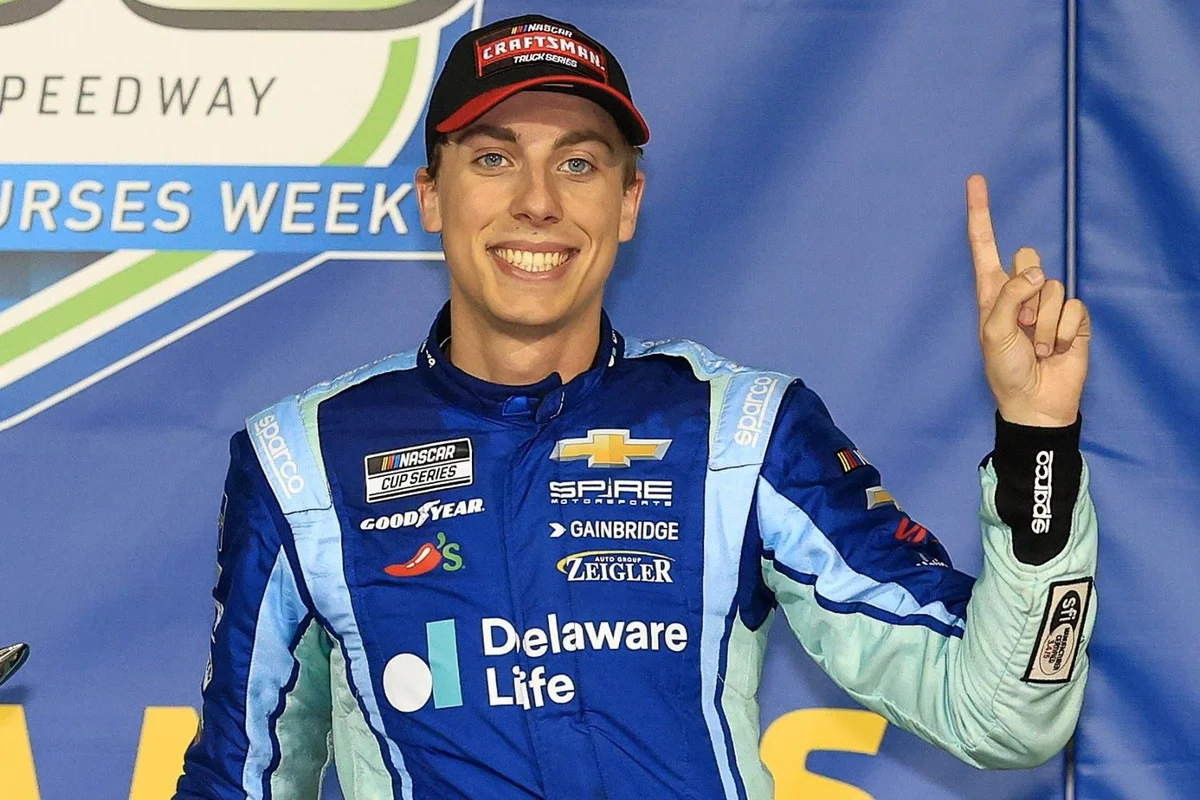
“Yeah, I wasn’t sure how much they were gonna use it because, obviously, it was Leigh Diffey saying it, and I was like, ‘Man, you’re not gonna hear that thing till next year in the fall, and I was like, I don’t know, they might have something different.’” Carson Hocevar said.
Hocevar views the nickname as a compliment and is optimistic that fans will gradually accept it. He also joked about potentially marketing merchandise featuring the nickname if the popularity continues to grow, emphasizing that nicknames must come naturally from others rather than being self-assigned.
“But, when FOX [did it], I was like, ‘OK, I guess we can make a shirt or something.’ I take it as a compliment. You can’t nickname yourself anything, it’s gotta come natural, it’s gotta come from somebody else.” Carson Hocevar added.
Implications for Hocevar’s Reputation and NASCAR Dynamics
Carson Hocevar’s aggressive racing style and apparent indifference towards off-track confrontations have stirred frustration within the NASCAR community and raised questions about sportsmanship on the circuit. His refusal to soften tensions with Christopher Bell could increase intensity in future races and alter driver relationships. The nickname “Hurricane” perfectly encapsulates Hocevar’s on-track persona, signaling that his competitive conduct will remain a significant factor for opponents and fans alike.
As Hocevar advances with Spire Motorsports, how he balances his fierce competitiveness with maintaining professional respect will be critical for his career trajectory. Meanwhile, the simmering dispute with Joe Gibbs Racing’s Bell has the potential to lead to further dramatic moments in upcoming events, making this rivalry one to watch closely.
