
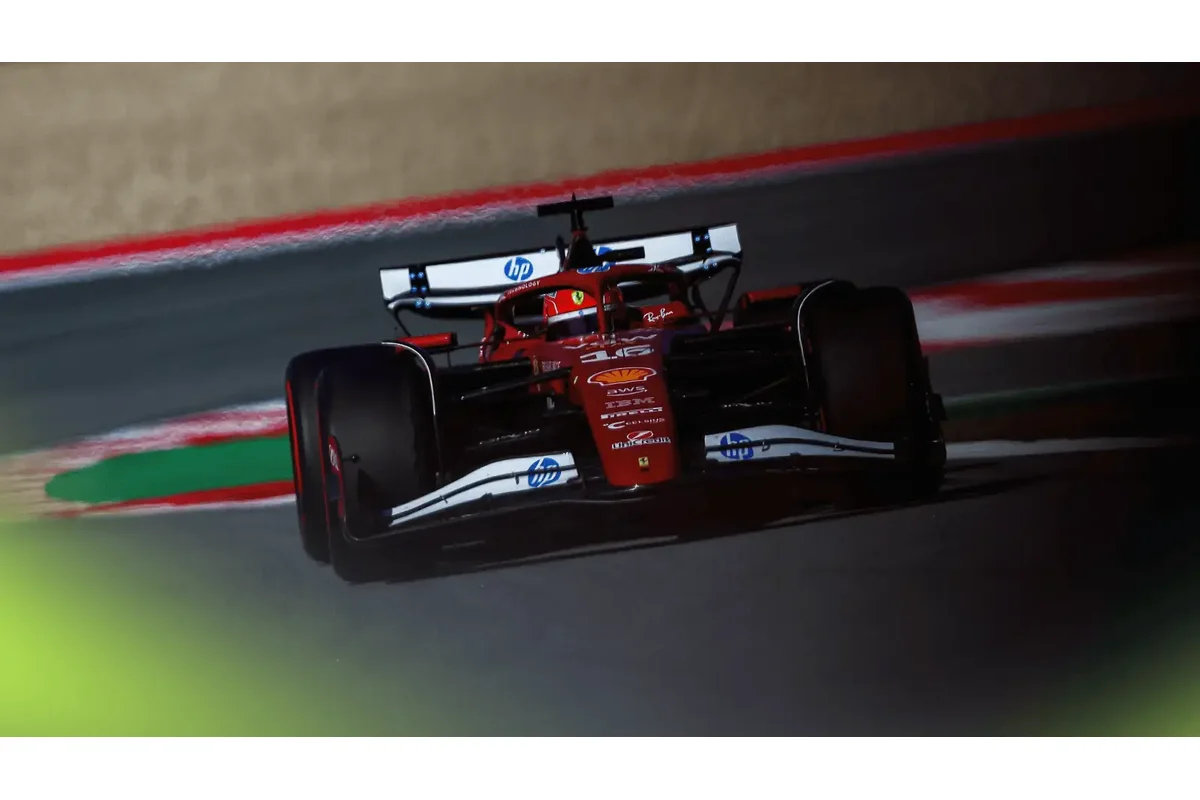
Ferrari is preparing to shake up the Formula 1 landscape with the much-anticipated Project 678, scheduled for launch on January 23rd, just before Barcelona‘s pre-season testing. At the center of this movement is Charles Leclerc, who turned heads during the season finale in Abu Dhabi with his unconventional experimental setup, giving fans and analysts new reasons to speculate about Ferrari’s next steps and how the team intends to position itself in an evolving, competitive world of F1.
Leclerc’s Abu Dhabi Experiment Fuels Talk of Change
Charles Leclerc endured a season of ups and downs, securing seven podium finishes, while his new teammate, Lewis Hamilton, found it difficult to make a mark in his first year with the team. Yet, it was Leclerc’s bold approach during the Abu Dhabi race that drew serious attention from team principal Fred Vasseur, especially as Leclerc finished just off the podium behind McLaren’s champion Lando Norris. This performance has sparked widespread debate: Could Leclerc’s approach signal a shift in Ferrari’s engineering direction for its 2026 F1 car?
Vasseur Foresees Major Transformation Under Upcoming Regulations
Fred Vasseur, guiding Ferrari through these critical moments, underscored the fundamental changes looming for car design across the grid. As Vasseur put it,
“Half of the car will be different.”
The 2026 season stands to transform Formula 1 with the introduction of 50% electrification, the use of sustainable fuels, and major advancements in active aerodynamics. Reflecting on this transition, Vasseur remained pragmatic about the road ahead:
“The issues we faced in 2025 won’t be the same next year, but we will certainly face new ones.”
The sweeping regulation changes mean every team, including Ferrari, will face new technical puzzles and competitive uncertainties.
Tire Management: A Defining Factor in the 2025 Season
The past season’s defining challenge for Ferrari was tire management, a factor that had implications for both strategy and race outcomes. Vasseur highlighted the razor-thin margins with a specific example:
“In Mexico, even a slight difference in tire temperature could mean the difference between qualifying in P2 or P5.”
This constant struggle underlined the intense competition, where minute details can dictate success or failure over the course of a Grand Prix weekend.
Setback and Recovery: Learning from Challenges in Abu Dhabi
During the Abu Dhabi race weekend, Ferrari encountered significant difficulties with their initial setup, leading to urgent adjustments in pursuit of better performance. Vasseur described the pressure at play:
“It’s a matter of tenths of seconds; a poor start can plunge you from P4 to P14 in no time.”
Despite these early challenges, Ferrari managed to regroup and recover, attributing this resilience to the relentless work from both the Maranello base and the trackside crew.
Introducing Two Stages of Project 678 for 2026
Ferrari’s plan for Project 678 is ambitious and detailed, featuring two distinct versions for the 2026 campaign. The first car will debut in Barcelona as a launch-spec model, specifically targeting design validation for engine packaging and the integration of a revamped power unit. A second, B-spec version will follow in Bahrain for further examination and refinement ahead of the main season. This two-step unveiling strategy is designed to keep Ferrari competitive amid innovations from rivals such as Red Bull, who are developing their RB22 with dual pushrod suspension technology.
The Road Ahead: High Expectations and Intense Rivalries
The unveiling of Project 678 has sparked considerable anticipation throughout the Formula 1 community, fueling hopes that Ferrari can regain its competitive edge in a period defined by electrification and technological evolution. Alongside Charles Leclerc, teammates and figures such as Lewis Hamilton and team principal Fred Vasseur face mounting expectations. With fierce opponents like McLaren’s Lando Norris and Red Bull driven by Max Verstappen, the upcoming season promises drama, innovation, and stories that will shape F1’s future.
