
In anticipation of the 2026 All-Star Race at Dover Motor Speedway, Dale Earnhardt Jr. and Chase Briscoe outlined a bold vision to reshape the event by introducing a multi-class NASCAR format. Their idea centers on including playoff drivers from the three national series, combining the Truck Series, Xfinity Series, and Cup Series into one high-stakes competition.
This proposal aims to enhance the spectacle while maintaining the exclusivity of the race. Dale Earnhardt Jr. emphasized the importance of the event remaining invitation-only, with entries extended solely to deserving drivers, rather than opening the field to all participants.
Rationale Behind Integrating Multiple Series
The discussion began with Junior highlighting a conversation he had with Marcus Smith, CEO of Speedway Motorsports Inc., who expressed interest in increasing the number of cars on the grid. While Junior agrees on expanding the field size, he insists on a selective approach. He visualizes a 30 to 40 car race featuring all-star drivers from Trucks, Xfinity, and Cup.
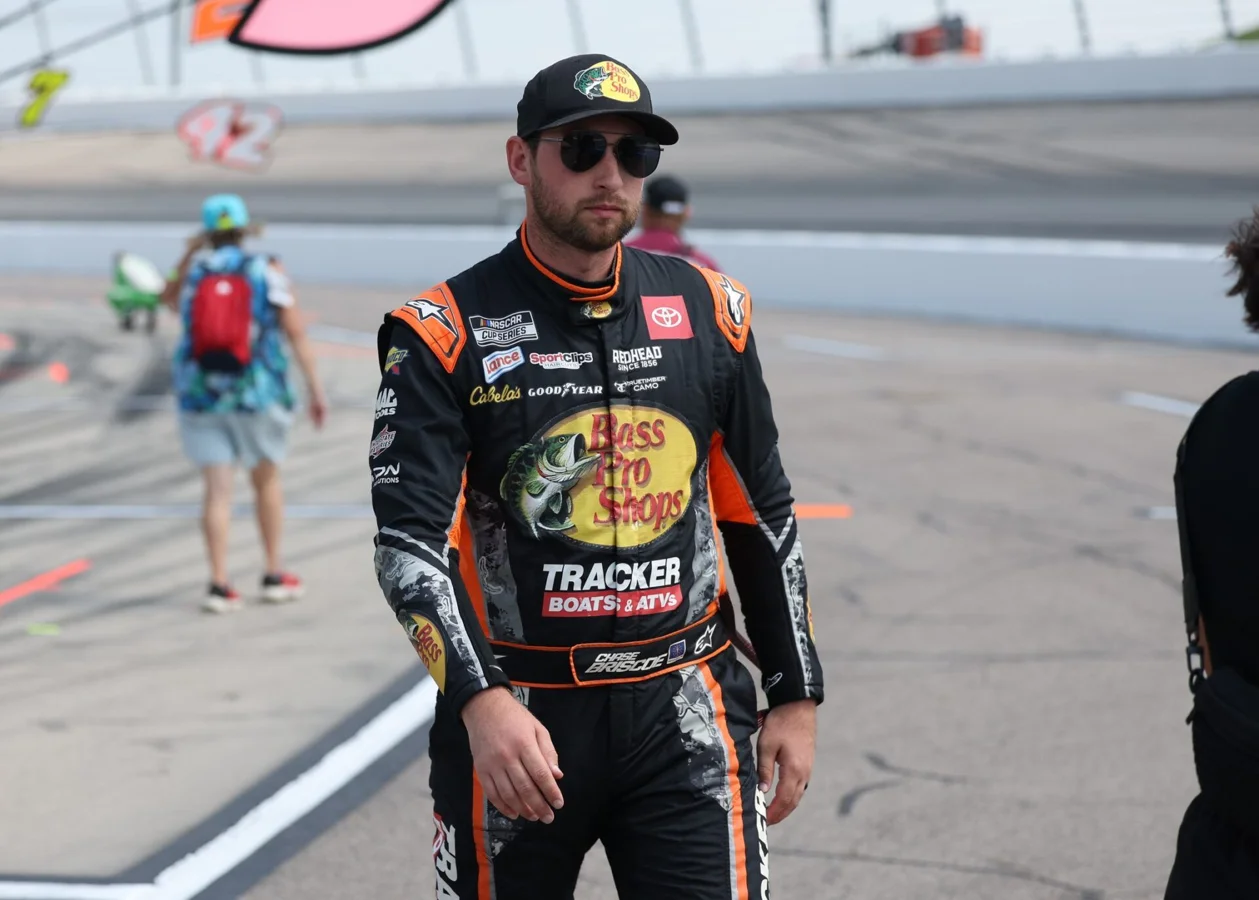
Chase Briscoe shared his experience competing alongside drivers from multiple series, recalling it as a “pretty wild” challenge. He believes such a format would generate strong fan interest and attract larger crowds to the tracks.
Influence from IMSA and Endurance Racing
Earnhardt Jr. drew inspiration from the multi-class racing model commonly seen in IMSA endurance events. Working as a broadcaster for NBC Sports during the 24 Hours of Daytona opened his eyes to the potential of blending different categories in NASCAR races. He envisions a similar multi-class endurance event lasting three to four hours, possibly at iconic venues like Daytona.
He explained,
“When I went to the 24 Hours and was broadcasting that with NBC Sports, that’s what made me want to see NASCAR do something similar. Whether it’s a three or four-hour race, getting two classes together.”
—Dale Earnhardt Jr.
Briscoe Reflects on the Challenges of Multi-Class Racing
Briscoe recounted his limited but instructive experience driving alongside multiple classes in IMSA, where he had the challenge of managing interactions between higher-powered cars and lower-powered vehicles on track. He humorously noted,
“The multi-class thing is pretty wild when you are out there.”
—Chase Briscoe
One of the key advantages they identified was the valuable opportunity for lower-tier drivers to develop their skills through competition against Cup Series participants. This exposure could also elevate their profiles, making it easier to secure sponsorships, helping their careers progress.
Operational Considerations and Potential Benefits
One practical challenge mentioned was the shortage of spotters, as many currently cover all three tiers across NASCAR. Junior remarked that the shift to a multi-class format could create new employment opportunities within the sport, joking,
“It would be good for people who need jobs, Spotters who are looking for work.”
—Dale Earnhardt Jr.
Adding to the conversation was NASCAR writer Bozi Tatarevic, highlighting the potential pushback from fans wary of sports car influences infiltrating NASCAR’s traditional format.
Implications of the Multi-Class NASCAR Format Proposal
This proposed multi-class NASCAR format presents a notable shift that could fundamentally change how the All-Star Race and potentially other events are conducted. By combining national series playoff drivers, the event may become more thrilling and inclusive while maintaining high competitive standards. The drivers’ exchange of skills across tiers could accelerate development throughout NASCAR’s ranks.
However, the operational complexities, such as managing more cars and ensuring sufficient spotter coverage, require careful planning. If successful, this shakeup might pave the way for endurance-style events in NASCAR, borrowing proven elements from IMSA and transforming fan experiences at marquee races.
