
The Daytona 500 climaxed with chaos as multiple cars crashed near the finish line, with Tyler Reddick securing the victory on Sunday. Among those involved was Chase Elliott, who suffered a severe hit against the wall just before crossing the start/finish line after being struck from behind by Riley Herbst, who lost control of his No. 35 car.
Elliott expressed his frustration following the incident, highlighting the challenge of navigating the closing moments while avoiding collisions.
Chase Elliott details moments before impact
Reflecting on his final lap struggle, Elliott shared,
“I just felt like I was going to get crashed if I had tried to throw another move on him,”
according to Toby Christie. He described trying to maintain position and sought a final push to the finish line, but faced resistance from Herbst’s car, which did not cooperate with a push and eventually caused the crash that involved Elliott.
He also admitted uncertainty over his options, saying,
“Maybe I should have just turned left, wrecked the first time.”
Lead battle and escalating tension
Despite the risks, Elliott chose to race cleanly and capitalized on a powerful push from Zane Smith to take the lead heading into the final stretch. However, Reddick surged forward and executed a remarkable inside pass that put him ahead. Pursuing Reddick aggressively, Elliott felt the momentum shifting away from him.
“We got way out there and I knew that probably wasn’t going to be good,”
Elliott recalled per TSJ Sports’ Noah Lewis, acknowledging that his position left him vulnerable to a shift in momentum, which eventually came as opposing drivers converged behind him.
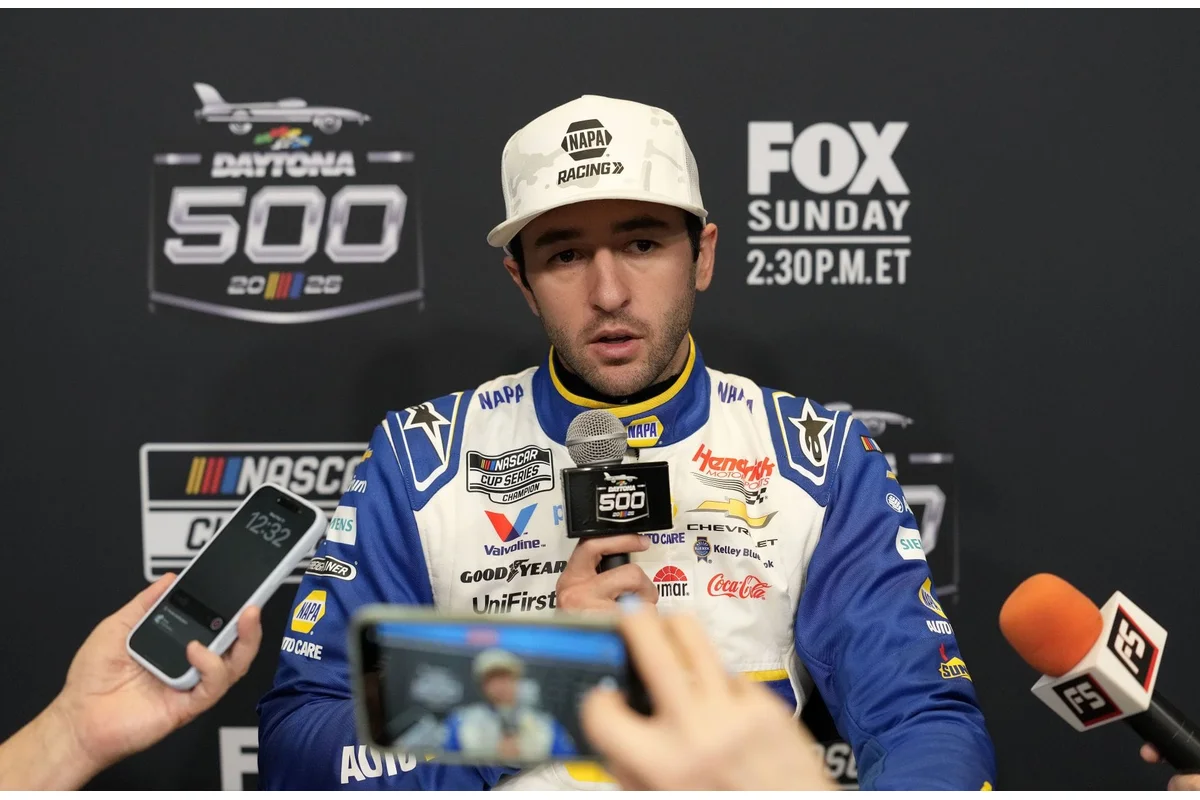
Elliott reflects on near victory and race dynamics
In the moments after the race, Elliott sat on the front of his car near the grandstands, visibly absorbed in how close he had come to winning. He acknowledged the unpredictability of the race’s style and the nail-biting final laps.
“Yeah, I just felt like Tyler was coming so quick. I kind of blocked one direction and he went the other way. Felt like if I had tried to throw another one I would have been spun out, wall or the inside. At that point nobody’s lifting, and I totally get that. Just obviously sucks to be that close there in the closing lap and have the lead off four and come up short. But I think the momentum had just shifted the other direction and it was just all defense and being on defense in the last lap is tough,”
Elliott remarked.
He emphasized his usual focus and competitive mindset:
“Yeah, I mean I’m not the type of person that ever like lets myself get there in the first place, so I knew it wasn’t over.”
He added,
“At the end of the day, that’s part of this style of racing. I knew we were racing back to the line. They seemed pretty keen on wanting us to race back to the line or they would have thrown the caution a long time before that.”
“I felt like we were coming back to the line and I had the sensation that the momentum had shifted back the other way. At that point it was going to be tough sledding. And unfortunately it was,”
he concluded.
Implications of the crash and what lies ahead
The intense conclusion to the Daytona 500 demonstrated the fine line drivers must walk between aggressive moves and caution in the closing laps, especially on a superspeedway. Chase Elliott’s experience reflects both the thrills and perils of NASCAR’s high-stakes racing, where momentum can instantly change and outcomes swing in mere seconds.
With Elliott showing strong form and determination, future races are expected to feature his continued pursuit of victories. The lessons from this race may influence how drivers tactically approach late-race battles to avoid wrecks and maximize their chances of winning.
Chase Elliott disappointed to come off of Turn 4 with the lead and end up crashed in the Daytona 500. Elliott took exception with Riley Herbst wrecking him, and wondered if he should have just turned left an wrecked before he got to that point. pic.twitter.com/z7peHD9LCt
— Toby Christie (@Toby_Christie) February 15, 2026
.@chaseelliott had a chance…he talks through the final lap and seeing that chance go away. #NASCAR pic.twitter.com/2UFn0GtDb0
— Noah Lewis (@Noah_Lewis1) February 15, 2026
