
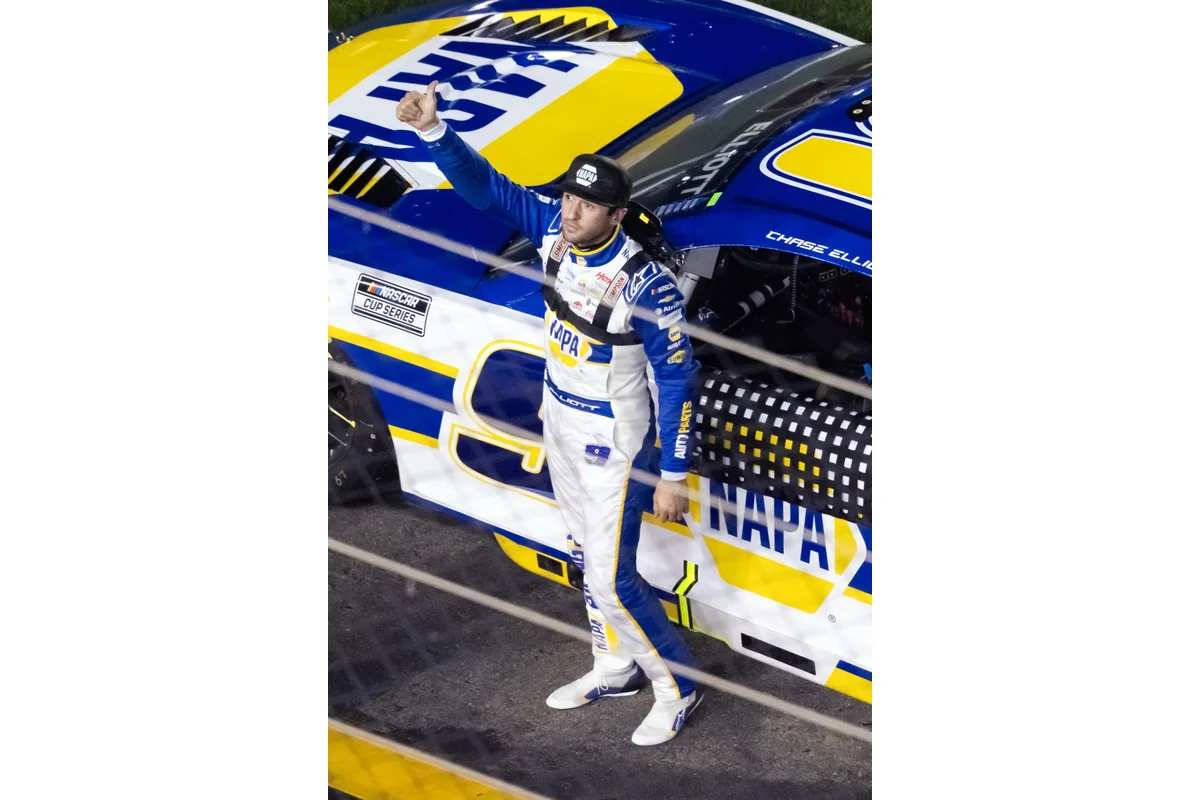
Chase Elliott, the victor of the second Daytona Duel, shared key observations after his performance ahead of Sunday’s main event at Daytona International Speedway. Reflecting on the race held recently, Elliott highlighted the intense pace and aggression as vital learnings that could impact strategy for the upcoming event. He noted that unlike typical Duel races, which often maintain a moderate tempo and lower energy, the evening’s race surged with faster and more dynamic competition, offering valuable experience for his team.
Adapting to Challenging Track Conditions
Elliott explained that during the Duel, he found himself leading both the outside and bottom lanes at times, which helped him anticipate how his car would handle on the warmer track expected on race day. He emphasized that although the car’s balance felt optimal during the Duel’s cooler conditions, Sunday will likely present at least twice the difficulty due to lower grip levels and increased temperatures. These factors will test handling and require precise adjustments.
Predictions on Potential Chaos in Sunday’s Race
When asked about teammate Joey Logano’s prediction of Sunday’s race turning into a “wreck-fest,” Elliott agreed that the race could indeed become chaotic. He pointed out that the cars had moments of instability throughout the Duel, especially during packed racing and late-race maneuvers. He described how being pushed aggressively by competitors like Carson amid high-speed racing exposed the cars to losing control unexpectedly.
Elliott explained that the nature of the superspeedway demands space for drivers to find speed, particularly later in the race when competitors refuse to yield, often leading to close-quarter racing and increased chances of collisions. He outlined how the track’s aging surface requires drivers to spread out more, but late-race intensity often prevents this, further heightening risks.
Experience and Technique for Short Superspeedway Races
Chase Elliott reflected on how prior experience helps drivers adapt quickly in shorter superspeedway races like the Duel and the main race. He mentioned that while the off-season break can cause some rust, his maturity and years of racing enable him to regain rhythm rapidly. Elliott also noted that the short turnaround between races aids maintaining consistency and making split-second decisions during intense competition.
Pit Stop Challenges and Strategies During the Duel
Discussing his pit stop strategy, Elliott revealed that the shifts in lane leadership and fuel consumption complicated synchronized pitting with partners, forcing him to pit without his usual team alignment. This was because both he and fellow racer Denny Hamlin led different lanes extensively, which naturally increased fuel burn and disrupted planned pit stop timing. Despite this, Elliott managed to pit effectively by coordinating with nearby drivers and emerging with competitive positioning alongside Hamlin and Erik Jones.
Weather Factors and Their Effect on Car Setup
Looking ahead to Sunday, Elliott acknowledged that potentially strong southern winds and variable weather could add complexity to car handling, particularly in the challenging turn four area where the track narrows. He explained that wind can push drivers out of their ideal line in this critical segment, increasing the difficulty of maintaining speed and control. While the possibility of rain remains uncertain, Elliott stressed the importance of preparing for whatever weather conditions might arise.
Defensive Racing and Managing Late-Race Pressure
On the final lap of the Duel, Elliott faced a powerful challenge from car number 77, which aggressively pushed him down the backstretch. He described the delicate balance involved in defending his position without triggering a crash, emphasizing that sometimes blocking maneuvers result in multi-car incidents. Rather than purely reacting, Elliott focused on making smart decisions to avoid dangerous situations while preserving his chance to win.
He praised Carson’s skillful pushing in the closing laps and highlighted the risks that come when changing lanes late in a race if other drivers don’t follow, which could drastically ruin a competitor’s finish. Elliott admitted that while he did not have a full view of the action behind the cars, the overall outcome was manageable and expected the main race to be even more demanding.
The Unique Nature of Racing at Daytona
Elliott commented on the widespread notion that racing at Daytona, especially in these Duels, is inherently sketchy due to the track’s characteristics and pack racing style. He conveyed that even with extensive practice, it is nearly impossible to replicate the high energy and precise grip conditions drivers experience during competitive races. He prefers racing in real events to gain genuine insights, accepting that miscalculations in setups are part of the learning process going into the main event.
Value and Impact of Duel Victory
While recognizing the importance of winning the Duel, Elliott downplayed how much it boosts morale or momentum since he and his team have been in similar situations before. He explained that the key advantage the victory provides is securing a favorable pit stall for Sunday’s race, which has been a critical factor in previous years. The tougher conditions on pit road, with all stalls occupied and limited openings for entry and exit, make this strategic edge even more meaningful.
Chevrolet’s Body Improvements During the Race
Regarding the Chevrolet body used in the Duel, Elliott noted slight improvements, particularly in the car’s pushing ability. Though he did not spend significant time pushing closely alongside other cars, he observed better pace in the closing laps, both when being pushed and leading, suggesting that the vehicle design is incrementally more competitive in pack racing scenarios. However, he acknowledged that some aspects remain uncertain and require ongoing evaluation.
Working with Carson and Handling Criticism
Elliott defended teammate Carson’s racing style during the Duel, stating the aggressive moves displayed were methodical and based on their experience working together in Super Late Model racing. He recognized that some fans and commentators have criticized Carson’s tactics but pointed out that learning curves are common in racing careers. Elliott expressed confidence in Carson’s maturity and contributions, especially in supporting their lane’s speed toward victory.
Unpredictability of Favorites in the Next Gen Era
Reflecting on the current NASCAR landscape since the introduction of the Next Gen car, Elliott remarked that dominant favorites have become less obvious compared to previous years. He recalled seasons when standout drivers or teams would clearly show speed advantage by race weekend, making it easier to identify potential race winners. Now, however, he believes cars are more evenly matched, with success largely dependent on situational factors such as drafting partners, race circumstances, and execution rather than inherent superiority.
Anticipation for Sunday’s Race and Beyond
Chase Elliott’s insights following the second Daytona Duel highlight the unpredictable and intense nature of the upcoming main event. His observations on track conditions, competition intensity, strategy, and weather challenges underscore the complex factors drivers face at Daytona International Speedway. With the Chevrolet team showing enhancements and teammates collaborating effectively, the race promises to be tightly contested. Elliott’s cautious optimism reflects his readiness to adapt and compete in what could be a chaotic and thrilling superspeedway challenge on Sunday.
