
Christopher Bell secured an intense victory at Bristol Motor Speedway, overcoming earlier frustrations experienced during the season. His crew chief, Adam Stevens, reflected on Bell’s notable radio outburst at Gateway, explaining how such moments of frustration are a natural part of racing.
Although Bell finished in the top ten at Gateway, he openly criticized the team’s pit strategy on the radio, signaling his dissatisfaction with his performance compared to Joe Gibbs Racing teammates like Denny Hamlin and Chase Briscoe. Despite these setbacks, Bell’s team appeared to find their rhythm on Bristol’s challenging concrete surface, ultimately clinching a dramatic 500-lap win.
Stevens on Managing Frustration in Competitive Racing
After the victory, Stevens addressed Bell’s radio complaint from Gateway, highlighting the emotional intensity that comes with professional sports. He emphasized that the highs and lows are inherent to NASCAR, where drivers may only win a handful of races each season but face many more losses.
“You just got to take everything for what it is right, and sometimes frustrations build up and they get let out with just a pinprick.”
“That happens in professional sports, and it’s inherently frustrating when you’re only going to win five or six or seven of these if you do your best job and you’re going to lose about 30 of them, so you know it’s inherently frustrating, so it’s part of the sport and something you got to get past,” he added.
Saturday’s contest at Bristol revolved heavily around tire management, requiring Bell to make 12 pit stops during a caution-heavy race. After starting ninth, Bell’s strategic patience paid off as he led just 12 laps and crossed the finish line ahead of Brad Keselowski, who finished second after leading 33 laps. Several playoff contenders struggled to secure a top-10 placement in this demanding event.
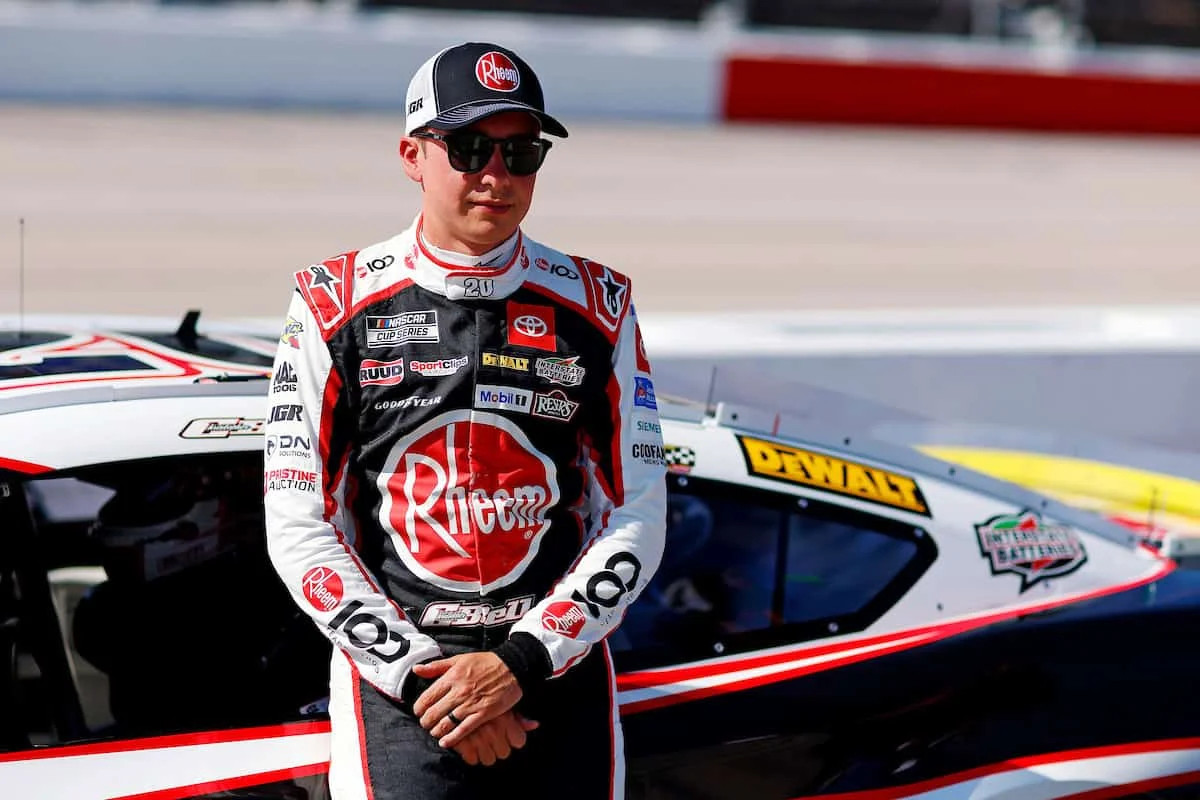
Bell Reflects on the Impact of Tire Issues During the Night Race
Christopher Bell discussed the unexpected difficulties caused by tire wear during the Bass Pro Shops Night Race at Bristol. Despite Goodyear supplying softer tire compounds intended for better performance, Friday’s daytime practice showed minimal wear, suggesting conditions would not be problematic. However, cooler evening temperatures significantly affected tire degradation once the race began.
The worn tires created loose marbles on the high-speed outer groove, forcing drivers to favor the bottom lane as the only viable racing line. Bell described the unpredictable nature of his victory, crediting a combination of strategy and luck amid the tire challenges and multiple caution periods.
“I never in a million years would have thought that my first win at Bristol would come with the tire fiasco like we had tonight. It’s a lot of luck involved whenever the tires go off like that, and especially whenever you have all the yellow flags, it’s just kind of about catching the timing right. Fortunately we did,” Bell said in an interview with SiriusXM NASCAR radio.
This race contrasted sharply with Bristol’s earlier spring event, where little tire wear resulted in fewer overtakes and a dominant performance by Kyle Larson, who led 411 laps. In the recent night race, drivers Ty Gibbs and Chase Briscoe held the lead for the most laps but eventually finished near the bottom of the top ten, underscoring the unpredictable nature of the event and Bell’s tactical success.
Significance of Bell’s Bristol Victory and Future Prospects
Christopher Bell’s triumph at Bristol marks a pivotal moment after a period of visible frustration, demonstrating resilience and growth in strategy execution. The race highlighted the importance of adapting to track conditions and managing tire wear, factors that heavily influenced the event’s outcome.
With this breakthrough win for the No. 20 team, Bell gains momentum and renewed confidence as the season progresses. His ability to overcome setbacks, combined with strategic expertise demonstrated at Bristol, suggests that Bell and Joe Gibbs Racing are positioned strongly for future challenges on diverse circuits.
