
Joe Gibbs Racing’s Christopher Bell spoke with the media on Wednesday ahead of the Daytona 500 about how changes to NASCAR’s playoff format will influence race strategies. Bell emphasized that the updated system will push drivers to carefully manage risks during the iconic season opener to preserve points throughout the year.
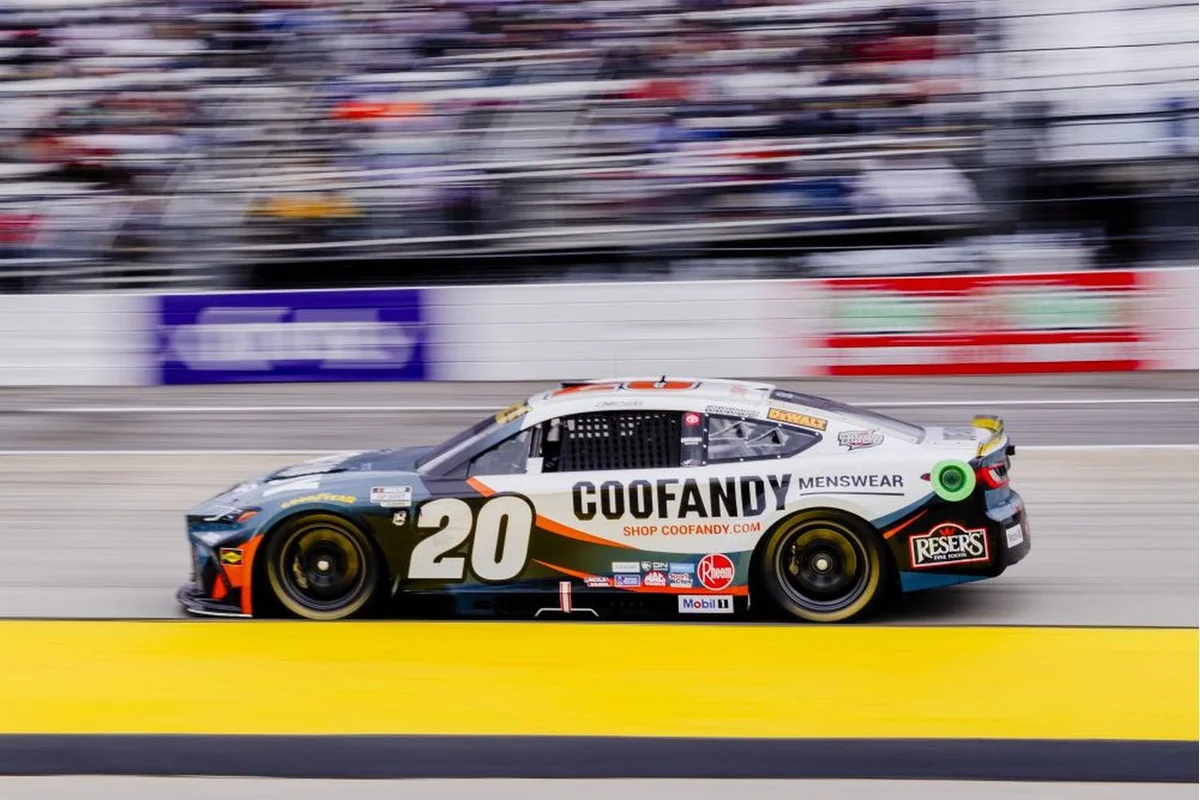
Bell, driving the No. 20 DEWALT/Interstate Batteries Toyota Camry XSE, stressed that with the new Chase playoff format starting in 2026, the mindset around the Daytona 500 is shifting significantly. He explained that, unlike previous years where drivers might lean into a win-or-bust approach at Daytona, the stakes of losing points due to wrecks have increased, affecting how drivers balance aggression with caution.
Impact of the Playoff Format on Race-day Risk Calculations
Reflecting on how the new points weighting changes the race dynamics, Bell said,
“The Daytona 500 in the past, with the previous format, it kind of gave it a win or bust mentality where you would lay it all on the line and go for the win and understand if you wreck out you’re going to be fine – hopefully you win a race in the next couple, right? Certainly, in the regular season. Where now, those points that you potentially lose if you do wreck out are going to matter a lot more. Yeah, the risk management of the Daytona 500 certainly becomes more of a talking point. Frankly, if you’re running second or third, you’re probably going to risk it all to win the Daytona 500 because it’s that big of an event. But I think if you’re running outside of that top 10, you’re going to be thinking about, ‘Hey, if I make a mistake here and get crashed out, I’m going to lose a lot of points.’ Every week is going to matter more now than it did in the previous format.”
Desperation and Drama: The Daytona 500’s High-Stakes Environment
When asked about the role of desperation at Daytona, Bell acknowledged its importance, although he pointed out past instances where desperation led to negative moments within the sport. He maintained,
“I would say in general I like it because it means so much to everybody. Looking back at the past last couple years in the sport, we’ve definitely had too much desperation at certain times that have created bad moments and bad looks for our sport, but the Daytona 500 I think is warranted. It’s a really big event, it’s a lifetime achievement and a career-making achievement if you’re able to win this race so I think it’s warranted.”
Challenging Tracks and Mental Focus in the Season
Bell identified Martinsville as one of the toughest tracks on the circuit for him personally. He recalled success in 2022 but acknowledged ongoing challenges, saying,
“Well, for me, it’s been Martinsville. I don’t know why that is, but it’s certainly been a track that’s had our number as a team for the last couple years. I had a great race there in 2022 and was able to find my way to victory lane, but we just haven’t been able to repeat that recently. Martinsville for me would be the biggest trouble.”
Regarding the final green flag pit stop, Bell explained the critical nature of positioning and race strategy, stating,
“Honestly, after the green flag stop you just hope that you find yourself in position. It’s what happens in the moments before that and what dictates who’s going to be in position to win the race. Those moments are critical in deciding who’s going to win the race and hoping that you make it through the wreck at the end. Typically, at the Daytona 500, and typically all of the superspeedway races, you find yourself saving fuel at the beginning of runs so you will rarely have yellow flags in the beginning of the runs. Once everyone starts pushing hard specifically at the end of the race, that’s when the big wrecks happen.”
Rising Intensity and Fleet Performance Late in Races
Bell described how the racing intensity changes dramatically between stage 3’s start and after the green flag pit stop.
“Oh, it’s night and day. You can see people starting to make more desperate moves and the pace picks up. Your cars start driving a little bit worse and you’ve got a lot of laps on your tires at that time. It’s night and day different.”
He added that once the field becomes tightly packed after pit stops, the playing field evens out, but critical moments revolve around pit road performance and fuel management.
“Once the field gets condensed after the green flag stop, you’re pretty landlocked and I’d say everyone is on a pretty level playing field. But it’s the moments during the green-flag cycle, getting to pit road, getting off pit road, getting in and out of your pit box, that’s where the driver really makes a different. And, then saving fuel. That’s a hot topic with the speedway racing, but it’s a super important strategy key that you have to be able to save more fuel than your competitors and shorten that pit stop up because that puts you in front of the pack.”
Experience in Drafting and Race Partners
Bell emphasized the value of experience over recent performance when selecting teammates to draft with during races.
“It’s definitely more important that they have experience.”
Maintaining Prestige in the Daytona 500 and Its Challenges
When questioned about whether the race’s prestige has changed, Bell responded,
“From outside of the industry, I’d say the answer is probably no. From inside the industry, since I’ve been in the sport, I’d say no, but I think as a sport we can make changes to our product — to our rules package — to add more prestige to this event for sure.”
Regarding the extreme conditions when leading the pack and potential wreck risks, Bell recalled his own experience with last year’s accident and noted the aggressive nature of racing at the front. He said,
“Not at that point in time. I prior to my wreck (last year) that I was likely going to end up on the hook and not see that checkered flag. I said it after that race – I don’t blame Cole Custer. He was doing what he had to do to help himself finish well, help me finish well. You have to push in that situation and unfortunately, I wasn’t able to take it, and my car was all over the place and I lost it and hit the wall.”
Qualifying for Daytona 500 and Its Limited Race Impact
Discussing the rarity of pole sitters winning the Daytona 500, Bell noted the importance of luck and race-day conditions over qualifying speed.
“I think it kind of goes hand in hand with the fact that you trim out the car to qualify well, it probably won’t race as well mixed with the fact that it takes a lot of luck to win this race. You’re never out of it until you’re out of it and qualifying has very little input on the race.”
Personal Growth and Offseason Preparation
Bell shared insights into his mental approach throughout challenging seasons, acknowledging his tendency to focus too much on negative moments.
“I’ve learned that I dwell on too much on the negatives for sure. I was talking about this a little bit earlier today – one of my strengths is I never get too high when I’m succeeding but one of my weaknesses is I get too down whenever I’m not running well. You’ve got to be able to ride those highs and ride those lows and stay pretty even keel through it all. That’s something that I certainly need to do a better job of.”
Reflecting on his recent offseason, Bell explained,
“I would say it was very similar, very normal. Everybody took a lot of time off, a lot of separation. We spend a lot of time around each other throughout the season so whenever that checkered flag falls in Phoenix, you’re excited to take a break for sure. I think everyone on this 20 group is super optimistic about the format change and we think it should play well into our favor.”
Toyota’s Efforts to Improve Superspeedway Performance
Bell credited Toyota with making significant strides to enhance their competitiveness on superspeedways in recent years. He joked about luck’s role but acknowledged ongoing improvements in qualifying and race pace.
“Toyota certainly has put in a ton of effort in trying to become better at these races. I do joke around and say it’s luck, but you look around at Ford and what they’ve been able to do in these races. They’ve pretty much dominated them and with that being said, I don’t think they necessarily get the wins that they should out of it which is why it takes a lot of luck to win these races. Toyota has put in a lot of effort to try and run better, qualify better and I’d say we’re seeing that. We had multiple cars in position to win this race last year and unfortunately none of them made it to the start-finish line. We have put in a lot of effort.”
Adapting Mentality with the New Playoff Format
Addressing how the new playoff system influences his mindset, Bell noted the increased importance of risk management throughout the season.
“I think it really tilts the risk management skill. If you’re in the top two or three of the Daytona 500, you’re obviously going to risk it, but if you walk out of Daytona with a DNF like I did last year, it’s going to hurt you a lot more in 2026 than it did in 2025. I love the changes they made to the format because it weights races a lot more equally. Before you had that championship race at that championship track that if you weren’t good at Homestead – I lived that through the Xfinity cars – that you were never going to be a champion and if you weren’t good at Phoenix – you were never going to be a champion. That should not crown – one race should not crown a champion. And now, all 36 races are going to be weighted way more equally which I think is super important.”
Confidence Ahead of the Season Opener
Looking ahead to the Daytona 500 kickoff, Bell declared that he is fully prepared mentally and physically.
“I think I’m at 100 percent. I’m ready, man. I’m ready. We’ve been recharging all offseason. I’m ready.”
