
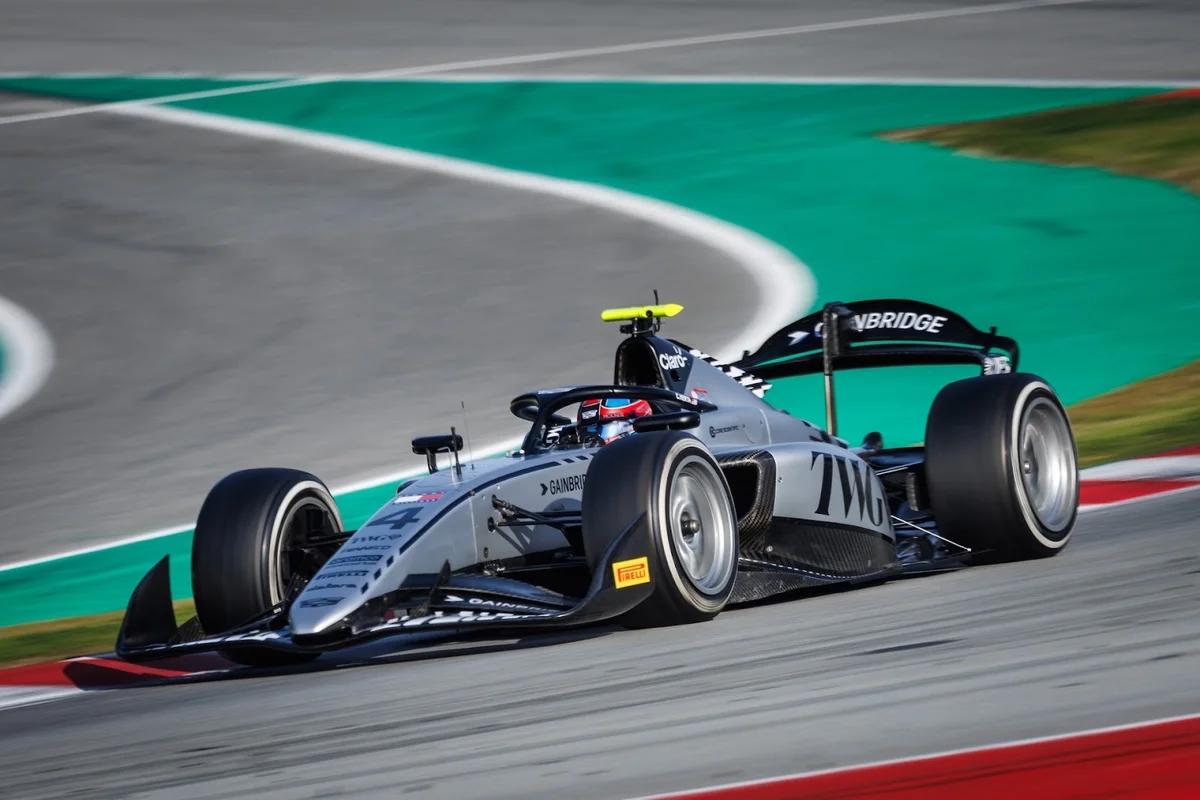
Colton Herta is undertaking a remarkable career shift by leaving behind his successful run in IndyCar to pursue a full season in FIA Formula 2 with Hitech while simultaneously taking on the role of Cadillac’s Formula 1 test driver. This move, aimed at securing an F1 race seat by 2026, has attracted significant attention across the motorsport community due to its high stakes and uncertain outcome.
Choosing Europe Over IndyCar for a Formula 1 Dream
While many American open-wheel talents build their careers exclusively in IndyCar, Herta is charting a different course. Having already become the youngest winner in IndyCar history and a consistent front-runner, his achievements in the series are unquestionable. However, his ambition lies in reaching Formula 1, and IndyCar’s structure does not provide a dependable gateway to the sport’s pinnacle.
The primary obstacle is the FIA Super Licence points system, which mandates drivers to earn sufficient points in recognized championships to qualify for an F1 seat. Although IndyCar awards some points, the amount falls short compared to European feeder categories such as Formula 2. Without accumulating enough points and gaining direct exposure to F1 teams, a driver’s chances of entering Formula 1 remain slim, regardless of talent. This structural challenge is at the heart of Herta’s decision to pivot back to Europe.
Cadillac’s Entry into Formula 1 Presents a New Opportunity
Cadillac’s forthcoming debut as a manufacturer in Formula 1 in 2026 opens doors previously unavailable to drivers like Herta. The team requires drivers and development personnel to support its F1 entry, making Herta’s role as a test and development driver crucial. His dual responsibilities allow him to compete in Formula 2 while gaining valuable seat time and experience in F1 through testing and free practice sessions with Cadillac’s car.
This collaboration is designed as a structured development pathway rather than a promotional stunt. By competing in F2, Herta can gather the necessary Super Licence points and refine his skills on European circuits, while his work with Cadillac’s engineers during F1 sessions builds his familiarity with F1 machinery and race conditions. Both components are essential to prepare him for a potential race seat in the future.
The Risks Behind the Ambitious Plan
Analysts in motorsport widely recognize Herta’s move as a considerable gamble. Leaving behind a secure and competitive IndyCar seat means relinquishing guaranteed race wins and established prominence in a top-level series. Entering Formula 2 involves adapting to new, highly competitive equipment, with immense pressure to perform immediately.
Failure to achieve strong results quickly in F2 could slow down or even derail Herta’s Formula 1 aspirations by raising doubts about his readiness for the highest level. The window for advancement is narrow, and success depends on numerous factors aligning perfectly in a timely manner. The stakes are high, rendering this transition a significant professional risk.
Defining Success on the Road to Formula 1
To secure a spot on an F1 roster, Herta must demonstrate strong, consistent performances in Formula 2, challenging at the front of the field and proving his ability to meet the demanding standards of F1 teams. Success in this feeder series directly influences the likelihood that Cadillac will offer him a full race seat for 2027 or later.
Equally important are his contributions during F1 practice and testing sessions. These outings not only provide critical technical feedback to Cadillac’s engineering team but also accumulate points toward his Super Licence tally, both vital for his eligibility and readiness to compete at the top level.
For Cadillac, cultivating an American driver who progresses from development roles to a race seat aligns with their strategic interest in promoting homegrown talent within their Formula 1 program. If this plan bears fruit, the partnership would highlight a rare continuity from the initial stages of driver development directly into the F1 grid.
An Emerging Shift in American Motorsport’s Role
Herta’s trajectory mirrors evolving dynamics in the motorsport world, especially as Formula 1 deepens its presence in the United States. Growing interest from manufacturers and teams to cultivate American drivers reflects this trend, with opportunities expanding accordingly.
His attempt also raises a broader question about the feasibility of a driver returning to the European developmental ladder after establishing a career elsewhere and still making it to Formula 1. Historically, such a path is uncommon and challenging; Herta’s journey could demonstrate a viable alternative approach for future American talents.
The Stakes as 2026 Approaches
Colton Herta’s decision to leave a secure IndyCar future behind demonstrates ambition that carries inherent uncertainty. The upcoming 2026 season will serve as a critical test, with his performance in Formula 2, progress in F1 test sessions, and Cadillac’s strategic decisions shaping his chances.
Observers will closely follow his results and how Cadillac supports his development, as the opening of the driver market late in 2026 will likely determine the availability of race seats. If successful, Herta’s career move could be remembered as one of the most calculated and daring gambles in recent motorsport history, potentially opening new pathways for future American drivers seeking Formula 1 careers.
“Herta is walking away from a front-running IndyCar seat, guaranteed race wins, and high visibility in a series where he’s already established.”?Motorsport Analyst
“Cadillac has been clear this isn’t a marketing stunt. It’s a structured development plan, and Herta is at the center of it.”?Cadillac Team Representative
