
Colton Herta, formerly a prominent figure in IndyCar racing, has officially transitioned to Formula 1 and Formula 2 ahead of the 2026 season, pursuing his lifelong goal to compete at the highest level of motorsport. Although well-established at Andretti Global, the American driver chose to leave IndyCar to chase his dream of racing in F1, a move that has garnered backing from several current IndyCar drivers.
The shift was confirmed shortly after the conclusion of the 2025 IndyCar season when Herta announced his signing with Cadillac F1. While he was under consideration for a full-time seat with the newly formed F2 team, he did not meet the superlicence points requirement and therefore accepted a reserve driver role. Alongside this, Herta will compete full-time in the 2026 Formula 2 championship with Hitech GP, aiming to accumulate the necessary points to earn a superlicence for Formula 1.
Challenges Faced by Herta in Adaptation
At 25 years old, Herta has already undertaken winter testing in F2, adapting to significant differences from his IndyCar experience—most notably the nuances of managing Pirelli tires, which many consider a major challenge. Although both IndyCar and Formula 2 involve driving spec open-wheel cars, the racing dynamics differ greatly, especially because Pirelli tires have a narrower operational window compared to IndyCar’s Firestone tires, requiring precise management to maintain optimal performance.
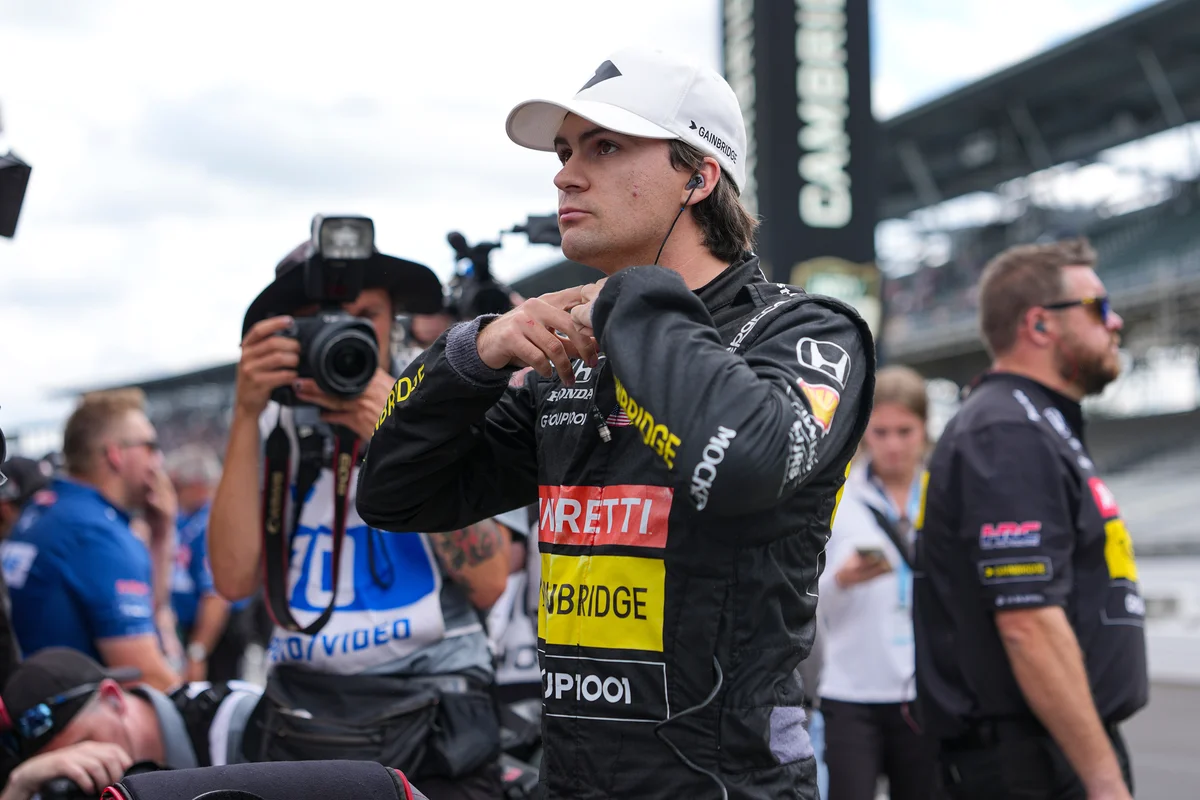
Support Expressed by IndyCar Competitors
Fellow IndyCar drivers Christian Lundgaard and Alexander Rossi have publicly expressed their confidence in Herta’s potential as he embarks on this new chapter. Lundgaard, who has competed in Formula 2 himself, commented on the typical adjustment period required for tire management, explaining,
“I think he’ll do fine. I think he’ll struggle at first with tire management. The Pirelli tires are very different from the Firestones. But again, it’s a different car. It’s a different series. I don’t know how his testing has been going. I haven’t spoken to him in a little bit. I’m sure I will be checking in with him just to hear what his thoughts are. I was following the post-season tests they had in Abu Dhabi. He seemed to be getting on fine.” – Christian Lundgaard, IndyCar driver
Alexander Rossi, who brought experience from his stint as a part-time driver with Marussia in Formula 1, also praised Herta’s attitude and dedication, remarking,
“Well, Colton doesn’t carry any weight because whether it goes well or not, I can promise you, he won’t lose any sleep over it. But I think he’s very excited about the opportunity to go and experience something new and something that ultimately was a dream of his as a child.” – Alexander Rossi, IndyCar driver
Reflections on IndyCar and Future Aspirations
As the 2026 racing season approaches with F1 testing underway, Herta was recently present at the 24 Hours of Daytona event, competing in the prestigious Rolex 24 race. When asked about what aspects of IndyCar he will miss the most, Herta expressed a deep appreciation for the unique competitiveness and driving style the series offers, saying,
“I really enjoyed the competitiveness of IndyCar, the ability to be strong, the aggressiveness you can drive with that race car, it’s unlike any other race car in the world. You can turn in two, three, four times, super aggressive, no power steering. It is a joy to drive, and I’ll miss that aspect of it, along with some of the people I got to race with, very talented race car drivers and great teammates.” – Colton Herta, Former IndyCar driver
During the Rolex 24 at Daytona, Herta teamed up with Jordan Taylor and Louis Deletraz in the #40 Cadillac Wayne Taylor Racing entry, finishing sixth in the highly competitive GTP class. This performance underlines Herta’s versatility and readiness for the challenges ahead as he continues to prepare for a full-time role in Formula 2 and eventually Formula 1.
Implications of Herta’s Move for Motorsport
Colton Herta’s transition from IndyCar to F1 and F2 highlights the increasing fluidity between major open-wheel racing series, emphasizing the appeal of Formula 1 as a pinnacle for drivers worldwide. His journey will be closely watched by fans and peers as he adapts to new cars, tire management demands, and competition levels. Success in Formula 2 could open the door to a full-time seat in Formula 1, potentially impacting Cadillac F1’s roster decisions and influencing future driver pathways from American open-wheel racing to the global F1 platform.
