
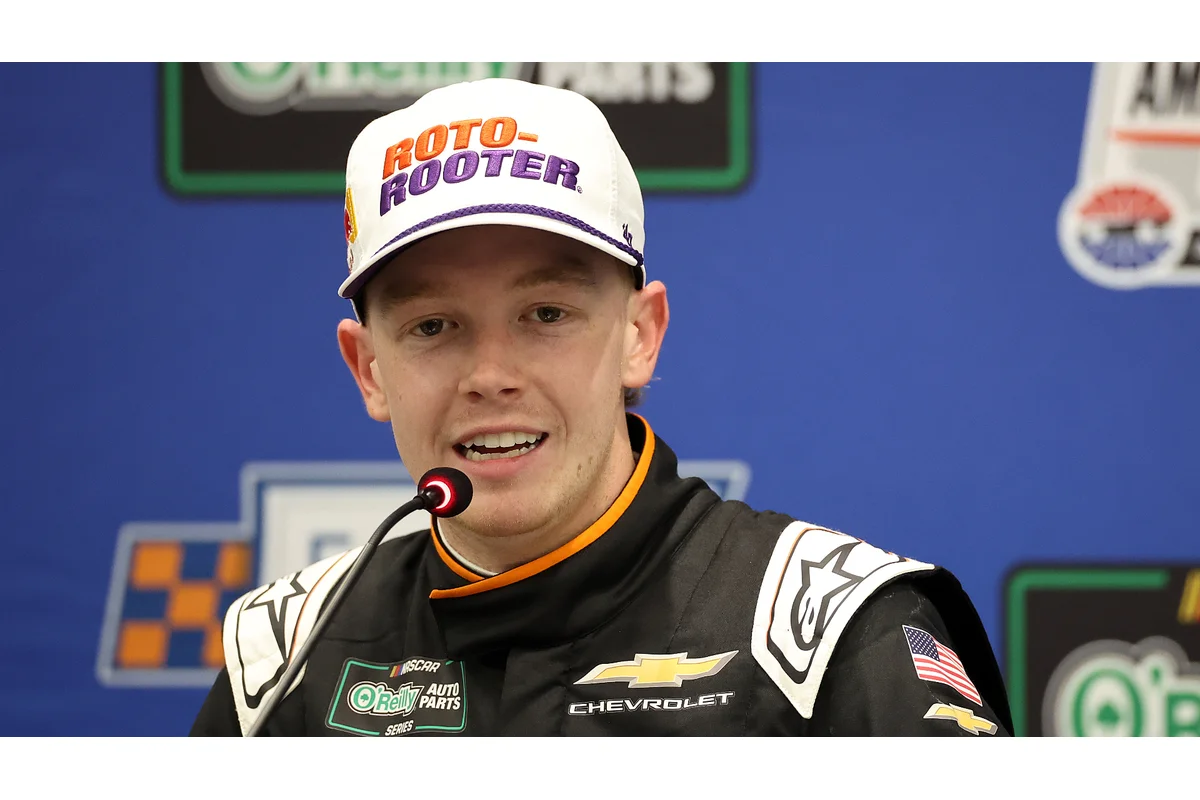
Corey Day, a 20-year-old prospect for Hendrick Motorsports, is encountering the limits of NASCAR’s tolerance as he adapts to the O’Reilly Series. Known for his raw talent and impressive dirt-track background, Day has recently struggled with costly mistakes that have begun to impact not only his own races but also those of his teammates, marking a difficult stage in his development.
These issues came to a head at Circuit of the Americas (COTA), where Day’s actions ended an otherwise strong run for fellow driver Connor Zilisch, who was positioned for a top-five finish in his No. 1 JR Motorsports Chevrolet before the incident. The fallout was swift, attracting criticism from fans, drivers, and most notably, prompting a serious response from Dale Earnhardt Jr.
Inside the Hendrick and JR Motorsports Response to the COTA Incident
On The Dale Jr. Download podcast, Earnhardt Jr. addressed the incident openly, sharing how Hendrick Motorsports and JR Motorsports convened internally to address Day’s mistakes. According to Earnhardt Jr., the team met as a group with Rick Hendrick engaging directly with Day to clarify expectations.
“We sat down as a group, and Rick spoke with Corey directly,” Earnhardt said. “The message was simple: we want him here, and we believe in his ability to win at this level. But he has to grow in a way that doesn’t hurt the people around him. It may look rough from the outside, and it’s difficult for our teams, but this is part of developing young drivers into the competitors we know they can become.”
This candid statement underscores the gravity of the moment. Earnhardt Jr.’s willingness to publicly discuss the matter signals the organization’s serious concern and the need for Day to adjust his approach, balancing potential with responsibility to his team.
Recurrent Incidents Highlight a Persistent Issue
The problem at COTA was not isolated. A similar pattern of mistakes emerged the previous week at Atlanta, where Day’s misjudgments also involved JR Motorsports drivers Carson Kvapil and Justin Allgaier, compromising their races unfairly. These were not minor collisions but incidents that caused the loss of valuable points and altered the trajectory of teammates’ seasons.
For a driver like Zilisch, who is recognized for maturity and resilience, being sidelined by repeated rookie errors illustrates the cost of inexperience within a team vying for wins. Multiple wrecks involving allied cars over two races point to a concerning pattern, attracting attention from key figures within Hendrick and JR Motorsports.
Earnhardt Jr.’s remarks highlighted how those discussions moved past coaching phrases into serious organizational concerns once Hendrick himself got involved, showing that these growing pains have reached a critical threshold.
Adjusting from Dirt Racing to NASCAR’s Asphalt Demands
Day’s transition from dirt to asphalt racing is a significant factor in his current struggles. His formative years on dirt tracks taught him to rely on aggressive instincts, adaptive driving, and fluid race lines—skills that don’t translate directly to stock-car racing on paved road courses and intermediate ovals. The two surfaces require vastly different techniques, and adjusting to this can be challenging for any young driver.
Corey Day’s early weeks in the O’Reilly Series are proving to be a steep learning curve, especially given the pressure and scrutiny that comes with competing in a high-profile program like Hendrick Motorsports. As he gains experience, patience remains, but it is tempered by the need to perform and not compromise teammates’ efforts.
At just 20 years old, Day has significant time to develop, and his Hendrick-affiliated seat reflects a vote of confidence in his inherent capabilities. However, development occurs within the context of competition, where every misstep bears consequences—especially when they start to affect others.
Rick Hendrick’s Direct Involvement Highlights Importance
Rick Hendrick’s personal meeting with Corey Day following the incident at COTA conveys the seriousness within the organization. Hendrick typically intervenes only when a situation demands top-level guidance, which indicates that Day’s pattern of accidents is no longer viewed as routine rookie adjustment.
Though Earnhardt Jr.’s statements were measured, the underlying message was unmistakable: Day must curb his errors or face dwindling opportunities. The organization maintains belief in his skill but is clear about the need for accountability and sharper decision-making moving forward.
This juncture represents a defining test in Day’s career. Young drivers eventually reach a point where the sport’s inherent pressures force self-reflection and change. How Day responds now will shape his future prospects within these elite racing programs.
The Wider Effect on Hendrick Motorsports and JR Motorsports
The repercussions of Day’s mistakes extend beyond his own performance, influencing two powerhouse NASCAR organizations. JR Motorsports is actively competing for wins and playoff positioning, while Hendrick Motorsports focuses on developing emerging talent to maintain its competitive edge.
When key drivers like Zilisch, Kvapil, and Allgaier—each integral to their teams—have their races compromised, the impact resonates throughout the organizations. The loss is felt by crews, strategists, and ownership, increasing pressure to address and contain these disruptions promptly.
Thus, the current moment is less about reprimanding Day and more about safeguarding the teams’ stability and ensuring the system supporting drivers remains intact and productive.
The Road Ahead for Corey Day and NASCAR
Dale Earnhardt Jr.’s experience with the pressures of top-tier racing informs his comments about Day needing to grow without negatively impacting others. His perspective draws on a lifetime in the sport, emphasizing that raw talent alone is insufficient to guarantee a lasting career.
Corey Day has been afforded a rare opportunity with top equipment and strong organizational backing, but to maintain his place, he must develop self-awareness, embrace learning, and accept responsibility for his actions on the track. The door remains open for him, yet the question remains whether he can navigate this critical phase without undermining those around him.
The upcoming races will be pivotal in determining whether Day can transform his potential into consistent performance, adapting quickly to NASCAR’s demanding environment and living up to the expectations of Hendrick Motorsports, JR Motorsports, and the sport itself.
