
As the NASCAR Cup Series prepares for the race at Circuit of the Americas (COTA), Turn 1 remains the most scrutinized and volatile spot on the track, drawing the focus of drivers and fans alike. Among those who understand this chaos intimately is Denny Hamlin, who describes the frenetic scramble for position as a moment defined by risk and survival instincts. With over 30 cars accelerating uphill toward a sharp left-hand turn, the intense climb compresses the field, creating a high-stakes bottleneck where players are jostling for advantage.
Each driver enters Turn 1 with the goal of gaining as many positions as possible before the pack stretches out, but the narrow space and steep gradient make that objective treacherous. There is no room for gradual adjustments—every move is aggressive, as cars cluster tightly and racing lines become scarce. The tight braking zone invites contact, and the uphill momentum leaves little room for error or mercy.
Denny Hamlin Reflects on the Turn 1 Mentality
Hamlin was candid when asked if there is an unspoken code of conduct in this critical corner.
“Yeah, I don’t know. I don’t know if there is any. I wish I could say. I think everyone has the mentality, and I’m guilty of it too, is you go in there and you try to position your car that is whatever best for yourself,”
he said.
“Now, there’s collateral damage that goes on way out on the right side of you that you never see. And so it’s kind of out of sight, out of mind.”
He emphasized how drivers often justify their actions if they don’t cause direct contact in front, yet their maneuvers frequently set off chain reactions affecting several cars nearby without their awareness.
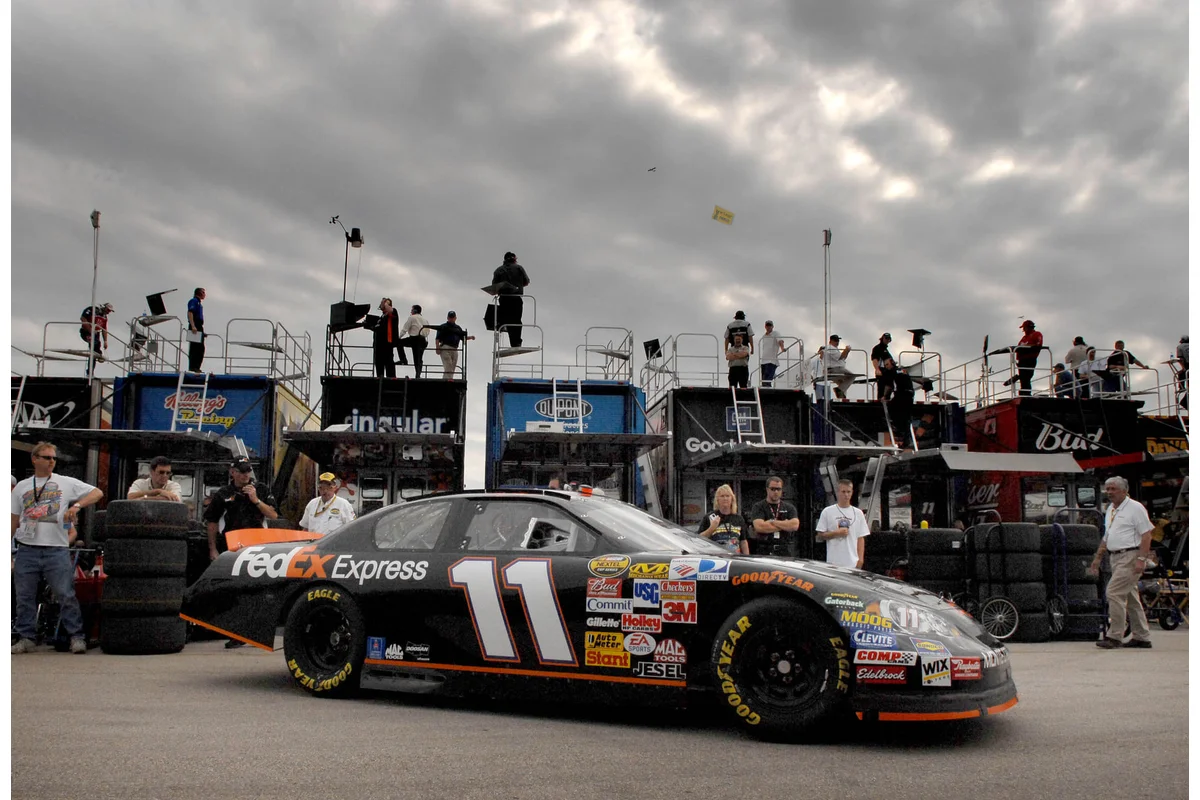
Hamlin pointed to Turn 1’s unique pressure cooker environment as a reason why reckless moves occur with limited consequences.
“So it’s easy to have a little bit of that lawlessness with less repercussions at turn one at Cota than probably any corner that we’ve got on our schedule,”
he explained, underlining the gap between the risk involved and the penalties—or lack thereof—that drivers face during the rush.
Why Turn 1 Encourages Aggressiveness and Risk
The nature of Turn 1 at COTA fosters a mindset where caution often falls away. Unlike tighter corners where one error can end a driver’s race immediately, injuries and severe damage are less common here due to the available run-off and track width. This safety net tempts drivers to push harder, knowing the margin for survival is higher. They enter with tunnel vision, fixated on optimizing their position before the field separates.
Spotters, who normally mitigate chaos by guiding drivers through hazards, find their roles stretched to the limit. They have to interpret a rapidly evolving congestion uphill at speed, often communicating virtually in real time while visibility is limited and braking points vary widely among vehicles. The spotter’s ability to provide clear, timely advice diminishes under these conditions.
Fans recognize the volatility of this spot and frequently station themselves on the hill overlooking the braking zone, anticipating the inevitable collisions and “accordion effects” that can stack rows of cars when a single driver misjudges braking or entry.
Turn 1 as a Battlefield of Conviction and Survival
Turn 1 at COTA exemplifies a crucible where decisive action is rewarded and hesitation is punished. This environment fosters a form of engineered chaos where blame is masked just enough for drivers to persuade themselves of fair play despite frequent bumping and shuffling. It’s not that respect and racing ethics vanish completely, but rather that natural survival instincts rise to the forefront as the uphill charge causes nearly everyone in the pack to push hard and expect collisions. The resulting turmoil sets Turn 1 apart as one of NASCAR’s most lawless and fiercely contested corners.
Ross Chastain Opens Up About His Struggles at COTA’s Turn 1
Ross Chastain of Trackhouse Racing also weighed in on the challenges of attacking Turn 1 at Circuit of the Americas. In a recent media discussion, Chastain admitted he has experienced both sides of the corner’s hazards, having spun out and been spun himself, including during past events in the NASCAR O’Reilly Series. He highlighted the uphill grade as the key complicating factor, which limits drivers’ ability to pick reliable braking markers and condenses their reaction time.
He noted that race restarts further exacerbate the difficulties at Turn 1. The difference in speeds between restarts and standard green-flag laps means drivers approach the corner differently, even though efforts have been made to move restart zones closer to Turn 20. Chastain was frank about his own errors:
I’ve made more than my fair share of mistakes. The track was designed to build a lot of speed, have a ton of braking potential with the uphill elevation climb to Turn 1, and then trying to make a turn back the other way is really difficult. But when you get it right, it’s very rewarding.
— Ross Chastain, Trackhouse Racing driver
This candid reflection highlights both the technical challenge and the rewards for mastering this critical section of the Circuit of the Americas. With drivers like Hamlin and Chastain acknowledging its difficulty and unpredictability, Turn 1 appears destined to remain a dramatic and pivotal point in NASCAR races at COTA, where split-second decisions can shape an entire event’s outcome.
https://twitter.com/PRNlive/status/2027407626657784089
