
Tyler Reddick secured a dramatic victory at the 68th running of the Daytona 500, capturing his first Harley J. Earl trophy and sparking celebrations for 23XI Racing and owners Michael Jordan and Denny Hamlin. However, amid the excitement, the event once again revealed a recurring frustration in NASCAR superspeedway racing: the widespread use of fuel-saving techniques even during green-flag conditions.
This continued reliance on extended half-throttle conservation complicates the on-track action, limiting overtaking and impacting the race’s competitive flow.
Hamlin Urges Major Changes to Improve Superspeedway Racing Dynamics
As the race’s thrilling spectacle impressed fans, many questioned the quality of competition under the current rules. Veteran driver Denny Hamlin openly criticized the status quo, advocating for increased horsepower and a fundamental change in car behavior to address the problems caused by fuel-saving strategies.
Hamlin emphasized that the primary challenge lies in the aerodynamic package applied to Next-Gen cars, which makes passing difficult. Due to the high drag and closely matched performance, breaking out of the tightly packed field often results in substantial loss of speed and track position, effectively discouraging drivers from attempting risky maneuvers.
Instead, teams often prioritize fuel conservation to gain an edge through shorter pit stops, turning strategy into the dominant factor rather than raw racing skills.
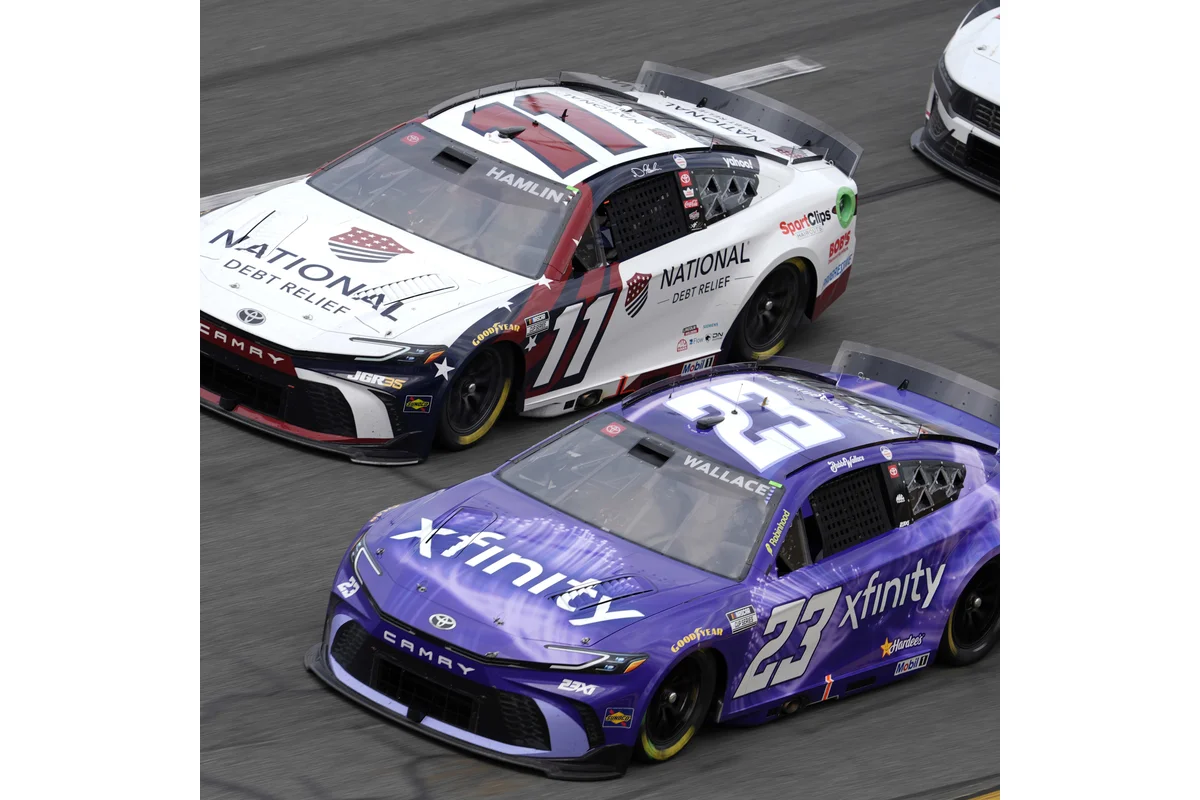
Reiterating his viewpoint at the post-race press conference, Hamlin said,
“There’s a way, but we’re going to have to increase the speeds by a lot. You’re going to have to make it to where handling matters. That’s going to spread (out) the field. That’s going to make it to where we’re not… it’ll look a little more like racing from the past.” — Denny Hamlin, Cup Series Driver
He argued that the current car setup rewards stability and pack driving, removing the need for drivers to manage throttle control in corners and enabling prolonged periods of single-file racing.
“But as long as their insurance company is okay with it, you’re going to have to speed up the cars, because right now we’re so planted in the racetrack that we can just run in this really tight pack.” — Denny Hamlin, Cup Series Driver
Proposed Experiment at Preseason Clash Could Test Fuel-Saving Alternatives
Hamlin’s most daring suggestion involves leveraging NASCAR’s preseason exhibition, the Clash, as a platform to experiment with car setups aimed at eliminating fuel-saving tactics. He proposed that a select group of drivers collaborate to develop a package that forces genuine throttle management, ensuring races are determined through skillful car control rather than strategic fuel conservation.
He explained,
“One of the suggestions we talked about just a few days ago is come here next year in the Clash, let a few of us come up with a package that we think you won’t see any fuel saving, you’re just going to see people hanging on. That would be the only fix.” — Denny Hamlin, Cup Series Driver
The intended changes would include reducing rear downforce and increasing sensitivity during corner entries, encouraging drivers to focus on handling. This shift is expected to scatter the tightly packed field naturally, open passing lanes, and restore the traditional feel of superspeedway racing.
Potential Impact and Uncertainty Around NASCAR’s Response
While NASCAR has yet to confirm whether it will adopt Hamlin’s fuel-saving experiment, his stance sends a clear message after another Daytona 500 marked by strategic caution despite high-speed visuals. Hamlin’s call reflects growing concern among drivers and teams that the current approach detracts from pure competition and excitement.
If embraced, these changes could fundamentally alter race strategies and sharpen the on-track battles in future superspeedway events, revitalizing the sport’s signature style and pleasing fans eager for more engaging racing action.
Daytona 500 winning crew chief Billy Scott when asked if there's a way to fix mass fuel saving on superspeedways: "I doubt there's a fix to it, because we're just gonna figure out the next way to exploit it. … It'd be like asking you to change how chess is played."
Denny… pic.twitter.com/Kd43EnAavH
— Steven Taranto (@STaranto92) February 16, 2026
