
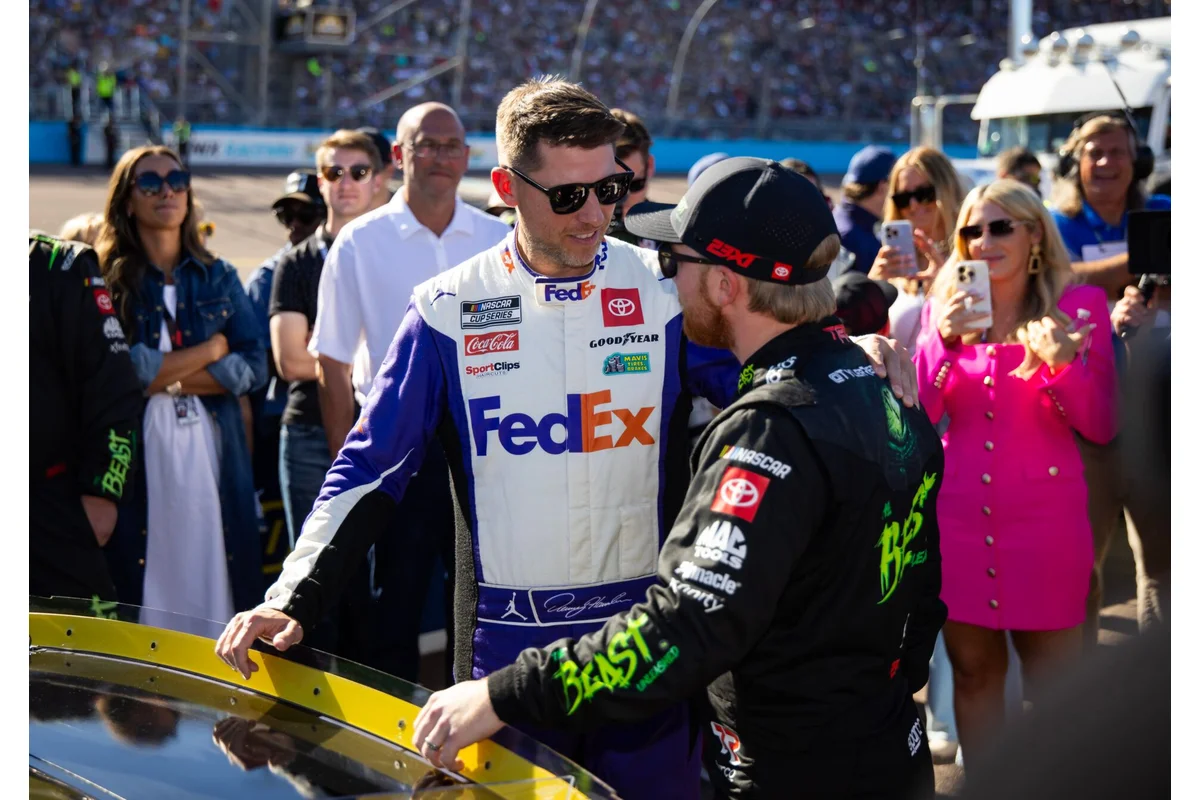
Denny Hamlin defended NASCAR’s choice to end the Craftsman Truck Series race at EchoPark Speedway early during the Atlanta weekend, citing television scheduling and logistical concerns as key reasons. The decision to throw the white flag roughly 10 laps before the scheduled finish sparked debate among fans and broadcasters, but Hamlin emphasized the importance of managing the day’s timeline effectively.
Following the race, which saw a surprising finish due to the shortened distance, social media erupted with criticism aimed at NASCAR and Fox’s coverage. However, Hamlin, speaking on his Actions Detrimental podcast, dismissed much of the backlash and explained why he saw value in the decision.
Reasoning Behind Ending the Race Prematurely
The race was concluded early to respect the television window established by Fox, ensuring the network could air all scheduled programming without significant delays extending into the next day. NASCAR prioritized running both events planned for the day rather than pushing the remainder of the Truck Series race into Sunday or Monday.
Hamlin highlighted this broader context as critical, stating the move was necessary to maintain the integrity of the overall race weekend schedule and avoid inconveniencing teams, broadcasters, and viewers.
“It was a fun race to watch,”
Hamlin said.
“Social media had a buzz about kind of shortening the race, but I don’t get it. They had no issues with that. The only thing Fox could’ve done differently was give us an update.”
“I thought it was good for NASCAR to really commit to, ‘We’re going to get these two races in today, not drag these guys back here on a Sunday morning or Monday,”
he continued.
“I thought it was a good move, and it’s really important overall for the sport to hit certain TV windows to make sure you’re not switching channels. So, no issue on my end on that.”
Highlights from the Atlanta Truck Series Race
The race itself delivered plenty of excitement before the early finish. ThorSport Racing teammates Ben Rhodes and Jake Garcia dominated the early portions, collaborating at the front. Meanwhile, Kyle Busch, a two-time NASCAR Cup Series champion driving the No. 7 Spire Chevrolet, maintained a competitive position along the bottom lane throughout the race.
Corey Heim took the checkered flag for Stage 1, showing strong performance in the initial segment. Stewart Friesen made a notable return in Stage 2, winning that portion after recovering from serious injuries, while the race remained relatively clean despite a few incidents, including a hard crash involving Dawson Sutton.
Ultimately, Busch powered through to claim his 68th career Truck Series victory, further cementing his record with another win at Atlanta. The decision to end the race about 10 laps early remained the most controversial aspect, but the competitive racing and key moments defined the event’s narrative.
Impact of NASCAR’s Scheduling Strategy on Fans and Teams
The early race conclusion underscores challenges NASCAR faces balancing broadcast commitments and race integrity. While some fans questioned the shortened format, the decision reflects a growing emphasis on meeting television windows essential for viewership and sponsor obligations.
Hamlin’s defense reflects a pragmatic view shared by many within the sport, prioritizing overall event execution and the logistical realities teams face. By committing to completing both races in a single day, NASCAR aims to avoid extending race weekends beyond planned schedules, limiting disruptions for teams, broadcasters, and fans alike.
