
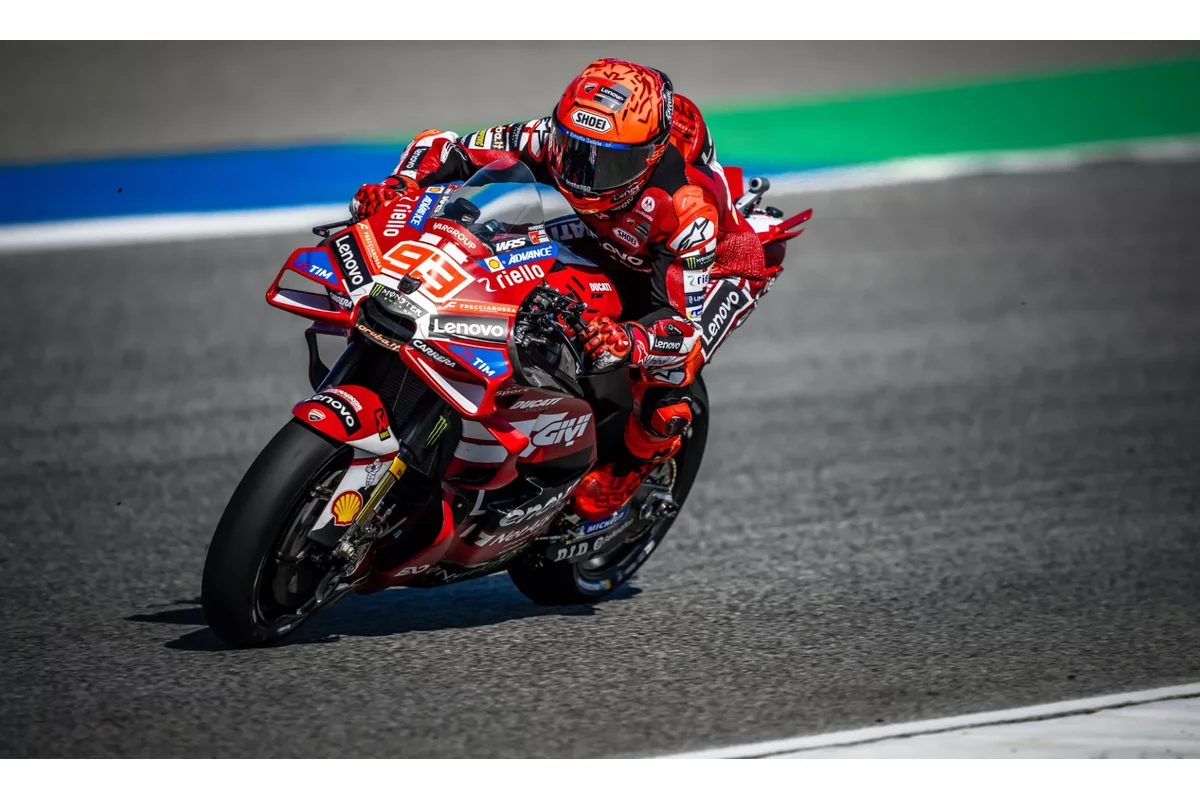
At the recent Thai Grand Prix in Buriram, Ducati experienced its most disappointing start to a MotoGP season in over a decade, failing to place a Desmosedici bike on the podium after 88 races and even missing the Top 5 after 102 outings. This marked the worst beginning to a championship for Ducati since 2013, a stark contrast to their previous dominance in the opening rounds of recent seasons.
This poor showing was particularly jarring given the team’s exceptional performance just one year prior at the same venue, where they swept the podium with riders Marc Marquez in first, Alex Marquez second, and Pecco Bagnaia third, while Morbidelli secured fourth place. Ducati had built a reputation for strong starts, with victories in Qatar (2024 and 2023) and Losail (2022), highlighting the unexpected nature of the result in Buriram.
Historical Context of Ducati’s Early Season Results
In recent years, Ducati riders consistently reached the podium early in the season. For instance, in 2020 amid the COVID-19 pandemic, Dovizioso still secured a third place finish in Jerez, even though Yamaha took the top two spots. The 2014 season was one of the few exceptions in recent memory before this year, with Dovizioso finishing fifth without a Ducati bike on the podium. The last time Ducati opened a season with worse results was 2013, when Dovizioso only managed seventh place as the team was struggling through a challenging transitional phase after Valentino Rossi’s departure.
Factors Behind the Unexpected Setbacks in 2024
This season’s difficulties were compounded by a series of unfortunate events and technical issues. Marc Marquez lost the Saturday sprint race due to a penalty and was forced to retire on Sunday because of a broken rim, despite being poised to reach the podium. Meanwhile, Di Giannantonio reported a technical fault that hampered his performance. Other Ducati riders faced challenges as well—Alex Marquez crashed, and riders Morbidelli and Bagnaia finished far from their usual top spots, coming in eighth and ninth respectively. This scattered performance identified an absence of the “red army” cohesion that had previously closed gaps during tough races.
Coming into the season, test results had been promising with Aprilia riders Bezzecchi and Ogura leading but closely followed by Marc Marquez, Bagnaia, and Alex Marquez. Morbidelli and Di Giannantonio had also shown promise with respectable seventh and ninth positions in testing, respectively. However, the race day unfolded contrary to expectations, with mistakes, technical problems, and misfortune severely impacting Ducati’s starting championship performance.
Technical Adjustments and Future Prospects for Ducati
During the off-season, Ducati’s riders praised the new GP26 model, highlighting its improved front-end responsiveness and changes made to the chassis, lowering device, and aerodynamic package. However, the engine remained frozen due to regulations, restricting development in that area. Some aerodynamic upgrades have been deferred pending further testing, indicating that not all modifications have been fully optimized.
Despite the current challenges, Ducati’s engineers retain the ability to adjust the bike’s setup and components throughout the season, unlike past years when engine design flaws proved irreparable during the race year. This flexibility suggests that the team’s poor start does not necessarily indicate the end of its competitive era.
Marc Marquez emphasized the need for patience, stating,
“we will have to wait until Jerez to get a clear idea of the form factor.”
With upcoming races at Goiânia and Austin, the team faces tracks offering varied challenges but also opportunities to regain momentum. European races tend to stabilize championship standings, making it crucial for Ducati to prevent further point losses as the season progresses.
Implications and the Road Ahead for Ducati
The unexpected setbacks at the Thai Grand Prix serve as a reminder of the unpredictability and high stakes in MotoGP. For Ducati, a team with a rich history of early-season success, this difficult start signals a need for urgent adjustments and renewed focus. The 2024 season now presents both a test of resilience and technical problem-solving as Ducati strives to reclaim its competitive edge.
Maintaining performance consistency and overcoming the current difficulties will be essential for the team’s championship ambitions. The next rounds in Goiânia, Austin, and across Europe will be critical in determining whether Ducati can reverse its fortunes and avoid a prolonged period of struggle in the MotoGP championship standings.
