
Ferrari has moved to block other Formula 1 teams from altering the new race start sequence introduced for the 2026 regulations after discovering a loophole that gives them a potential advantage. This development could increase Lewis Hamilton’s edge at race starts in the upcoming season, as Ferrari’s unique technical setup enables a more efficient launch compared to competitors.
The start procedure was tested during pre-season trials in Bahrain, involving a simulated start scenario that nearly caused Alpine’s Franco Colapinto to lose control while attempting burnouts. During these tests, drivers did not maintain the expected grid order, prompting concerns about the sequence’s safety and consistency.
McLaren’s Safety Concerns Spark Calls for Changes to Start Procedure
Following the Bahrain tests, McLaren has emerged as a leading voice advocating for modifications to the new start system, citing driver safety risks. The team plans to present these concerns at a scheduled meeting next week where several teams will discuss potential amendments to the regulation. However, Ferrari is expected to oppose such changes strongly due to the advantage they have engineered.
The core of Ferrari’s advantage lies in their use of a smaller turbocharger, which requires less engine revving at the start. This means their cars can deliver power more efficiently within the constrained start sequence timing, potentially giving drivers like Lewis Hamilton an improved launch off the grid compared to rivals.
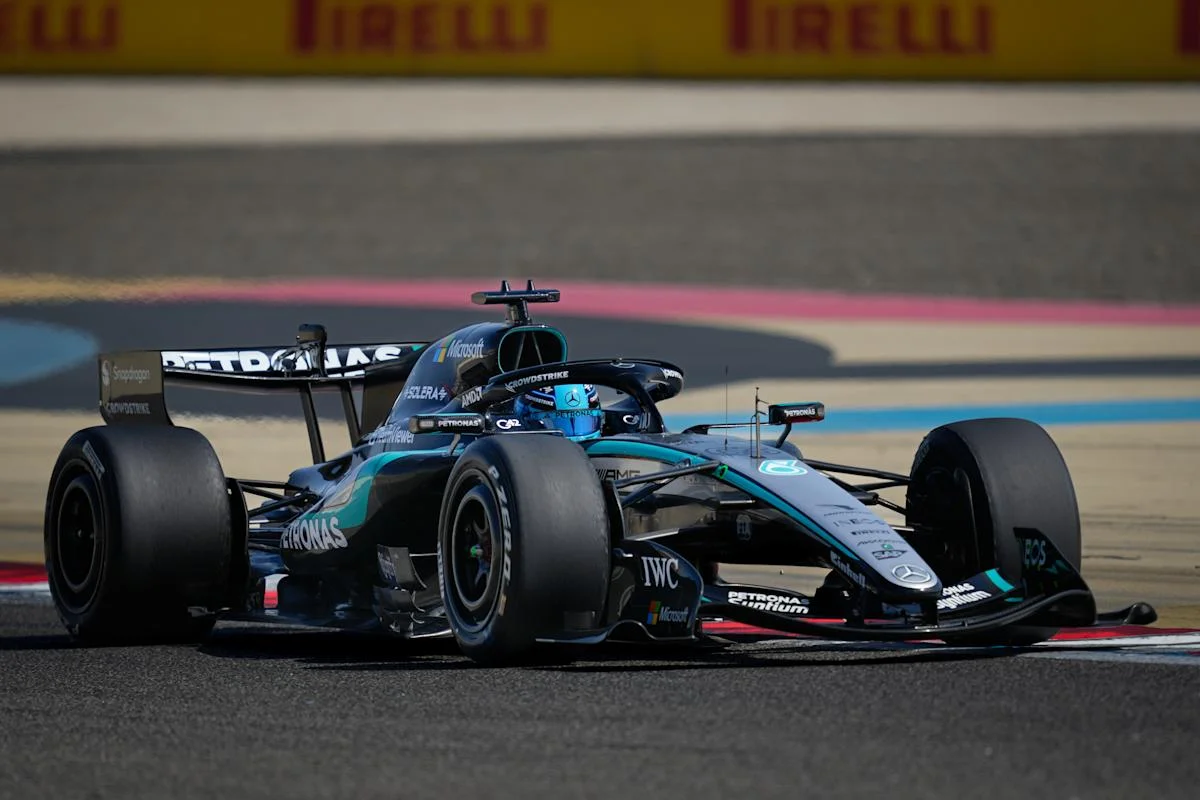
Early Warnings and Strategic Design Decisions by Ferrari Leadership
Journalist Jon Noble reported on the Race F1 podcast that Ferrari team principal Fred Vasseur and Mercedes driver George Russell were among the first to identify issues with the new start sequence. Vasseur brought forward concerns in a commission meeting a year ago, advocating for preemptive action to prevent problems in 2026.
“12 months ago, [Vasseur] was in a Commission meeting and said, ‘We’re going to have a problem in ’26, we should do something,'”
Jon Noble, Journalist
According to Noble, Ferrari committed to a design that mitigates this problem, likely through the adoption of a smaller turbocharger.
“So he committed to a design that covers this problem, likely a smaller turbo.”
Jon Noble, Journalist
Fellow journalist Ed Straw added that George Russell also recognized the advantage this setup could bring, even though he is neither a Ferrari designer nor driver.
“George Russell suggested [as much]. He’s not the Ferrari designer or Ferrari driver, but there’s widespread belief that that’s the case. They’ve committed to the smaller turbo, their start issue is sorted.”
Ed Straw, Journalist
Noble also highlighted the political complications this creates, as Ferrari’s early warning means they are less likely to support any rule changes aimed at fixing start problems the other teams now face.
“Suddenly when it comes back and the others say, ‘We have got a problem with the starts’, he brought this up six months previously, why should he vote in favour?”
Jon Noble, Journalist
Insights from George Russell on Start Sequence Challenges
Mercedes driver George Russell spoke to the media about the challenges surrounding the narrow turbo operating window and the timing required for a successful launch.
“Well, at the moment, we’re just sort of going through our procedure, and I’m only doing my launch when I’m in a given window,”
he explained.
“But we are very conscious that for a race start, you go when the lights are out, you don’t go when your specific turbo is in the right window.”
Russell acknowledged improvements since early testing, referencing progress made after the Barcelona tests but emphasized that not all manufacturers might be in as good a position as Ferrari.
“So as I said, I think we have made progress. I don’t know what it’s like for the other manufacturers.”
He also noted Ferrari’s advantage in gear usage during race starts.
“I think Ferrari seem to be able to run higher gears than other manufacturers, which probably suggests they’ve got a smaller turbo than other manufacturers. So maybe they’re in a slightly easier position for their race starts.”
“But, as long as there’s not a safety concern… There probably was in Barcelona, but as I said, we have made big progress since Barcelona in that specific regard.”
George Russell, Mercedes Driver
Potential Consequences for the 2026 Season and Beyond
Ferrari’s success in leveraging their turbocharger setup to gain an unofficial advantage in starting procedure control creates a challenging situation for the Formula 1 paddock. Their opposition to start sequence rule changes at the upcoming meeting could solidify a benefit for drivers like Lewis Hamilton, heightening the competitive gap at race launches.
This controversy highlights the tension within F1 teams between innovation and regulation, especially as new technical rules take effect in 2026. How teams balance safety concerns against strategic advantages will likely shape the dynamics of the grid and possibly influence future regulatory debates.
