
Ferrari is positioning itself as the early frontrunner for the 2026 Formula 1 season following an impressive turnaround after a lackluster 2025. The Italian team’s performance during the second pre-season test in Bahrain caught the attention of rivals, highlighting both their competitive speed and innovative solutions under the newly introduced energy-focused regulations.
New regulations have brought significant technical challenges, but Ferrari’s progress has sparked discussions about their potential to contend for the championship from the season’s outset.
Technical Advances Highlight Ferrari’s Competitive Edge
At the Bahrain test, Ferrari showcased several technical innovations, including a heat-resistant wing element positioned near the exhaust and a uniquely designed 270-degree movable rear wing. Observers believe Ferrari’s smaller turbo configuration may be a key factor in improving their race starts, a known challenge for many teams under the latest rules.
Williams team principal James Vowles praised Ferrari’s continuous development and highlighted their clever integration of active aerodynamics into the rear wing endplates, an approach he had not previously considered.
“Ferrari – they’re bringing out great innovations, they’re constantly developing,”
he said.
“They’ve cleverly packaged the active aerodynamics in the endplates.”
— James Vowles, Williams team principal
Insights on Start-Phase Performance and Rear Wing Legality
Former Formula 1 team boss Franz Tost attributed Ferrari’s strong race starts to their turbo design, suggesting that the smaller turbo may give them an advantage off the line, even if it introduces a trade-off elsewhere in performance.
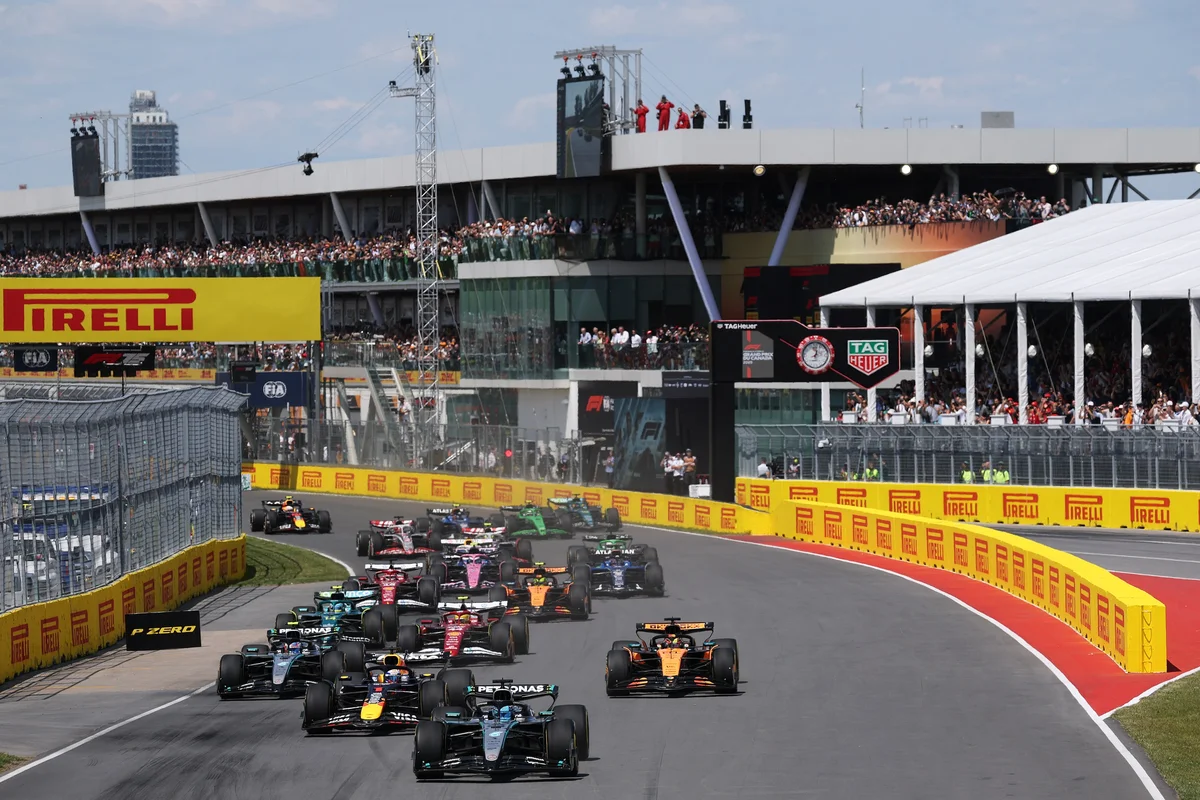
“Ferrari have had super starts – they probably use a smaller turbo, but they will likely have a slight disadvantage elsewhere,”
— Franz Tost, former F1 team boss
Meanwhile, the FIA has confirmed the legality of Ferrari’s rear wing design, removing restrictions on the maximum width opening between the main wing and upper section to encourage innovation. Nikolas Tombazis explained that this regulatory change was intended to offer teams more creative freedom, affirming Ferrari’s solution was acceptable.
“There is no longer a maximum opening width for the gap between the main rear wing element and the upper section,”
“We wanted to give the teams more creative freedom, and from our point of view, Ferrari’s solution is fine.”
— Nikolas Tombazis, FIA technical director
Controversy Surrounding Start Procedures and Turbo Spooling
The handling of race starts remains contentious, with several teams calling for adjustments to allow additional time to spool turbochargers before the race lights go out. Ferrari team principal Frederic Vasseur recalls that they raised concerns with the FIA a year ago due to challenges posed by the absence of MGU-H systems, but no changes were made.
“We raised the issue with the FIA a year ago,”
“Without the MGU-H, it was clear that it would be problematic. But the FIA didn’t adjust the procedure.”
— Frederic Vasseur, Ferrari team principal
Mercedes continues to struggle with starts, with driver Kimi Antonelli admitting it is their weakest area, while George Russell was candid about his poor starts during testing.
“Starts are honestly our weak point.”
— Kimi Antonelli, Mercedes driver
“To win a race you have to be able to start like a winner. My two starts were probably my worst in Formula 1.”
— George Russell, Mercedes driver
Mercedes team principal Toto Wolff has voiced support for procedural modifications, including a proposed five-second warning before the starting lights activate to prevent confusion.
“This is a good solution to avoid chaos,”
— Toto Wolff, Mercedes team principal
Ferrari’s Speed and Team Confidence at Bahrain Test
The Ferrari team’s outright pace was clear as Charles Leclerc set the fastest qualifying simulation lap of the Bahrain test week. Formula 1 CEO Stefano Domenicali expressed optimism, noting confidence in both Ferrari drivers and the team’s current position.
“Ferrari seems to be starting from a good base, Charles and Lewis are confident and we should be too,”
— Stefano Domenicali, Formula 1 CEO
Despite this confidence, Vasseur urged caution regarding long-term success, emphasizing that rapid development and part production will be more decisive than early testing performances.
“The most important thing this season will be our ability to develop and produce parts quickly,”
“The championship will be decided much more on that than on the performance in Melbourne, or even Bahrain. The goal isn’t to be first in the Bahrain tests.”
— Frederic Vasseur, Ferrari team principal
Ongoing Rivalry and Uncertain Competitive Landscape
As the development race intensifies, Williams’ James Vowles suggested that some teams may still be holding back details of their performance upgrades. He specifically noted Red Bull’s apparent decrease in power unit performance since initial testing phases.
“Games are being played,”
“Red Bull looked really good until we talked about their power unit. Since then, they significantly scaled back.”
— James Vowles, Williams team principal
This evolving scenario underlines how unpredictable the competitive balance may remain as teams adapt to the 2026 regulations, with Ferrari currently positioned as the team to beat but with plenty of challenges ahead.
You spin me right round! 😵💫
Here's Ferrari's innovative solution to moving the upper flap of the rear wing as part of this season's active aero introduction 👀 #F1 #F1Testing pic.twitter.com/yY0ZcI1Kph
— Formula 1 (@F1) February 19, 2026
