
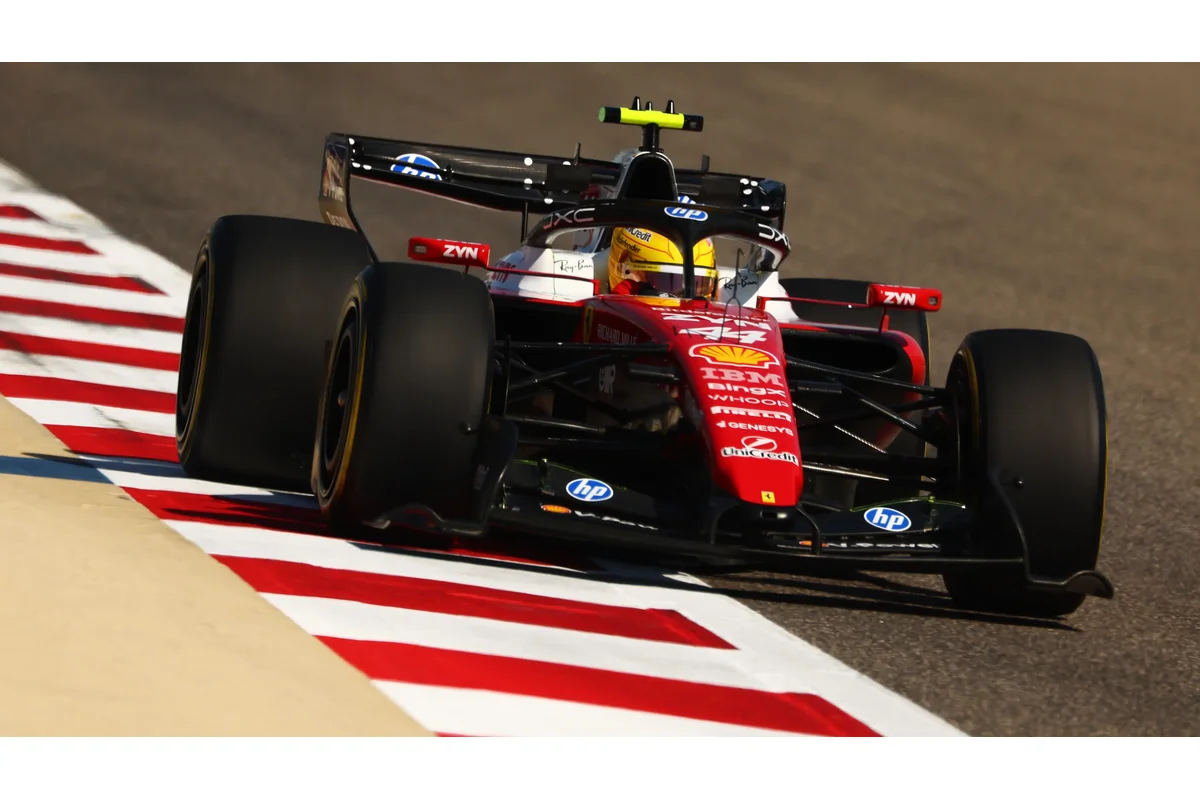
During the recent Bahrain testing sessions, Ferrari shocked the Formula 1 community by introducing an unconventional rear wing design on their SF-26. This new development takes advantage of the 2026 regulations, which allow active aerodynamics on both the front and rear wings, enabling teams to adjust wing flaps for optimal performance depending on whether the car is on a straight or approaching a corner. Ferrari’s approach, involving Lewis Hamilton, caught attention when their rear wing actively opened on the straight in a way that appeared upside down, defying traditional aerodynamic setups.
Functionality Behind Active Aerodynamics and Ferrari’s Unique Approach
The active aerodynamic system permits teams to open or close flaps on the wings: closed flaps increase downforce but cause drag, while open flaps reduce both drag and downforce. Ferrari’s surprising twist lies in exploiting a subtle regulatory gap, where the wing’s orientation is not required to be “right side up” during deployment. This allowed them to orient the rear wing upside down on the straights, producing lift rather than downforce, similar to an aircraft’s wing. As the car approaches corners, the wing returns to its closed, downforce-generating position.
F1 technical analyst Sam Collins remarked on the initial moment of discovery, stating,
“I think Ferrari just tried it very briefly right at the start of the day and hoped nobody else would notice.”
Sam Collins, F1 Technical Analyst
Potential Impact and Benefits of the Upside-Down Rear Wing
Ferrari’s upside-down rear wing could significantly reduce aerodynamic drag and create lift, reducing resistance and potentially allowing higher top speeds on straights. This innovation may also help offset the drag caused by Ferrari’s exhaust wing system, where an extended diffuser flap uses exhaust gases to increase downforce but at the expense of additional drag. By counterbalancing this with the new rear wing, Ferrari might optimize overall performance.
However, this rear wing design is currently a test component and is undergoing evaluation during the Bahrain testing phase, with no guarantees it will be deployed for the full season. The development has already stirred debates amid the broader context of regulatory clarifications and competitive engineering strategies in Formula 1.
Significance of Ferrari’s Aerodynamic Breakthrough
Ferrari’s experiment highlights the intense strategic innovation in F1, as teams push boundaries within complex technical regulations. The upside-down rear wing is one of the boldest aerodynamic solutions seen this season and could influence the design philosophy of other teams if proven advantageous. This approach may also prompt regulatory discussions from the FIA regarding whether such interpretations align with the spirit of the rules.
As the season progresses, observers will watch closely to see if Ferrari refines their active rear wing system and how rivals respond, especially given the ongoing scrutiny over technical details such as Mercedes’ engine compression controversies. Ferrari’s breakthrough could mark a key milestone in optimizing speed and efficiency under the new 2026 car regulations.
— Rob Myers (@RobLMyers) February 19, 2026
