
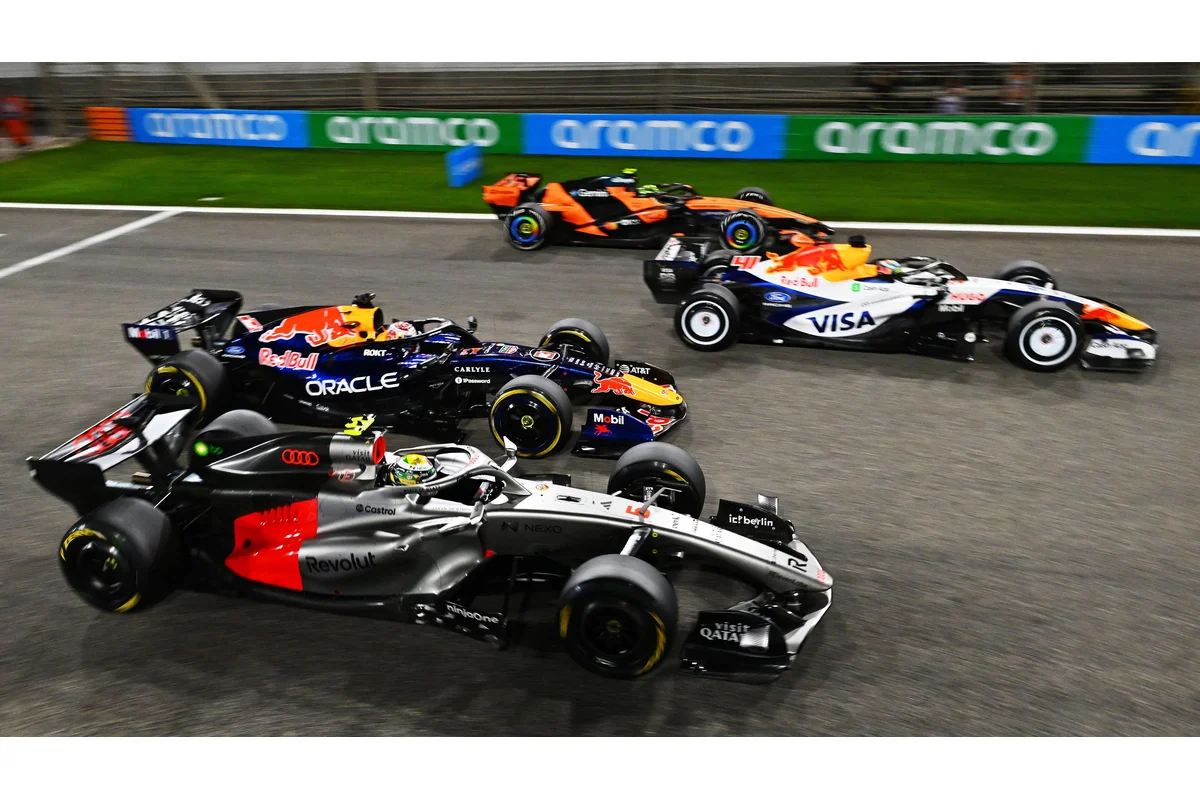
The Australian Grand Prix, kicking off the 2026 Formula 1 season, is expected to produce chaotic and unpredictable race starts due to substantial changes in the sport’s power unit regulations. The removal of the Motor Generator Unit-Heat (MGU-H) from engines has complicated drivers’ ability to launch smoothly from the grid, raising concerns over safety and position shifts before reaching the first corner.
Power Unit Changes Create Start-Line Challenges
The fundamental cause of the disrupted starts is the elimination of the MGU-H system, which previously helped reduce turbo-lag—a delay in engine response caused by the time taken for the turbocharger to spool up through exhaust gas pressure. Without the MGU-H electrically spinning the turbo, drivers must now rely on a slower process to build boost pressure, significantly impacting acceleration from a standstill.
During early pre-season testing, this problem became apparent. McLaren’s team principal, Andrea Stella, expressed concerns about increased risks of collisions due to some cars struggling to leave their grid positions while others launched perfectly. This imbalance led race officials to adjust start procedures by giving drivers extra time to prepare on the grid.
Gabriel Bortoleto, Audi’s driver, described the revised launch process in testing as “quite a mess,” elaborating,
The 10-second thing, and then after five seconds I already lost the count and then the engine’s revving up, gear in and out, and you need to release the clutch. It’s quite a mess. It was much easier last year.
?Gabriel Bortoleto, Audi Driver
The Motor Generator Unit-Kinetic (MGU-K), another component of the hybrid system, cannot mitigate this early turbo-lag because it only provides electrical energy once the car reaches 50 km/h, which is after the crucial initial acceleration.
Adjustments to Starting Procedure Introduce New Complexities
To address these difficulties and promote fairness among drivers, Formula 1 introduced an additional five-second hold before the race start lights go out. This delay is designed to help drivers build sufficient boost pressure on the grid. The updated sequence begins with a green flag, followed by a five-second pause marked by blue lights on trackside panels, and then the usual five red lights that signal the race start.
Testing sessions highlighted noticeable disparities in start quality between different teams. Ferrari-powered cars consistently showed stronger getaways, as demonstrated when Lewis Hamilton, also using Ferrari power, jumped from 11th to first place at the first corner during a practice start, overtaking George Russell, who was on pole position with Mercedes.
George Russell voiced his frustrations, stating,
To win a race, you’ve also got to get off the line quite well,
and added,
And I think the two starts I’ve made this week were worse than my worst ever start in Formula 1.
He further remarked,
I think what’s going to trip you up, it’s always going to be that tallest hurdle. And that’s what we’re trying to get our heads around right now, and we’re stumbling on some at the moment.
?George Russell, Mercedes Driver
Teams such as Haas and Cadillac, which also rely on Ferrari engines, matched this reliability in start performance. Analysts suggest Ferrari’s engine architecture, possibly including a smaller turbocharger, facilitates easier boost build-up before the race begins, giving their drivers an edge off the line.
Driver Reactions and Expectations for Opening Races
Oscar Piastri from McLaren acknowledged the greater difficulty of race starts under the new regulations. He commented,
The way we do starts is much more difficult than last year. It’s trickier from every single angle.
Piastri predicted that early-season races, including the Australian Grand Prix, may witness significant variations in start success across drivers.
I think certainly at the first few races, we could see some starts that look a bit like what we have this week. But I think we’ll start to converge hopefully pretty quickly if you’re on the bad side of that.
?Oscar Piastri, McLaren Driver
Though drivers anticipate improving as they gain experience with the new power unit dynamics and adjusted procedures, the initial Formula 1 events of 2026 are likely to produce tense and unpredictable moments off the grid.
Implications for the 2026 Season and Australian GP Anticipation
The entrance of these new technical rules is reshaping the dynamics of race starts, a critical aspect for race outcomes. Teams and drivers are now challenged to master more complex launch protocols while managing engine behavior previously assisted by the MGU-H. With safety concerns raised by Andrea Stella and observable performance imbalance during testing, the Australian Grand Prix is expected to be a high-stakes test for the new system.
The unpredictable nature of starts could lead to dramatic position changes and intensified battles in the opening laps, adding to the spectacle but also increasing the risk of incidents. This evolving challenge will demand adaptability from drivers, engineers, and race officials as the season unfolds, potentially influencing championship trajectories from the very first race weekend.
