
Audi’s Gabriel Bortoleto explained that he unintentionally overtook several cars during the Australian Grand Prix due to the high closing speeds experienced under the new Formula 1 regulations. The race in Melbourne last week marked the start of F1’s 2026 technical era, featuring active aerodynamic systems and enhanced electric power outputs, which had a noticeable effect on how drivers approached wheel-to-wheel racing.
The introduction of these rules also motivated German manufacturer Audi to make its debut in the championship, with Bortoleto securing points for the team in their very first race. Starting from 10th on the grid, the Brazilian found himself competing fiercely within the midfield pack, offering him a firsthand view of the challenges and nuances faced by drivers with the new cars.
Adjusting to the Complexities of New Regulations
Bortoleto admitted the transition to the updated rules has been demanding, as overtaking maneuvers now require more strategic thinking due to energy management and unpredictable car behavior.
“It was very nice, I must say, but a lot of things to be learned still,”
he said.
“I made overtakes – that I didn’t want to make – by mistake, because I had so much energy and the other car was clipping like crazy.”
He further elaborated on the mental calculations needed during races under the new regime:
“Last year, everything was much more predictable. So, as soon as you make an overtake, it was done. And now you make an overtake, you need to calculate the next three straights, because maybe the guy will overtake you back, then you need to overtake him back in the other one. And it keeps going like that until everyone is in the same state of energy.”
Expressing ongoing uncertainty regarding the regulations, Bortoleto shared,
“I wish I could give you more than this, but I’m still a bit confused with the regs. And I’m getting to know them better while we live them.”
When asked if he thought the new rules were
“too complicated or something you’ll learn over time,”
he responded simply,
“I think you’ll learn over time.”
Strong Race Performance Amid Chaotic Opening Event
After advancing into Q3 during qualifying, Bortoleto reached the finish in ninth place at the Australian Grand Prix, helping Audi surpass competition from Mercedes-powered teams Alpine and Williams as well as fellow newcomer Cadillac. This was considered a remarkable achievement given the obstacles Audi faced during the pre-season, where technical issues hampered their preparation.
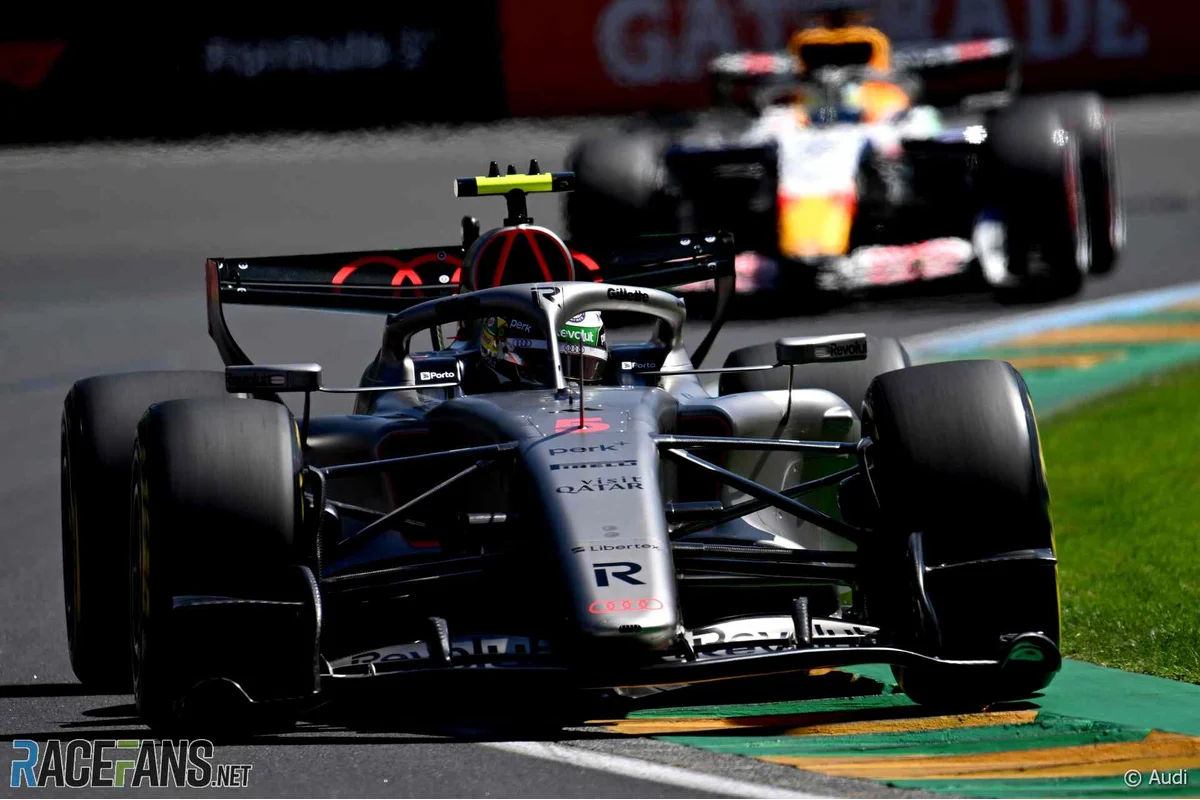
Reflecting on the team’s result, Bortoleto said,
“I’m very happy and very positive. The team has done an incredible job. All winter working very hard to put a car in one piece that finished the first race, got the first Q3. So, it’s the start of a long journey, but extremely happy.”
He added,
“If someone told me we were going to score points in our first ever race and be in Q3, man, I would have said they were drunk or what, because it was a bit tough at the beginning for us – a lot of problems, a lot of things happening. But the team has managed to put an incredible piece of art and deliver a great result.”
Race Conditions Tested Drivers’ Focus and Strategy
Bortoleto did not have an ideal getaway from the starting grid and slipped outside the top 10 initially before clawing his way back to ninth by race’s end. He also spent a couple of laps drafting behind his manager Fernando Alonso, adding to his insight into the evolving race environment. He described the overall race as chaotic, remarking,
“There were a lot of messy things happening.”
He elaborated,
“It was just a crazy race. I still need to think a little bit [about] what happened. But the start was a messy one. A lot of lock-ups, a lot of very good and bad starts. And pitstops, safety cars. It was one of the 100 [things] that happened.”
Implications for Audi and Future F1 Campaigns
Bortoleto’s efforts and Audi’s debut showing signal a promising entry for the German manufacturer in Formula 1 amid a rule change that has unsettled many competitors. His experience highlights the steep learning curve imposed by the new technical regulations, especially regarding racecraft and energy management. As Audi continues its inaugural season, the team’s ability to adapt and refine its approach will likely shape its performance trajectory.
For Bortoleto, navigating this uncertain landscape provides crucial experience in his second F1 season, allowing him to grow alongside the evolving sport. Given the intensity and unpredictability he described, forthcoming races are expected to further test driver skill and team strategy under the 2026 regulations while offering opportunities for breakthroughs and improved results.
