
Mercedes driver George Russell expressed optimism about the upcoming 2026 Formula 1 season, highlighting the impressive power of the new cars and suggesting that the recent regulatory changes will create more thrilling racing. During the opening preseason test at the Circuit de Barcelona Catalunya, Russell demonstrated strong pace by setting the second fastest time and completing 95 laps in the afternoon session, showcasing his growing confidence in the redesigned machinery.
Significant Changes in 2026 Power Units and Chassis
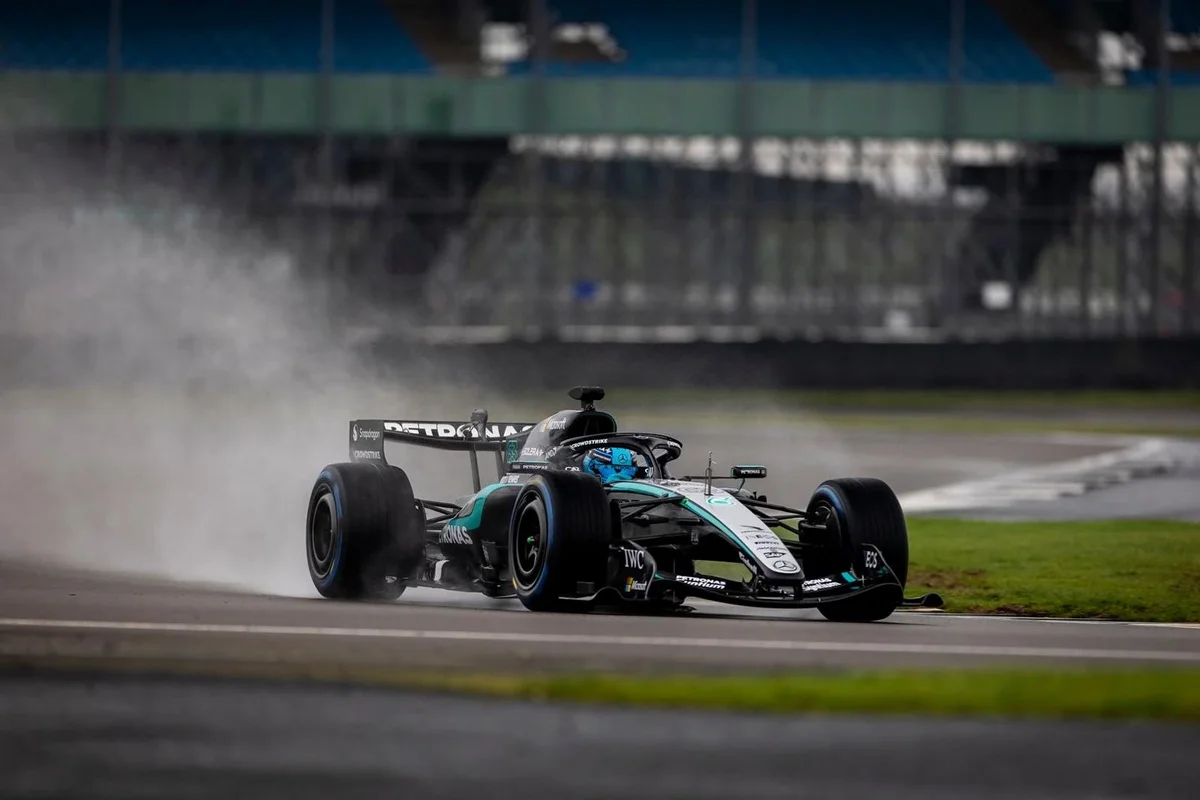
The 2026 regulations represent a landmark shift in Formula 1, with fundamental overhauls to power units and chassis dimensions that affect performance dramatically. The new power units deliver nearly three times the electrical power compared to the previous year’s models. Along with this, cars are physically smaller—being lighter, shorter, and narrower—which contributes to both speed and handling agility. Russell noted these changes make the vehicles more responsive and easier to control than he had initially anticipated.
Russell Reflects on the Car’s Performance and Handling
After observing various teams on track, Russell described the level of electrical power as particularly remarkable.
“I think just generally, on the whole, the amount of power they give is pretty impressive,”
he said. He added that the cars reached speeds through Barcelona quicker than he had ever witnessed in the sport. Russell also emphasized the impact of the cars’ reduced dimensions on the driving experience,
“The cars do generally feel like you feel it being smaller, you can feel that weight reduction compared to previous years so I think from that aspect as well it’s gone in a good direction.”
Adjusting to Increased Electrification in Race Strategy
The enhanced electrification of these power units introduces new complexities for both drivers and teams. Specifically, managing energy recovery during braking and cornering poses fresh challenges, requiring refined techniques and strategies. Although some drivers voiced concerns after simulating the 2026 cars last year, Russell insisted that the real-life experience surpassed virtual impressions. He remains convinced that these developments will elevate the excitement for fans and improve on-track battles.
The Intuitive Nature of the Updated Formula 1 Cars
Russell described adapting to the new vehicles as initially challenging but ultimately straightforward once understood.
“It is very different to be honest, but once you wrap your head around it, it then feels quite intuitive,”
he explained, expressing optimism about the potential for better racing spectacles. He also addressed concerns about energy recharge times during races, suggesting these issues will evolve with further development. Reflecting visually, Russell commented on the cars’ smaller size:
“I’m really glad and happy the cars are smaller now, because even though I was such a fan when we went to the big cars in 2017 visually, having driven them now for a few years I think they were too big and now they just look cool.”
New Electrical Boost and Overtake Modes to Impact Racing
The season will feature a strategic shift in how electrical power is deployed during races. Drivers have access to an electrical “boost” usable anywhere on the track, while a new “overtake mode” will replace the drag reduction system (DRS) first introduced in 2011. This change is expected to play a crucial role in wheel-to-wheel combat and race strategy, offering drivers greater control over how and when to use additional power to improve overtaking opportunities.
Liam Lawson on Learning and Adapting During Preseason Testing
Racing Bulls driver Liam Lawson emphasized the importance of the ongoing preseason testing series, which will continue beyond Barcelona with two further tests scheduled in Bahrain. He admitted it will take time for drivers to fully grasp the new power unit capabilities.
“I haven’t got my head around it fully yet. It’s something that we’ll keep learning over the next few days and weeks in Bahrain as well,”
Lawson said. He noted the new cars offer increased potential for driver input in influencing race outcomes.
“It feels like there’s a lot more we can do as drivers, potentially, to make a difference – which is good.”
Positive Feedback from Mercedes Engineering Team
Andrew Shovlin, Mercedes’ trackside engineering director, provided insights into the team’s early experiences with the 2026 car. He observed that the drivers’ initial exposure took place primarily in simulators, but real-world running at Silverstone showed improved feelings of drivability.
“Prior to Silverstone their experience of it was all in the virtual world in the simulators and in a number of areas it’s actually feeling better to them on track than they were feeling in the simulator so that’s certainly encouraging,”
Shovlin said. He also highlighted the impressive electrical power available, especially on the straights, which enhances the thrill of driving. Shovlin acknowledged the significant workload ahead as testing progresses but expressed confidence that the car will be competitive for the season opener.
“It’s a lot of work to do and you know we’ve really just at the very very embryonic stages of the test programme here, but I’m sure that we’ll make progress over the next few days and it does seem like we can get it in a sensible place for the first race.”
Implications of the New F1 Cars for the 2026 Season
The 2026 Formula 1 specifications are set to transform racing dynamics across all circuits. The substantial increase in electrical power and the introduction of new tactical elements like the overtake mode have the potential to redefine battles on track. Drivers such as George Russell and Liam Lawson are adapting rapidly, and engineering teams like Mercedes are optimistic about the cars’ drivability and performance. As testing continues through Bahrain following Barcelona, teams will refine energy management tactics and aerodynamic packages to unlock maximum potential. These developments promise a season marked by closer, more strategic racing that could reinvigorate fan engagement worldwide.
