
Jack Miller, the Australian MotoGP rider, has given an honest account of Yamaha’s challenging development process as the team prepares for the upcoming Buriram race. His reflections highlight the ongoing efforts required to build a competitive bike amid frequent changes and adjustments.
Miller emphasized the importance of establishing a solid foundation for the Yamaha motorcycle to perform reliably, a key step in their quest to improve after a difficult start to the season.
Early Testing Reveals Difficulties and Learning Opportunities
The initial day of testing proved difficult for Miller, who expressed personal accountability for not achieving the expected results, denying that the bike’s structure was at fault. He acknowledged the complexity created by ongoing modifications to parts and setup, which made it harder to extract consistent performance.
“It was a tough day… I couldn’t get what I wanted from the bike, but that was on me,”
he said, underlining his commitment amidst setbacks.
Miller detailed a comprehensive testing process designed to evaluate every component’s strengths and weaknesses. He confirmed that this thorough approach was necessary to deliver accurate feedback to Yamaha’s engineers as they continue refining the bike.
“We aimed to understand the good, the bad, and the ugly of every piece to provide the clearest feedback possible to the manufacturer,”
he explained.
Focusing on Building Confidence Through Stability
Following testing adjustments, Miller stressed the vital role of returning to a dependable baseline to improve the bike’s responsiveness and rider confidence, especially as track and weather conditions evolve. Understanding how the motorcycle behaves when factors such as temperature fluctuate remains a key priority.
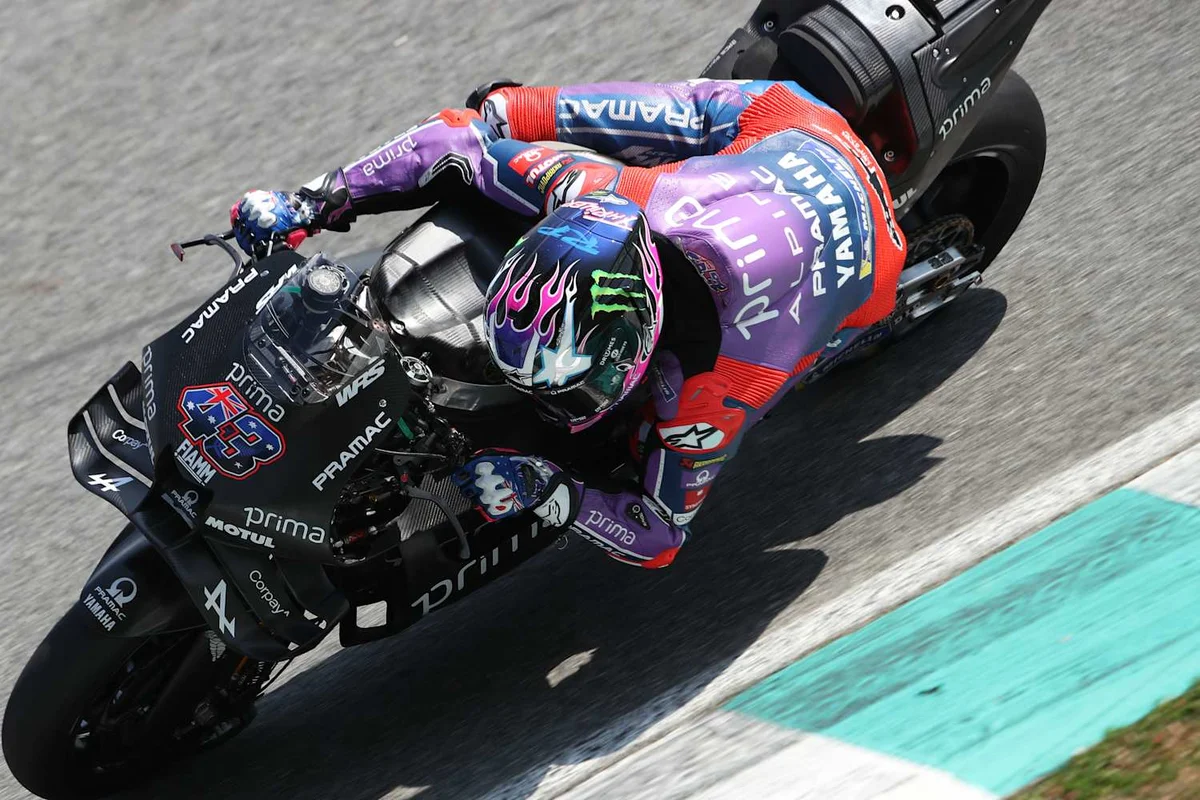
“One of the key aspects is knowing how the bike reacts when track conditions change. When the temperature shifts, that’s when you need to know what your bike will do,”
Miller noted.
He also pointed to electronics and engine power as essential areas requiring further development to enhance overall performance. Rather than chasing immediate lap times, the current strategy centers on gaining stability and deeper insight into the machine’s behavior.
“We need to work a bit more on the electronics, find more power, and continue building from there,”
he said plainly.
Viewing Setbacks as Necessary Steps in Progress
Miller was transparent about the technical challenges faced during testing but framed them as important learning moments rather than failures. He emphasized the unrealistic expectation of building a race-ready bike within a short timeframe without encountering difficulties.
“It would be extremely naive to think you could build a bike in nine months to compete against the best in the world without encountering some tough days,”
he remarked.
The rider praised the dedication of the Yamaha team worldwide, highlighting the efforts in Japan, Europe, and on-site that kept development moving forward despite obstacles.
“The guys worked tirelessly overnight to keep us moving forward, not just here but also from Japan and Europe. Everyone was involved.”
Miller also expressed a preference for facing these challenges during testing instead of during actual races.
“Better to deal with these issues now than during a race,”
he concluded.
Positive Signs Emerging from Race Simulation
Among the encouraging moments, Miller revealed that he unexpectedly found himself faster during race simulation runs compared to outright time attacks. This improvement brought optimism for race conditions, where consistency often matters more than single laps.
“I was pleased with the simulation. I was quicker in race pace than in the time attack, which startled me a bit,”
he laughed.
Miller highlighted the bike’s steady behavior under increasing pressure late in the simulation, an important factor for competitive racing.
“At the end of the simulation, when the temperature rises and the bike starts moving more, I felt really good. The bike was honest with me and did exactly what it needed to do,”
he observed.
Addressing Rear Tire Challenges as a Priority
Despite progress, Miller pointed out ongoing issues with rear tire management, particularly with the Michelin tires used in MotoGP. The difficulty lies in handling load transfer and traction when leaning sharply and accelerating out of corners.
“When you start leaning a lot and the tire begins to spin, it doesn’t stop for several gears. It’s tough to manage,”
he explained.
This requires Miller to adapt his riding style carefully to maximize corner exits, underscoring the complexity of balancing mechanical and rider dynamics.
Nonetheless, Miller’s outlook remains positive as Yamaha continues refining the bike based on these early tests and prepares for the Buriram race.
Looking Ahead to Yamaha’s Progress in the MotoGP Season
Jack Miller’s candid reflections illustrate Yamaha’s intricate and ongoing development journey. The rider’s focus on building a reliable platform and steady race pace indicates a strategic approach that prioritizes long-term gains over short-term solutions.
As the MotoGP championship approaches, Yamaha’s ability to convert their testing challenges into on-track improvements will be critical in their pursuit of competitiveness. Miller’s experience and feedback play a crucial role in guiding the team’s efforts to enhance electronics, engine power, and tire management.
Fans and stakeholders eagerly await how this hard work will translate on race day, with hopes that Yamaha’s resilience will pave the way for strong performances throughout the season.
