
NASCAR Cup Series champion Joey Logano explained that the distinctions between IndyCar and NASCAR become apparent as soon as the cars hit the track, particularly in speed, sound, and the way teams prepare. These differences emerge clearly during race weekends where both series sometimes share the same venue, offering an unusual opportunity to compare the two forms of racing directly.
Logano elaborated on these contrasts during a media interaction with FOX Sports reporter Bob Pockrass, stressing that the operations of the two series differ significantly—from car performance to practice routines and race strategies. He noted that understanding these differences often surprises drivers from both camps when they engage with each other’s approaches.
Speed and Noise Levels Mark the Distinctive Character of IndyCar
According to Logano, the speed at which IndyCars maneuver on the track is immediately noticeable and distinct from NASCAR vehicles. He pointed out that IndyCars are not only faster but also produce considerably less noise compared to NASCAR Cup cars.
They’re going really fast, for one,
Logano told Bob Pockrass.
They’re a little quieter than what our race cars are like. Those are the biggest things you notice. There’s this cultural difference.
He further emphasized that the variations extend beyond just the cars themselves, affecting how race teams organize and focus during events. These disparities manifest in preparation styles, what the teams concentrate on during practice, and their overall race execution.
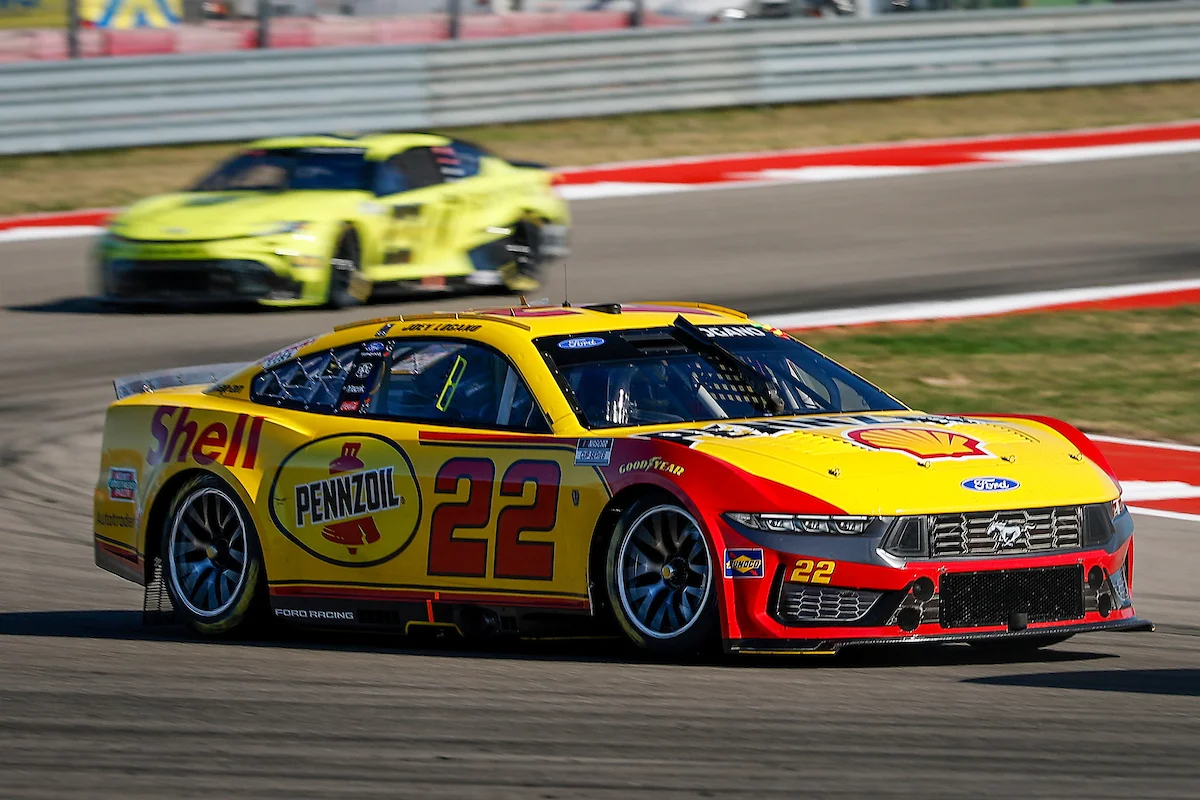
Just different, right? The way they have things set up, the way they prepare for their practice, and what they look at. Those types of things. It’s just a little bit different than what we do,
Logano said.
So I’m interested to see the race tomorrow and kind of see their strategies and how they play their race out.
The core reason behind these differences lies in the cars’ design philosophies: NASCAR Cup cars are heavier and louder, focusing on endurance and robust competition, while IndyCars emphasize aerodynamics and sheer speed.
IndyCar Drivers React to NASCAR’s Reduced Practice Time
Logano also mentioned how drivers from IndyCar often express surprise when they learn how limited NASCAR’s practice time is before qualifying sessions. This contrast reveals a gap in preparation expectations between the two series.
They’re very surprised when they say, ‘Yeah, we got like 20 minutes, and then we’re going to qualify.’ That’s what we get,
Logano explained.
A lot of the drivers are in disbelief when they hear that because they’re used to a lot of practice. We used to have this. I’m okay doing what we’re doing.
While IndyCar teams typically enjoy longer practice periods to fine-tune their cars, NASCAR has shortened practice sessions in recent years due to evolving race schedules. This difference often becomes a topic of discussion when drivers from both series interact at combined events.
Vehicle Design Plays a Pivotal Role in Performance Differences
Logano underscored that the design of IndyCar machines largely explains their higher speed capabilities compared to NASCAR vehicles, praising the stark contrast between the two types of racing machinery.
Well, obviously, there’s not much to say from an IndyCar to a Cup car,
he said.
That’s what makes this weekend so special. You have two completely different things. So if you’re a race fan, where else can you go and see two completely different things within a day of each other?
He elaborated on the unique physical aspects of IndyCars that contribute to their performance.
The cars themselves, you look at them, and they’re small, right? Look how low they are. Their tires are huge. The amount of downforce they have is ridiculous. All those things together are what make their speed just ridiculous.
Additionally, Logano shared a conversation he had with IndyCar driver Scott McLaughlin, highlighting the differences in braking techniques between the two racing styles.
I was talking with McLaughlin before the week started here, and he’s like, ‘You guys just kind of cover the brake a little bit?
Logano recalled.
I’m like, ‘No bro, we’re on the binders as hard as we can. We’re downshifted. It’s a lot of brake.
And he was in disbelief because they’re pinned all the way around. Almost at least. They’re right at it. It’s kind of crazy to hear the differences in driving.
Impact of These Differences on Racing Culture and Fans
The contrast between IndyCar and NASCAR, as described by Joey Logano, not only reflects technical and operational diversity but also shapes distinct cultural perceptions within motorsports. Fans attending race weekends featuring both disciplines witness two unique spectacles, each with its own style and strategy.
For drivers, these differences mean adjusting expectations and potentially adopting new techniques when encountering the other series. With such contrasting racing philosophies, the mixed-event weekends offer opportunities for cross-series learning and appreciation, while underscoring the distinctive appeals that each form of racing holds.
Joey Logano and I chatted as he watched practice to prepare to be in the FOX Sports booth for the INDYCAR race Saturday (1 p.m. ET, FOX). We talked differences between how an INDYCAR and a Cup car drives. And how about how much practice INDYCAR gets? @IndyCarOnFOX @NASCARONFOX pic.twitter.com/gzzdXUhEd0
— Bob Pockrass (@bobpockrass) March 6, 2026
