
Honda has extended Johann Zarco’s contract with LCR Honda through the end of 2027, committing to a two-year renewal announced in 2025. While this move signals confidence in Zarco, internal discussions reveal significant disagreements about the decision, especially considering his mixed performance during the recent seasons.
Despite a standout win at Le Mans and a podium finish at Silverstone, Zarco’s overall 2025 season was marked by inconsistency. He finished twelfth in the championship and was Honda’s highest-ranked rider, yet only held a narrow six-point advantage over teammate Luca Marini. Though respectable, his results were not exceptional, and the length of the new contract surpasses typical deals in the current MotoGP market.
Zarco’s victory at Le Mans was a major highlight for Honda, marking their first win since 2023. In challenging home conditions, the Frenchman delivered an impressive performance, followed by a strong second place at Silverstone. However, after the British Grand Prix, his form declined sharply, with just two top-10 finishes through the remainder of the season, despite ongoing improvements to Honda’s RC213V bike.
Ultimately, Zarco remained Honda’s best performer in 2025, but the question remains whether this justified offering him a two-year extension — a subject that has sparked debate within the team and the wider Honda management.
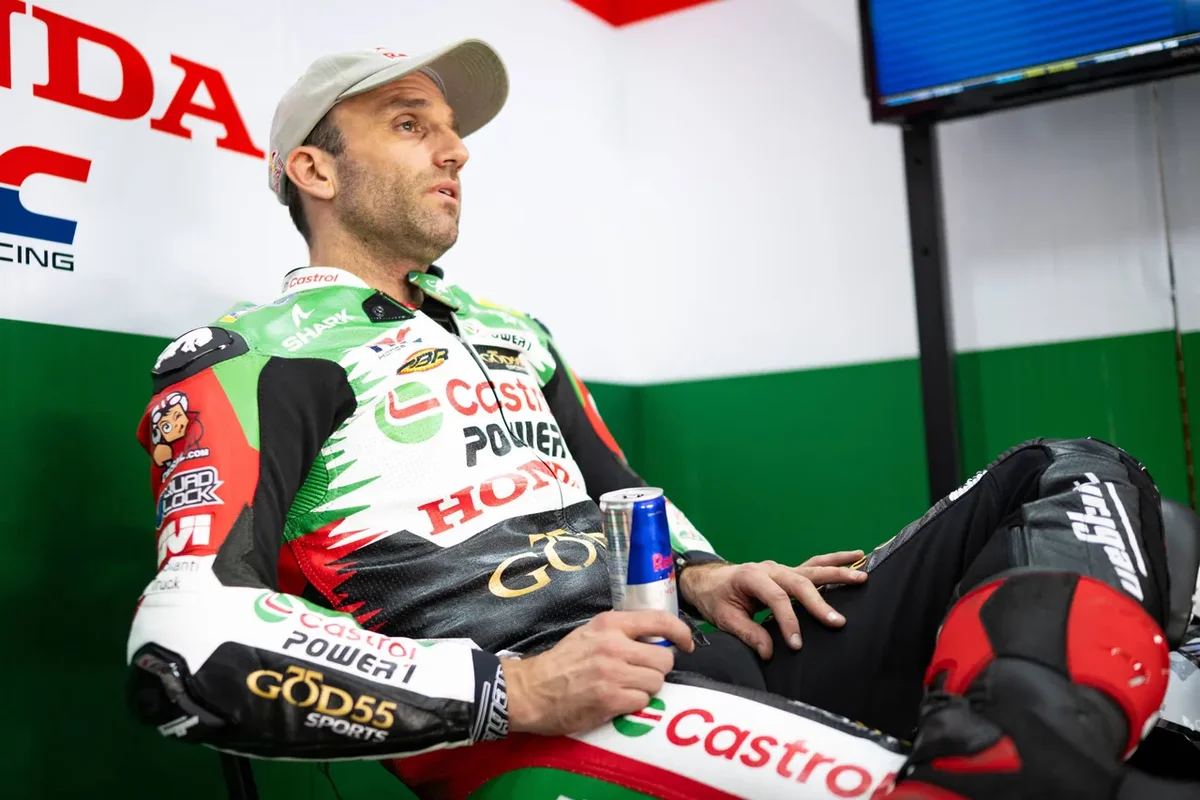
Insights into Zarco’s Contract and Its Complex Negotiations
An unusual aspect of the contract talks was the apparent absence of Alberto Puig, HRC’s director, from negotiations and the final agreement process, prompting speculation of internal disagreement within Honda. This unusual circumstance has fueled rumors about differing opinions on Zarco’s future with the team.
Journalist Neil Morrison addressed the situation on the Paddock Pass podcast, remarking on the sensitivity surrounding Zarco’s contract. He said,
“I see a certain evolution within LCR. Johann Zarco, for example, has a two-year contract, which runs until 2027.”
Morrison elaborated:
“If we consider its results, its trajectory, and that of Honda, as well as the ambitions displayed by the brand, one could imagine a situation where Zarco might be paid to ride for Honda’s test team or to participate in the Superbike World Championship.”
This suggests that, despite the contract’s signing, Zarco’s role is not absolutely fixed. One possible strategy discussed is to free up his MotoGP seat, move him to a test rider position or a role in WorldSBK, and bring in younger talent such as Luca Marini to strengthen the team’s future lineup.
Morrison also shared insight into Honda’s internal disagreements, adding,
“I had heard that some members of Honda’s management were far from pleased that Zarco was offered a two-year contract, especially given the frenetic situation in the rider market and the imminent arrival of promising young talents in Moto2.”
With the 2027 rider market already expected to be highly competitive, securing a 36-year-old rider for two seasons is seen by some as contrary to Honda’s long-term strategy.
Industry Experts Question the Wisdom of a Long-Term Deal for Zarco
Adding to the debate, Livio Suppo, a racing consultant and former Honda director, voiced strong reservations during an appearance on the Oxley Bom MotoGP podcast. He stated,
“He is 36 years old, would you offer him a two-year contract? Personally, no.”
Suppo outlined his perspective on rider development, explaining,
“In the first season, they just need to learn. In the second season, they start to show something. In the third season, they have to fight for the title.”
Addressing Zarco’s career achievements, Suppo further commented:
That is, the Australian Grand Prix on the Pramac Ducati on a dry track…
This pointed observation underlines the argument that, while Zarco has experience and some notable success, his record includes only one premier-class win, which raises questions about investing heavily in a long-term deal at his age.
The internal struggle at Honda highlights a fundamental dilemma: should the team continue to prioritize experience and stability in Zarco, or shift focus to younger riders to align with the evolving landscape of MotoGP?
Financial and Strategic Implications of the Contract
Sources indicate that Zarco’s salary with LCR Honda is approximately 4.5 million euros annually, a significant investment given the rider’s sporadic results. As Honda prepares to restructure its approach toward the 2027 season and adapt to new 850cc regulations, cost-effectiveness and forward planning are under scrutiny.
Zarco consistently supported Honda during challenging periods and contributed valuable technical feedback, bringing a level of stability to the team. His Le Mans victory remains a landmark achievement in this context. However, some executives advocate for promoting emerging talent such as Luca Marini, whose potential reflects Honda’s ambitions for the future.
Even though the contract extension is official, in MotoGP a signed deal does not always guarantee fixed long-term plans. The core question has shifted from whether Zarco merits the contract for 2026 and 2027, to whether Honda can afford to commit deeply to a rider representing the current generation instead of focusing on youth development.
The internal debate at Honda remains unresolved, reflecting wider challenges faced by teams balancing immediate results with sustainable growth in a highly competitive and evolving MotoGP environment.
