
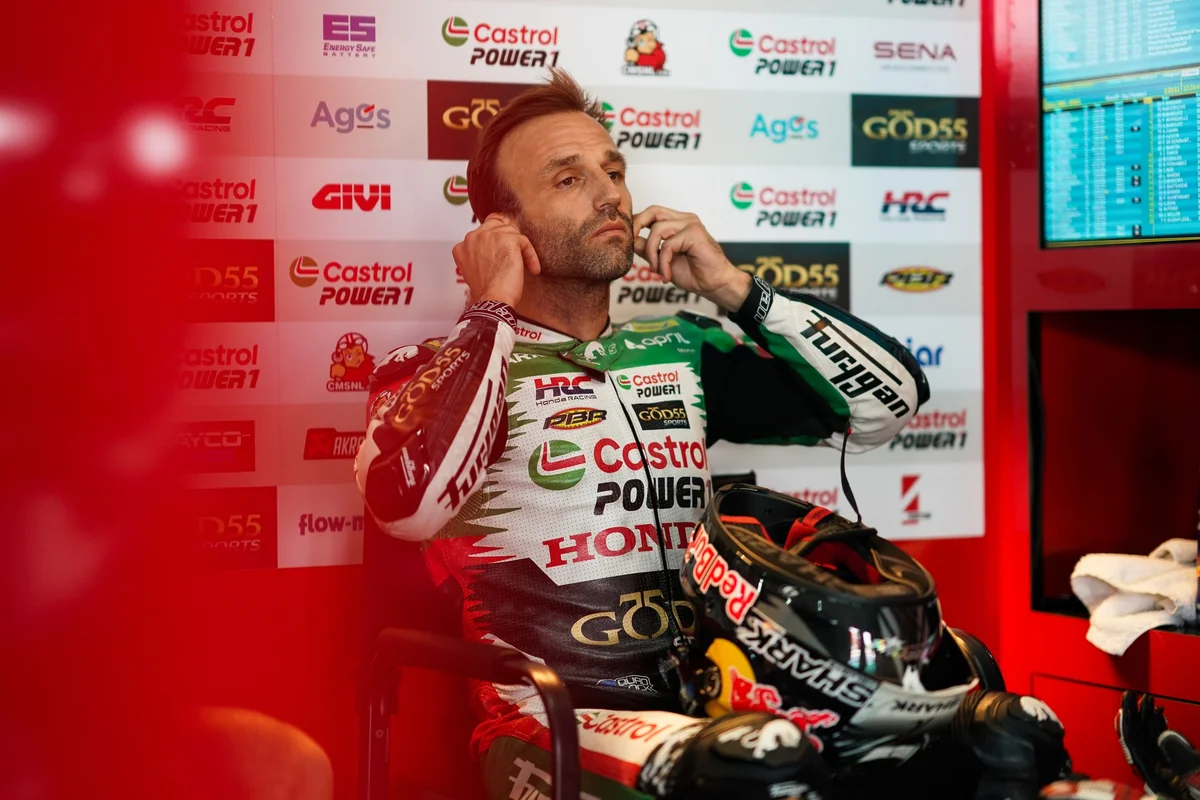
Johann Zarco, competing for the Honda LCR team, expressed clear frustration after finishing twelfth in the recent race sprint, highlighting the missed opportunity to score points. During his post-race interview on Canal+, Zarco reflected on his performance as
“disappointed, twelfth place means zero points. I think there was a way to get the point for ninth place.”
The French rider’s struggles became apparent early in the race.
Zarco described a promising start that quickly unraveled:
“[I made a] decent start, and my first corner was pretty well managed. Then I was behind [Brad] Binder in turn 3, I was under control, but as I entered the corner, I lost control of the bike, I went wide, and so the advantage I had in the first corner, I lost in turn 3.”
This mistake disrupted his momentum and prevented converting his early efforts into better results.
Seeking Inspiration from Competitors on Race Strategy
In an effort to refine his approach, Zarco looks to Brad Binder, a rider known for his strategic handling of race conditions. He noted,
“That’s where I try to take inspiration from Brad Binder. When he’s struggling, you see that he always manages to pull through in the race. It’s both thanks to his style and what he looks for on the track. It doesn’t give him instant speed, but when the race gets going, it’s enough to fight, accelerate again, and make the switch under braking.”
This insight emphasizes Zarco’s focus on adapting race craft over outright pace.
Impact of Track Conditions on Performance
The extreme heat affected grip levels significantly during the race, adding complexity to Zarco’s performance. He explained,
“It was very hot, it will be again tomorrow, and it’s extremely slippery.”
Despite these challenging conditions, Zarco felt moments of potential but struggled to sustain control.
“I was trying to control it. I knew I was going to be able to pass [Diogo Moreira], and then [Luca] Marini. I was very close with a slight advantage, but my bike wobbled a lot before turn 12. I found myself without brakes and as a result I lost time again,”
he admitted.
Errors and Learning Opportunities for the Full Race
The difficulties compounded as Zarco continued to push after his initial mistake. He said,
“After that mistake, there was the desire to catch up [with the riders ahead] as quickly as possible, and then other mistakes followed. [I’m] disappointed, but it’s not a big deal. I think there’s definitely a way to find a better way to control the bike, because right now I’m more reacting to things than riding it.”
This self-reflection shows his determination to improve bike management under pressure.
Despite the setbacks, Zarco’s lap times after overtaking his teammate, Diogo Moreira, indicated some promising performance.
“With the rear medium tire, it’s a different approach. […] We’re all going slower, but going slower means finding a consistency that I find appealing.”
These comments underline his goal to harness a steadier pace for the longer endurance race, aiming for a top-10 finish.
Balancing Speed with Race Efficiency
Zarco acknowledges that his current riding style prioritizes outright speed but at the cost of race consistency. He explained,
“That’s where I need to learn to control my driving to provide more useful information during the race, rather than just chasing pure lap times. I think I have a style that allows me to achieve great lap times, but it puts me at a disadvantage during the race.”
His honest assessment highlights the tension between excelling in single laps and sustaining performance among a group of riders over the race duration.
Meanwhile, Pedro Acosta, reflecting on his recent victory in Thailand, shared a contrasting sentiment, stating,
“I don’t feel like a winner.”
– Pedro Acosta, Rider
Johann Zarco’s race analysis reveals the challenges of mastering his Honda LCR machine under difficult conditions and his intent to learn from competitors like Brad Binder. His candid reflections provide insight into the complex balance between speed and control necessary for success in upcoming endurance events, particularly the endurance race where consistent performance over time will be key.

