
Kevin Harvick, former NASCAR Cup Series champion, views the upcoming season for Trackhouse Racing as one filled with intense pressure and high stakes. With changes such as new crew chiefs and the introduction of Connor Zilisch, who replaces Daniel Suarez, the team faces both promising opportunities and unknowns in its development.
Harvick noted,
“I think there’s a lot of questions. They’ve made a number of changes within their organization. Got two new crew chiefs. They’ve got a new driver with Connor Zilisch coming in.”
This overhaul sets the stage for an intriguing season but also brings expectations that will test the team’s cohesion and performance.
Shane van Gisbergen’s evolving impact on NASCAR
Harvick praised Shane van Gisbergen for transforming NASCAR’s road-course racing, drawing attention to his rapid growth on oval tracks as well. His adaptability across different race formats may become a key asset for Trackhouse’s competitiveness.
“He’s obviously changed the game on road courses,”
Harvick explained.
“But he’s gotten a lot better on the ovals. We saw him run great at the Clash last year, and we started to see top-10 runs on mile-and-a-halfs.”
This improvement suggests a dual-threat presence that could influence the dynamics within the team.
Connor Zilisch’s transition from road racing to NASCAR Cup
Connor Zilisch, a standout in the O’Reilly Auto Parts Series with dominant road racing performances, now faces the steep jump to NASCAR Cup competition. Harvick highlighted the challenges Zilisch will encounter as he adapts to Cup cars and the demanding atmosphere of weekly racing.
Discussing the internal competition, Harvick remarked,
“The interesting dynamic to me is on the road courses, how does Connor adapt? Is there a possibility they split those races up with their dominance? Connor’s got a whole new world in front of him.”
Patience is expected to be crucial for both the rookie and the team during this phase.
Broader changes affecting NASCAR’s top teams and figures
Beyond Trackhouse Racing, the NASCAR and college sports landscapes are experiencing notable shifts. The Associated Press poll for the Top 25 teams shows significant changes, accompanied by important retirements and updates that affect team trajectories.
Gus Malzahn, a well-known coach, has announced his retirement, while various teams have made top transfer additions influencing competitive balances. Additionally, Dick Vitale has publicly addressed the Charles Bediako case amid shifting bracketology predictions for upcoming tournaments.
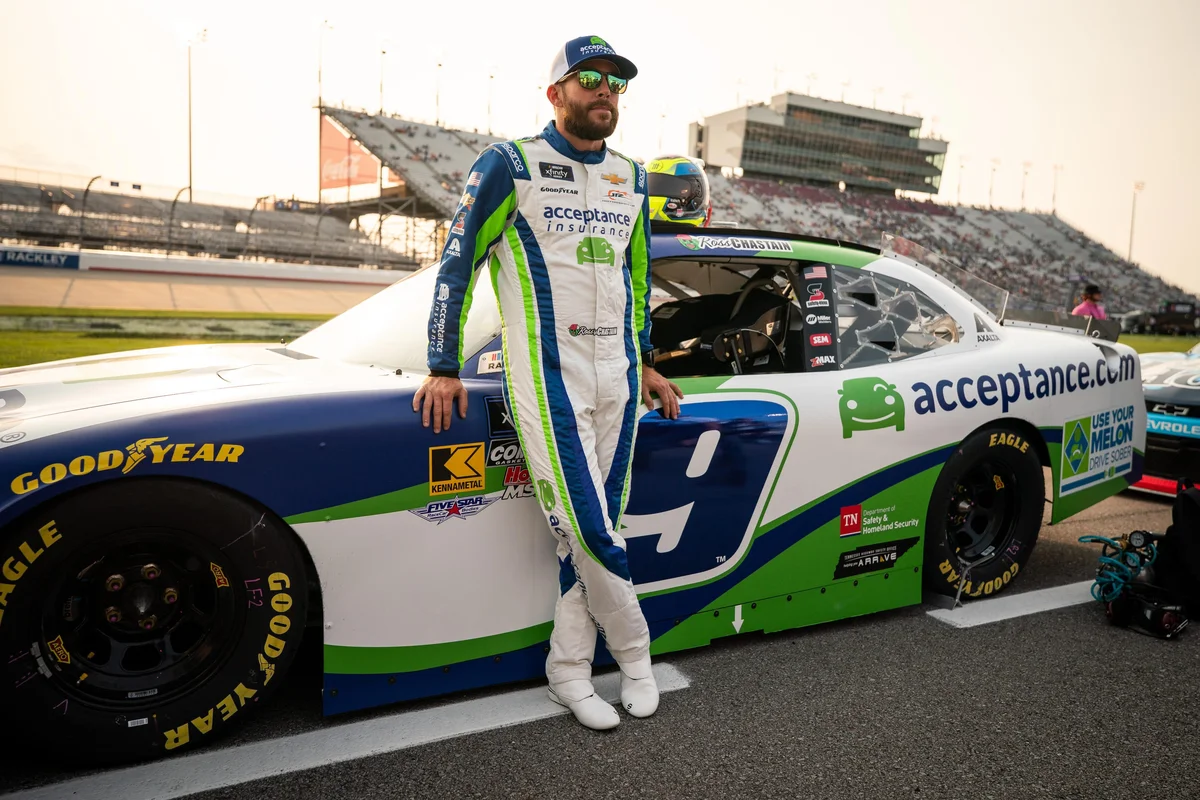
Harvick’s crucial message for Ross Chastain about winning expectations
Harvick underscored the significant leap required when transitioning from the Xfinity Series to the Cup Series, emphasizing the importance of mastering Cup cars and the heightened racing intensity. While recognizing the potential of both Zilisch and van Gisbergen, he stressed the need for steady progress and realistic expectations.
However, his strongest remarks targeted Ross Chastain’s expectations within Trackhouse Racing. Harvick stated,
“The dynamic — you expect Ross Chastain to win, right? He’s got to win. He has the work ethic. Has the talent. He has everything he needs personally.”
Although Chastain has demonstrated the ability to earn solid finishes from less competitive cars under the current points system, Harvick made it clear that merely finishing well is insufficient for a driver of his skill and resources.
He elaborated further,
“If Ross Chastain isn’t winning races, your cars aren’t fast enough. He should be winning multiple races every year. And if you’re not winning races, your cars are not fast enough.”
This statement places a spotlight on the necessity for speed and victories, setting a clear benchmark for both driver and team performance.
The future outlook for Trackhouse Racing amid high standards
The assertions from Harvick frame a scenario where Trackhouse Racing holds vast potential across its roster but faces intense scrutiny to translate that potential into wins. Especially with talents like Chastain and emerging drivers like Zilisch, the organization has no room for stagnation if it wants to contend at the top of NASCAR’s ranks.
The season ahead promises to test the team’s cohesion, adaptability, and ability to deliver results on the track, with clear expectations that victories must reflect the team’s resources and talent.
