
This weekend, the NASCAR Cup Series returns to Atlanta Motor Speedway for the second race of the 2026 season, following an exciting Daytona 500. Kyle Busch, driving for Richard Childress Racing (RCR), comes into this race riding strong momentum after securing the pole position in the previous event, marking a potential revival for the No. 8 team after two seasons without wins. Known for his success at Atlanta across all three national series, Busch views this track as a personal favorite despite its recent changes that have increased the unpredictability of races.
Atlanta Motor Speedway, recently reconfigured into a mini-superspeedway, has created a racing environment that blends high speed with tight competition. This redesign has contributed to heightened chaos, with frequent pushing, bumping, and accidents, especially along the straightaways, challenging drivers’ skills and race strategies.
Atlanta has gotten pretty chaotic, anything can happen. Any moment, we’re pushing each other, bumping each other, and more times than not we’re crashing down the straightaways. It’s a tricky little racetrack because it’s a mile-and-a-half. So, the superspeedway aspect of it, at a mile-and-a-half, the speed sensation is so much higher. So, it’s really a fun place to race, but yet a big challenge on the drivers.
Kyle Busch said (via Speedwaymedia.com).
Balancing Aggression and Caution in Atlanta’s High-Stakes Racing
When asked about how to manage aggression on such a demanding track, Busch emphasized that assertiveness is essential for success. The challenge is to maintain this aggression without causing wrecks early in the race, as accidents involving multiple cars can derail efforts for everyone involved. With nearly 40 drivers competing fiercely for the lead, the balance between pushing hard and exercising patience becomes critical.
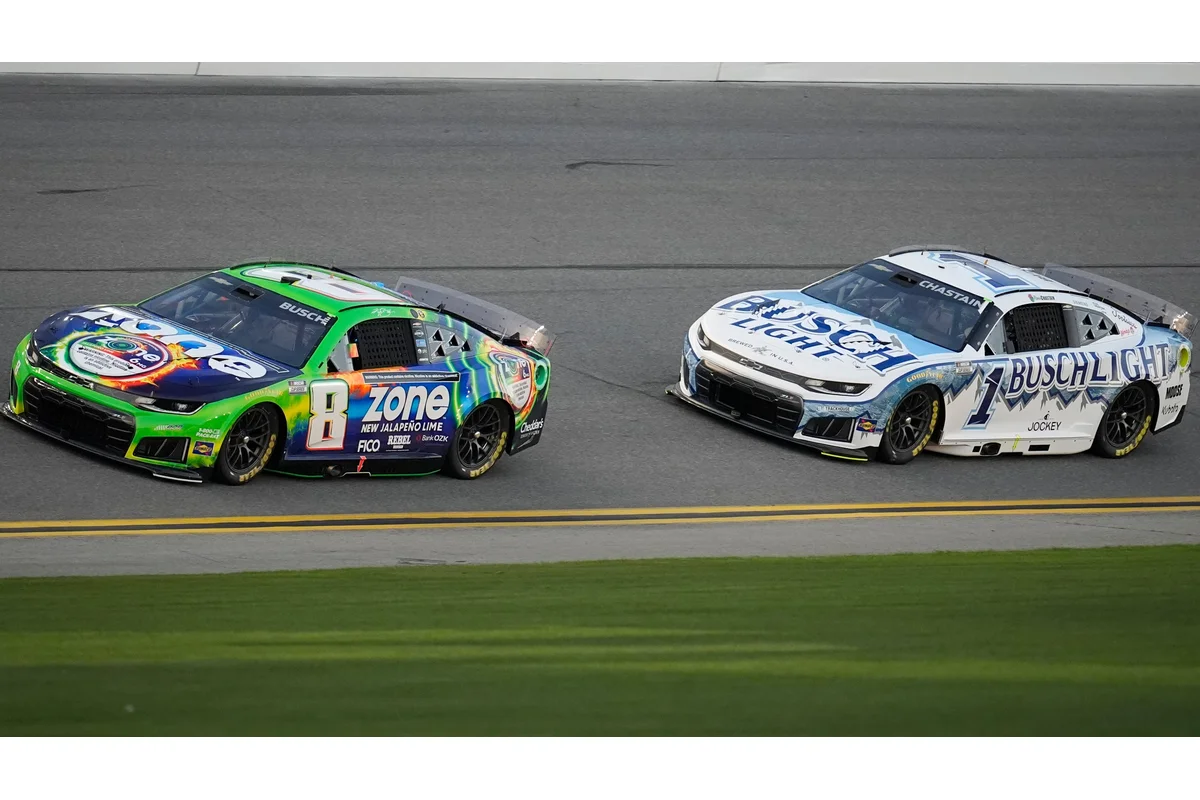
Yeah, you want to be aggressive at Atlanta because you want to get up towards the front. You want to make those moves to get yourself in position and everybody else is also trying to do that, so you got 30-40 drivers vying for that number one position it gets a little bit hectic, but you know you gotta wait. It’s a long race, you can’t be wrecking and piling up 30 something cars in turn three in the first stage it just makes zero sense, so trying to find a way to make it through the wrecks and not get caught up in one.
Kyle Busch added.
Busch’s approach highlights the complexity of racing at Atlanta: drivers must push aggressively to gain position but also remain vigilant to avoid premature crashes that could end their race before it really begins.
Impact of Track Changes on Racing Strategy at EchoPark Speedway
Reflecting on the recent transformation at EchoPark Speedway, the new asphalt surface has shifted the dynamics of races held there. Busch pointed out that tire and fuel management, which once played a key role due to the older track condition, now take a backseat to pure speed and close-quarter competition. Drivers are forced into tighter packs, making races more of a tactical battle resembling a chess match.
EchoPark Speedway is an entirely different track than what it used to be. No more old age asphalt and running and strategy to have the best tires at the end. It’s a speedway race. It’s all everybody on top of one another and there’s a lot of chess matches going on.
Kyle Busch said.
This change demands heightened awareness of lane choice and timing when making moves, especially in the closing laps, as drivers try to anticipate the best position to launch their final attack.
So, trying to figure out the best lane to be in, where you want to be on that last lap, do you want to be leading, do you want to be second, it just kind of depends on the situations and the runs and the energy that is happening behind you from the other cars to push you forward.
Kyle Busch added.
Strategic Decisions Become Crucial in Atlanta’s Chaotic Conditions
Kyle Busch’s insights reveal that winning at Atlanta now depends more than ever on strategy, splitting races between moments of aggression and precision. The newly reconfigured track requires drivers to constantly evaluate their position, the condition of their equipment, and the behavior of competitors. The outcome often hinges on these decisions rather than sheer luck.
As RCR aims to build on Busch’s early-season momentum, the weekend’s events will test how well the team adapts to Atlanta’s demanding conditions. Fans and analysts alike will be watching closely to see if Busch’s experience and tactical approach pay off with another victory at this notoriously chaotic venue.
