
Kyle Larson has reignited the intense debate around the Kyle Larson Max Verstappen controversy, blaming fans for distorting his comments during a recent podcast. The incident, tracing back to 2024, continues to provoke strong reactions among racing enthusiasts across F1 and NASCAR, underlining the charged nature of cross-discipline comparisons.
How the Controversy Between Larson and Verstappen Escalated
Rivalries between F1 and NASCAR are often defined by fundamental differences in racing style, yet it was Kyle Larson’s comparison involving Max Verstappen that truly stoked debate. In 2024, Larson declared,
“I know in my mind I am better than Max Verstappen as an all-around driver.”
That assertion was met with significant backlash, especially from F1 fans, and the controversy resurfaced when Larson suffered an Indy 500 crash in April 2025, sparking viral discussions once more. Larson has remained unrepentant and intent on clarifying his intentions.
Appearing on the Dinner with Racers podcast, the Hendrick Motorsports driver confronted the fallout head-on. The host explored the relentless backlash to Larson’s hypothetical comparison with Verstappen, focusing on how words were twisted by some fans. Larson reflected on the enduring firestorm, stressing his perspective on driver versatility and feeling misunderstood by parts of the motorsports audience.
Larson reiterated his belief in broad racing talent, stating,
“There are phenomenal drivers in every form of racing; it’s not just Formula One,”
and further added,
“Like, sure, Max Verstappen is one of the greatest of all time, probably in all different types of forms of racing, but yeah, for fans and whatever to think that the best race car drivers in the world are in Formula 1 is crazy.”
– Kyle Larson, Driver
He emphasized that his comments were not an attack on Verstappen’s ability, but a rejection of the notion that F1 stands alone as the peak of driving excellence. Larson highlighted his own diverse victories—from dirt ovals and stock cars to endurance events—as evidence for the value of versatility in motorsports, yet he noted that the uproar over the comparison persists.
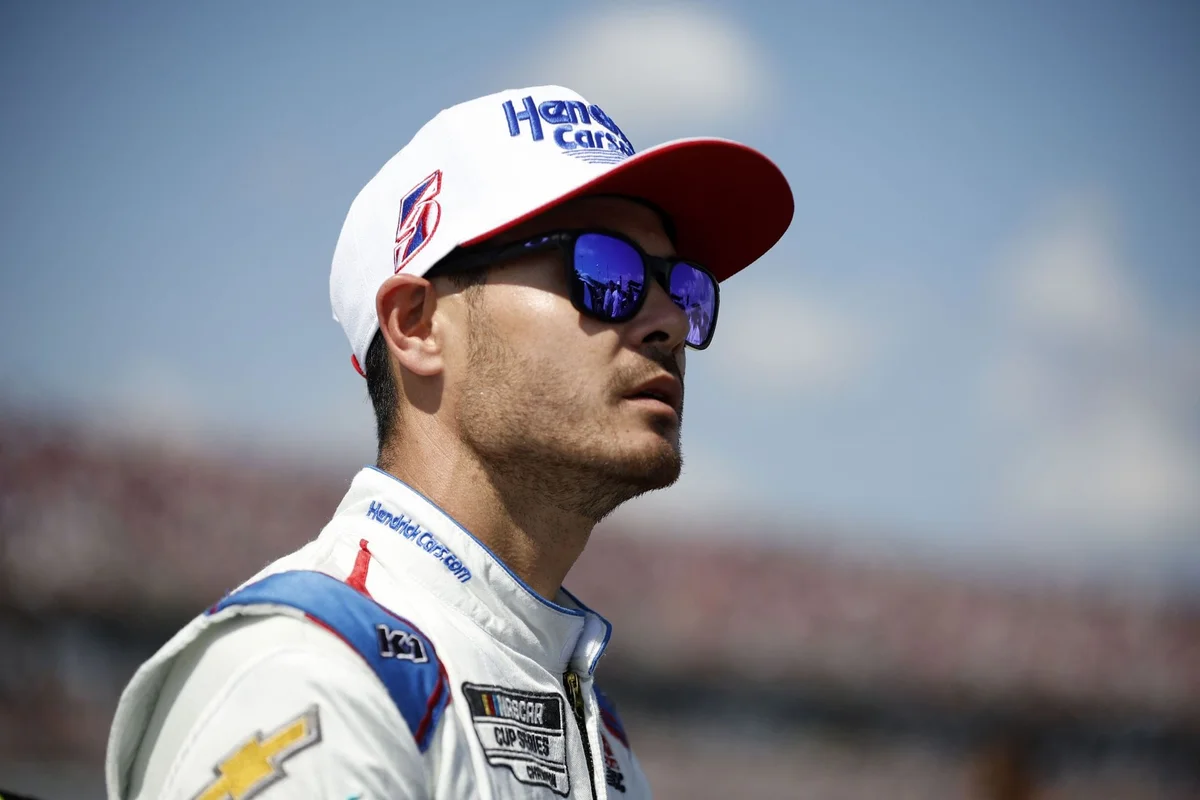
Larson’s Response: Fans, Media, and Misinterpretations
The roots of the controversy also touch on comments Larson made regarding racing and the Olympics. After being asked about the idea of adding racing to the Olympic Games, Larson responded,
“I don’t think racing should be in the Olympics because all the Olympic sports are purely athletic talent.”
– Kyle Larson, Driver
He also shared,
“I don’t need the Olympics to feel like I could compete with Max Verstappen. Everybody always wants to compare. Like, I’m content to know that I’m a great race car driver, and he is too,”
addressing fans’ relentless tendency to draw head-to-head scenarios between top athletes. – Kyle Larson, Driver
Larson described how quickly his nuanced positions were seized upon and distorted. He explained,
“People took that as like, ‘Oh, I won’t compete with Max Verstappen.’ No, I said I’m better than Max Verstappen in a Formula One car, too. I’m like, come on. You guys are crazy.”
He concluded with a pointed observation,
“Fans are going to spin it however they want to spin it.”
– Kyle Larson, Driver
Through these statements, Larson directly attributed the controversy’s endurance to the way racing fans and segments of the media interpret, and sometimes misrepresent, his commentary. Underlining the breadth of competition, he said,
“I just think there are great, great, great drivers in all forms of racing… even down to go-karts. Yeah. Like even down to go-karts.”
– Kyle Larson, Driver
This direct blame on fans for fueling the Max Verstappen debate serves as Larson’s attempt to halt the narrative distortions that cast him as a villain and to reinforce respect for racing talent in all its forms.
Larson’s Career Direction and Inspired Changes
Beyond the Max Verstappen controversy, Kyle Larson’s career ambitions have also evolved in the wake of intense challenges. His back-to-back failed pursuits of “The Double”—competing in both the Indy 500 and Coca-Cola 600 on the same day—forced a pragmatic reassessment. His 2024 attempt was derailed by rain delays in Indy, while in 2025, an Indy crash and later on-track problems at Charlotte led to another disappointment.
Larson said of his future intentions,
“I don’t plan on it while I’m a full-time NASCAR guy, but I would love to do it… someday when I’m done full-time racing,”
suggesting that for now, his focus remains firmly with Hendrick Motorsports and the NASCAR Cup Series. – Kyle Larson, Driver
He drew inspiration from Jimmie Johnson, who weighed a similar crossover but decided against it, ultimately prioritizing Cup Series dominance. Larson now opts to step back from IndyCar efforts until concluding his full-time stock car career, recognizing the limits of peak competitiveness in his mid-40s. He acknowledged this transition with,
“I know Helio and guys, there are definitely guys, in their mid-40s that are super competitive, but… I just don’t want to do it right and do it legit, and I don’t know if in your mid-40s you can,”
referring to Helio Castroneves and other veteran drivers. – Kyle Larson, Driver
Having secured the 2025 Cup championship with Hendrick, Larson is now moving away from sprint cars and the High Limit Series to spend more time with his family and to seek endurance racing opportunities. He highlighted his fondness for the 24 Hours of Daytona, a race he won in 2015 with Chip Ganassi’s team alongside Scott Dixon, Tony Kanaan, and Jamie McMurray. He reflected,
“It ranks really high on my list of wins for sure. It’s such a unique win too… I’ve never won a race with a teammate, so it’s a really special, unique sort of win.”
– Kyle Larson, Driver
The prospect of sharing more racing moments with his children now appeals greatly to Larson, as he said,
“I think at this stage in my career, yeah, I would do it again… to have my kids be a part of it would be cool.”
– Kyle Larson, Driver
Looking Ahead: Impact on Motorsports and Fan Culture
The Kyle Larson Max Verstappen controversy shows no signs of fading, as it reflects ongoing tensions about recognition, fan behavior, and identity in global motorsports. Larson’s insistence on respect for diverse racing skills, combined with his criticism of sensationalistic fandom, positions him as a leading voice calling for perspective in an increasingly charged environment.
Larson’s latest comments, career choices, and ambitions will likely continue to generate debate across NASCAR, F1, and endurance circles, affecting how racing fans and media engage with drivers’ statements and achievements in the years ahead.
