
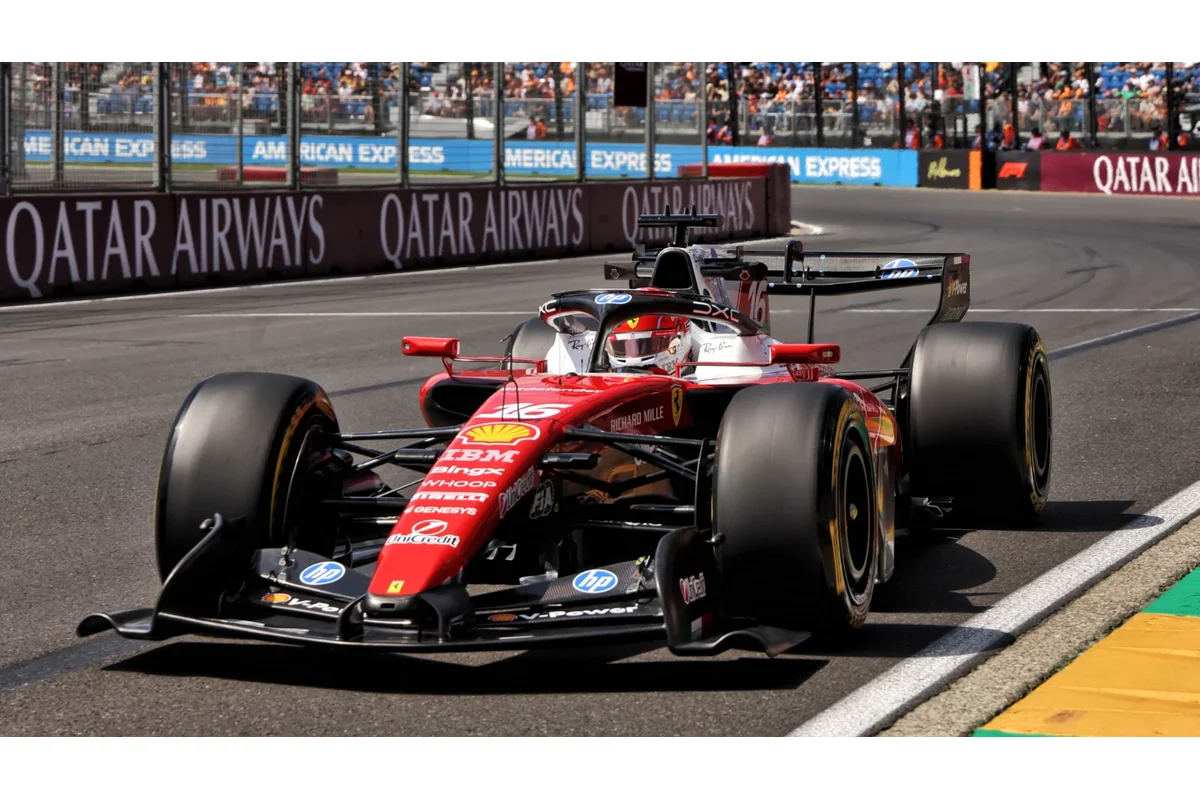
Charles Leclerc secured the fastest time in the opening practice session (FP1) of the 2026 Formula 1 season held in Melbourne, establishing his pace ahead of key rivals. Lewis Hamilton delivered the second quickest lap, while Max Verstappen ranked third driving the Red Bull Racing RB22. This session marked the first glimpse of on-track performance at the Australian Grand Prix, setting an early tone for the championship fight.
Introduction of New “Straight Mode” System for Melbourne
A notable update for the 2026 season is the implementation of the “Straight Mode,” a new feature activated across five designated zones on the Melbourne circuit. This technical adjustment is intended to influence overtaking opportunities and car performance during the season opener, adding a strategic layer for teams and drivers to navigate during practice and race sessions.
Notable Moments and Challenges During FP1
The first session was punctuated by several incidents impacting driver runs and team strategies. Arvid Lindblad experienced difficulties, necessitating a return to the pit lane and triggering a brief deployment of the Virtual Safety Car (VSC). A power unit issue prevented car #14 from participating in FP1 entirely, according to Honda Racing F1, causing disruptions to the team’s preparation.
“Arvid Lindblad is pushed back into the pit lane, and we briefly saw a VSC deployed 🟡#F1 #AusGP pic.twitter.com/XpmD3FYuvL” — Formula 1
“We found a suspected power unit-related issue which will prevent car #14 from participating in FP1.#AusGP pic.twitter.com/VRhzRigxfq” — Honda Racing F1
Drivers also dealt with traffic issues on track, notably Valtteri Bottas, who reported being completely blocked by Lewis Hamilton during his flying lap early in the session.
“I got fully blocked by Lewis” — Valtteri Bottas
Further on-track actions included Alex Albon’s car stopping due to a hydraulic failure, which again brought out the VSC to ensure safe management of the incident.
“🟡 VIRTUAL SAFETY CAR 🟡Alex Albon stops out on track, with the team reporting a hydraulic issue over the radio #F1 #AusGP pic.twitter.com/em7Y9T4xmJ” — Formula 1
Checo Perez also encountered a spin at Turn 4, adding excitement as he recovered from the loss of control.
“Getting in a spin! 😵💫Checo Perez goes for a wild ride at Turn 4 💨#F1 #AusGP pic.twitter.com/AhYoh5xTv0” — Formula 1
Isack Hadjar was briefly highlighted by teams and commentators as he completed steady running, described informally as “just mowing the lawn” around the track in his session.
“Just mowing the lawn over here 😉 @Isack_Hadjar #F1 #AusGP pic.twitter.com/KQBhBEhlcl” — Formula 1
FP1 Results Set the Stage for the Australian Grand Prix
The initial practice session’s results affirmed Ferrari’s strong start to the season with Leclerc leading, but also underscored the competitive threats from Mercedes and Red Bull Racing through Hamilton and Verstappen. Technical setbacks and incidents demonstrated early season challenges teams must resolve before qualifying and race day. As the championship unfolds, these performances and lessons learned in Melbourne will be critical in gauging who can sustain pace and manage reliability.
With various new technical regulations shaping the competition, the Australian GP FP1 has provided valuable insights into potential contenders and highlighted areas requiring improvement. Fans and teams alike will look forward to tighter battles and laps as the weekend progresses.
https://twitter.com/F1/status/2029506959485899066
https://twitter.com/F1/status/2029733329977671981
We found a suspected power unit-related issue which will prevent car #14 from participating in FP1.#AusGP pic.twitter.com/VRhzRigxfq
— Honda Racing F1 (@HondaRacingF1) March 6, 2026
https://twitter.com/F1/status/2029738370767749247
https://twitter.com/F1/status/2029743162953007554
https://twitter.com/F1/status/2029744005404062153
https://twitter.com/F1/status/2029746042460098631
