
Lewis Hamilton‘s career in Formula 1 has become a powerful symbol of progress in a sport long dominated by white drivers. Since his debut, Hamilton has been the lone Black face in a 75-year history of Formula 1, representing a breakthrough in representation while overcoming significant challenges. His journey began in Stevenage, where he started karting with a borrowed vehicle and a determined father supporting his ambitions, long before he claimed his seven world championships.
Hamilton openly acknowledges the influence of Tiger Woods and tennis legends Venus and Serena Williams in his path-breaking role. Speaking in a 2017 interview with Serena Williams, Hamilton confirmed:
“Definitely, yes. My dad and I admired watching Tiger do that in golf, and you and your sister (Venus) do that in tennis. We’re very proud that we’ve done that in motor racing… When I was karting, there was no one who looked even a little like me, who could help me see that this was something I could do. Now there are kids who see me. I’m very proud to be a part of that.”
—Lewis Hamilton, Formula 1 driver
Like Woods’ unprecedented rise in golf during the 1990s, Hamilton faced skepticism and hostility, but both men shattered expectations through excellence in their sports. Hamilton’s near championship win as a rookie in 2007, finishing just behind Kimi Raikkonen, and his record as the youngest world titleholder in 2008 only reinforced his pathbreaking status. Woods demonstrated a similar early dominance by winning the 1997 Masters and ascending to world number one within a year. Their parallel journeys not only changed sports records but also bridged cultural gaps.
Collaboration Between Lewis Hamilton and Tiger Woods on the TMRW Project
Building on their shared legacies, Hamilton and Woods have extended their partnership beyond inspiration into business. Hamilton is one of the exclusive investors in TMRW Sports, a cutting-edge venture co-founded by Tiger Woods and Rory McIlroy. The company focuses on transforming sports engagement through technology, with the upcoming launch of TGL, an innovative golf experience designed to merge traditional play with immersive digital elements.
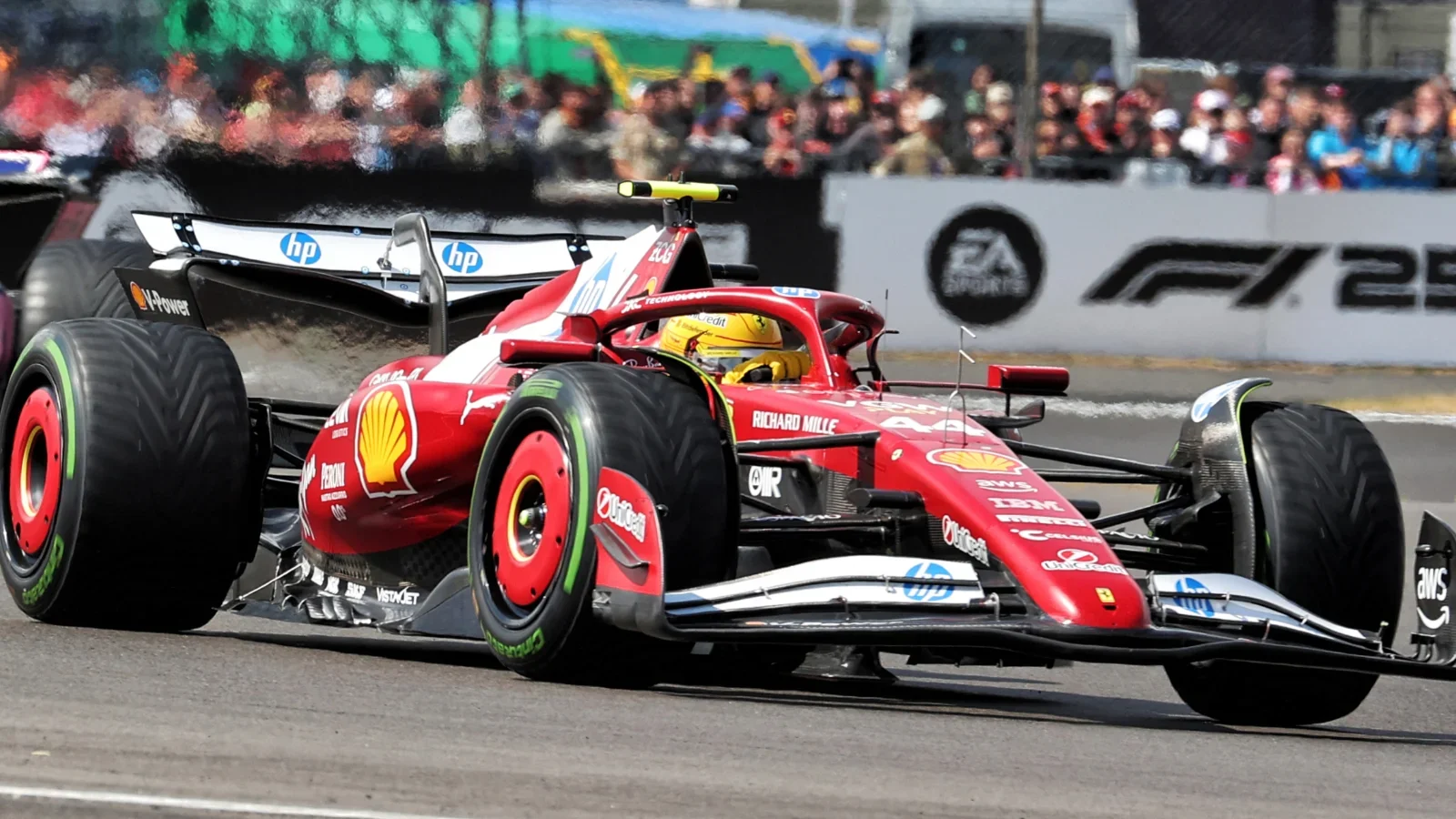
For Hamilton, whose investments include a stake in the Denver Broncos and eco-conscious fashion brands, his involvement with TMRW aligns with his commitment to increasing Black ownership in sports. Reflecting this in 2022, he stated:
“I do want to get more and more involved in teams because I really do believe in Black ownership, because there is a lack of it within sports, and Black equity. There is a real lack of that.”
—Lewis Hamilton, Formula 1 champion
Hamilton’s dedication to diversifying sports ownership is rooted in his experiences growing up in a predominantly white sport. In a 2020 interview, he related his story to the film Cool Runnings, saying:
“I relate a lot of my life to that movie because they arrive at the top of a hill with a rust bucket and everyone goes quiet… When we got to races I remember people looking at us like, ‘What are they doing here?’ Because it was a white-dominated sport.”
—Lewis Hamilton, Formula 1 champion
This lived reality drives his efforts with ventures like TMRW, which aims to break down gatekeeping in sports industries. Hamilton is joined in this investment by fellow Formula 1 drivers Lando Norris, Alex Albon, Carlos Sainz, and Mark Webber, as well as other sports luminaries including Stephen Curry, Venus Williams, Josh Allen, Trea Turner, Alex Morgan, Sidney Crosby, and the gaming icon Ninja.
The Significance of Continued Progress in Sports Diversity
From admiring Tiger Woods on television to now investing alongside him, Lewis Hamilton’s journey reflects a broader shift toward inclusivity in elite sports. His role in breaking color barriers has opened doors for new generations of athletes who can now see themselves represented at the highest levels of competition. By combining on-track success with off-track entrepreneurship and advocacy, Hamilton and his peers are working to create a sports landscape that embraces diversity not only in talent but also in ownership and influence.
The ripple effects of these changes are likely to grow as initiatives like TMRW reshape how sports are experienced and managed. As Hamilton continues to champion Black equity and representation, his partnership with Tiger Woods symbolizes a powerful alliance aimed at transforming the culture of competitive sports for years to come.
