
Lewis Hamilton’s Monaco GP telemetry advantage emerges as a key point of analysis after Friday’s practice sessions where Charles Leclerc dominated on home turf in Monte Carlo. While Ferrari set impressive pace, data shows Hamilton maintained a subtle but important edge in certain sectors, highlighting the complex dynamics at play during the event.
Why Monaco’s Unique Circuit Benefits Ferrari’s SF-25 Setup
The Monaco Grand Prix, renowned for its narrow roads and unforgiving corners, tests drivers’ precision more than outright car speed. This circuit’s low top speeds shift the focus to maximizing downforce, with teams prioritizing stability over aerodynamic drag reduction. The tough bumps and raised kerbs force a softened suspension and higher ride height to maintain control throughout the lap.
Ferrari’s SF-25, which has struggled with setup consistency this year, particularly in low-speed cornering, found itself surprisingly well suited to Monaco. This track’s predominantly slow corners allowed Ferrari to optimize its car for a narrow speed range—a rare advantage given their earlier season difficulties. Leclerc’s Friday pace demonstrated this, posting times 0.163 seconds faster than Max Verstappen and over 0.3 seconds ahead of Lando Norris in Free Practice 1.
A key section where Leclerc gained was Turn 12, the Tabac corner, where he extracted noteworthy grip. Additionally, Ferrari showed strength in Monaco’s fastest chicane at the lap’s end. Nonetheless, telemetry reveals lingering weakness in ultra-slow turns requiring strong throttle control, where SF-25’s traction limitations still cost time compared to rivals like McLaren, which appeared more stable exiting corners.
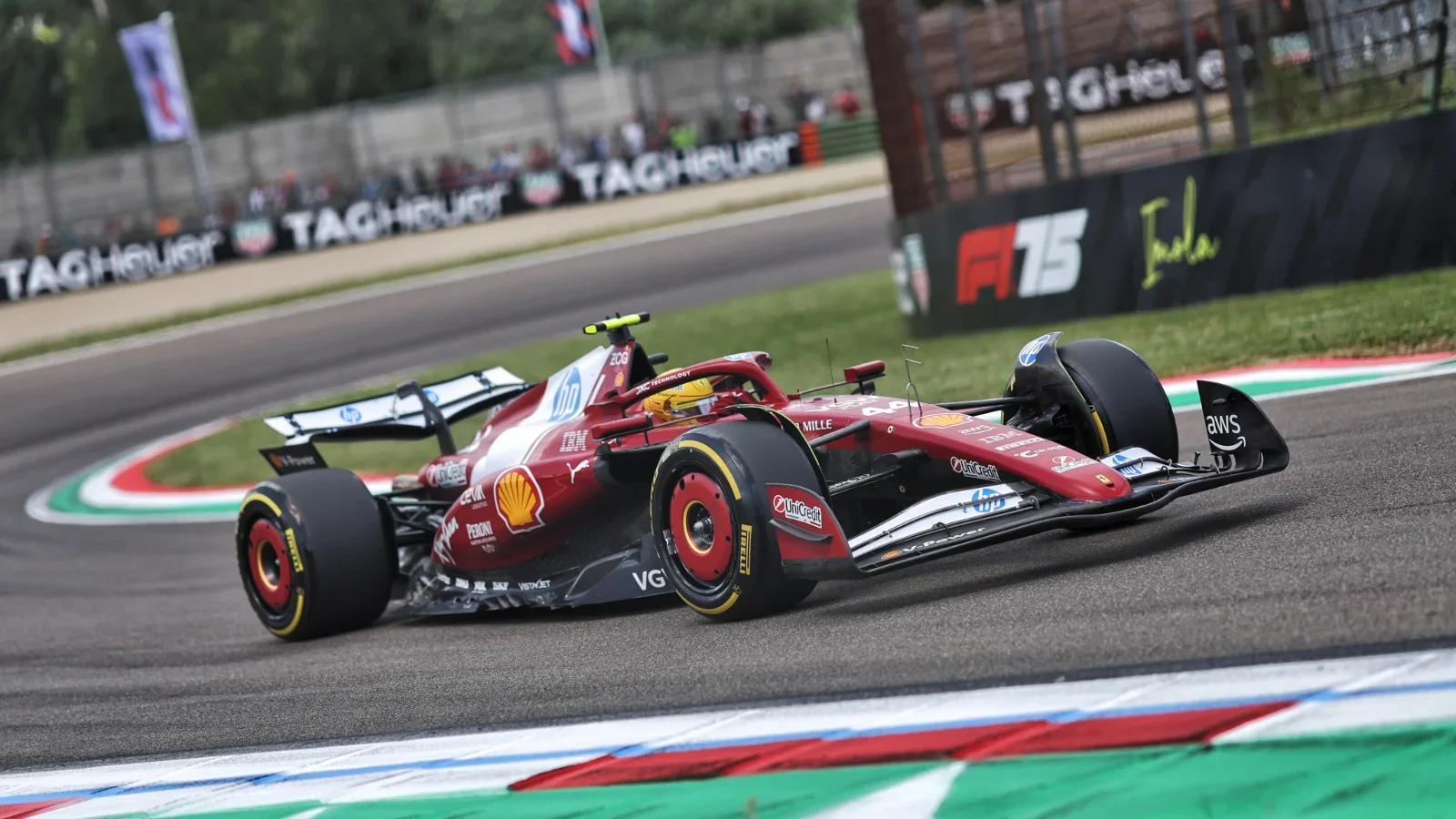
Leclerc voiced frustration with the car’s balance, noting
“understeer in right-handers and oversteer in left-handers,”
underscoring the challenges he faces despite the Ferrari’s overall strong pace at this weekend’s home Grand Prix.
Maintaining Momentum: Ferrari’s Consistency in FP2
During Free Practice 2, improved conditions and track evolution brought tighter competition, yet Leclerc again led the times, with teammate Piastri placing second and Hamilton third. Ferrari’s strong representation at the top of the order reassured their fans, the Tifosi, after a challenging season start.
The head-to-head comparisons with McLaren confirmed similar trends: McLaren showed advantage in tight, technical sectors between Mirabeau and Portier, but Ferrari excelled in the third sector, with Leclerc once more dominating Turns 12 and 15-16. The SF-25’s smooth kerb handling stood as a significant asset, especially for a track like Monaco where kerb management can save crucial tenths.
Even on the straights, generally less critical here, Leclerc managed to consistently reduce the time gap, underlining Ferrari’s continued gains in top speed despite the circuit’s short straights.
Insights into Hamilton’s Performance Compared to Leclerc
Telemetry data comparing Lewis Hamilton and Charles Leclerc reveals lap profiles that closely mirror each other, though Hamilton holds a slight edge in the very slow-speed sectors where the SF-25 struggles. However, Hamilton lost ground notably through Turn 8 and the tunnel section, critical zones where Leclerc’s confidence and control gave him the upper hand.
Leclerc’s attacking style at Turn 12 is especially clear in the data, showing superior apex precision and exit speed. His motivation at his home Grand Prix adds an extra dimension to his pace, contributing to his standout performance.
Meanwhile, McLaren remains competitive, with drivers like Piastri poised to potentially improve further heading into qualifying, signaling a tight fight beyond just Ferrari and Mercedes. Hamilton’s consistent lap times combined with his telemetry strengths indicate he is well-positioned to challenge for a top result despite Ferrari’s apparent advantage.
Anticipation Builds Ahead of Saturday’s Qualifying
The unfolding battle in Monaco, shaped by the intricate balance of driver skill and car setup reflected in telemetry data, promises a thrilling qualifying session. Ferrari’s SF-25, optimized for Monaco’s low-speed corners, faces persistent traction challenges, while Hamilton’s nuanced telemetry advantage in slow sectors and precision driving set the stage for intense competition.
With the traditionally demanding Monaco track rewarding driver precision above all, the performance nuances between Leclerc and Hamilton could prove decisive. Fans and teams alike await how these telemetry advantages translate into qualifying positions, setting the tone for what is expected to be an electrifying race weekend in Monte Carlo.
