
Ferrari is expected to halt development of its 2025 F1 car, the SF-25, later this month, shifting all resources towards their 2026 challenger, known as Project 678. This change in direction aligns with Lewis Hamilton’s recent statements suggesting the team should accelerate focus on the upcoming season’s car. The move reflects Ferrari’s current struggles during the 2025 season and the significant regulatory changes scheduled for next year.
Ferrari’s 2025 campaign challenged by technical issues and competition
After narrowly missing out on the 2024 Constructors’ Championship by 14 points to McLaren, Ferrari entered the 2025 season aiming to end a lengthy title drought with the addition of seven-time world champion Lewis Hamilton to their driver lineup. To gain an edge in the final year of the existing regulations, Ferrari introduced several design changes to the SF-25, including switching to a pullrod front suspension setup similar to those used by McLaren and Red Bull.
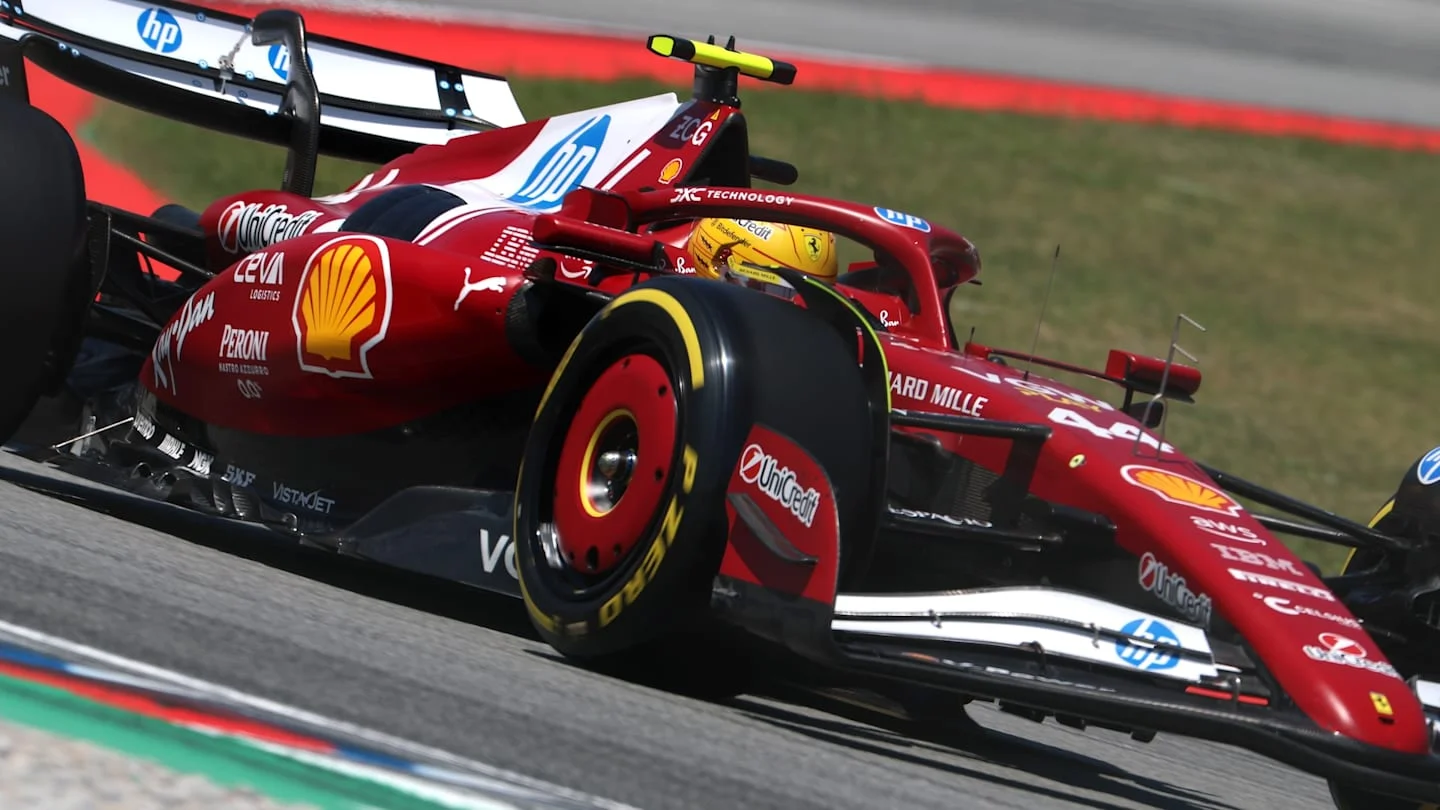
However, the strategy has not yielded results, as Ferrari finds itself 197 points behind McLaren by the tenth round at the Canadian Grand Prix. The SF-25 has been hampered by a critical ride-height issue, forcing the team to run the car higher than planned to avoid excessive wear on the skid blocks. This problem has directly affected performance, exemplified when Hamilton was disqualified from his sprint race win in Shanghai due to infractions linked to the car’s setup.
Limited progress and updates on Ferrari’s 2025 car
So far, Ferrari has secured just three podium finishes this season, all by Charles Leclerc, at the Saudi Arabian, Monaco, and Spanish Grands Prix. The team has been working on an important rear suspension update to address the ride-height problem and unlock the SF-25’s potential for the latter half of the campaign. This upgrade recently cleared critical tests in Maranello and is expected to debut at Hamilton’s home race in Silverstone next month.
Despite this, reports indicate that this upgrade will likely be one of the final major developments for the 2025 car, as Ferrari’s internal operations suggest preparations for Project 678 are accelerating. According to Italian motorsport publication Auto Racer, while development of the current car remains “a very dynamic” situation, the team’s focus is near complete transition, with Project 678 soon receiving “total space” in the wind tunnel.
Lewis Hamilton signals a nearing shift of team priorities to 2026 car
Hamilton, speaking after the Spanish Grand Prix, revealed his intention to urge Ferrari to concentrate increasingly on next year’s car. He admitted uncertainty over upcoming upgrades for the current season’s machine, stating:
“If I’m honest, I don’t know what upgrades we have coming, but we haven’t had an upgrade for some time. We’ll keep pushing with what we have, but before too soon I will just be saying: ‘Let’s focus on next year.’”
The seven-time world champion also emphasized the learning process Ferrari is undergoing this year, highlighting the importance of building a solid foundation in terms of tools, structures, and processes to arrive in 2026 with a competitive car. Hamilton acknowledged the team‘s involvement with next year’s development but declined to confirm the extent of their commitment to the 2026 car at this stage.
Next year is the championship that’s currently open. This one would be a lot harder to win, but it’s still not closed.
—Lewis Hamilton, F1 driver
Charles Leclerc highlights importance of clear strategic decisions amid mid-season
Charles Leclerc has pointed to the Spanish Grand Prix as a pivotal moment for Ferrari’s 2025 campaign, urging team principal Fred Vasseur to decide on how to balance resources between the current season and 2026. When asked about abandoning the current season, Leclerc firmly stated,
“No. We definitely don’t want to give up now. It’s still kind of early.”
He acknowledged the complexity of the situation, noting that the team is approaching mid-season but cannot afford to lose hope, pointing to last year’s scenario where McLaren’s upgrades significantly altered the championship dynamics. Leclerc viewed the technical directive affecting front wing regulations at Barcelona as an important juncture for evaluating the team’s performance gains and next steps.
Regarding future updates and closing the competitive gap, Leclerc admitted timelines are uncertain and subject to change due to the team’s ongoing push to deliver improvements as soon as possible. However, he expressed caution about Ferrari’s ability to consistently fight for victories this season, saying:
But to be in front and fighting for wins, I’m not sure yet.
—Charles Leclerc, F1 driver
Anticipating Formula 1’s major regulatory overhaul in 2026
The 2026 F1 regulations will overhaul key components of the sport, introducing fundamental changes to chassis and engine specifications. The season will mark the introduction of 50% electrification, fully sustainable fuels, and active aerodynamics, constituting one of the most significant transformations in Formula 1 history.
Reports from the Bahrain Grand Prix weekend in April indicated serious development challenges for four of the five engine manufacturers working on the new power units. Only one engine maker is said to be advancing well, while one is considered “uncompetitive” due to selecting a different biofuel type than rivals, who are opting for synthetic fuel. Two others are reportedly behind the pace, with little information available on the final manufacturer’s progress.
Mercedes, Hamilton’s former team, is widely expected to excel under the new regulations. Their dominance, established since the introduction of the V6-hybrid engines in 2014, resulted in seven consecutive Drivers’ Championships by Hamilton and Nico Rosberg and eight straight Constructors’ titles. For 2026, Mercedes will supply engines to McLaren, Alpine, Williams, and their factory team.</p>
Looking ahead: Ferrari’s critical decisions and F1’s evolving landscape
Ferrari’s impending full commitment to Project 678 signifies a strategic shift in response to their 2025 season struggles and the promise of new regulations. Hamilton’s advocacy for focusing on the 2026 car underscores the team’s need to rebuild and adapt amidst fierce competition and technological upheaval.
The decisions made now will shape Ferrari’s ability to compete effectively in the next era of Formula 1, as car design and power unit transformation raise the stakes for all manufacturers. With McLaren leading this season and Mercedes poised for strong performance under the new rules, Ferrari’s approach to managing resources between present challenges and future ambitions will prove crucial in their quest for championship success.
