
The Williams team has filed a right of review in response to the 10-second penalty given to Carlos Sainz for a collision with Liam Lawson at the Dutch Grand Prix, underscoring persistent disagreements regarding Liam Lawson F1 racing rules. The incident occurred on lap 27 at Zandvoort, where Sainz attempted to overtake Lawson around the outside of Turn 1 but was pushed off the track following contact.
The FIA race stewards attributed fault to Sainz, deciding that Lawson was entitled to space at the apex and exit of the corner, as Sainz had not positioned his car far enough alongside. This ruling aligns with the FIA‘s updated racing regulations slated for 2025, which provide specific criteria for judging overtaking maneuvers, particularly when executed on the outside.
Updated FIA Overtaking Criteria Clarify Space Allocation on Track
The 2025 FIA guidelines emphasize that overtaking on the outside is a more challenging maneuver and place clear conditions on when the overtaking driver should be given room. To qualify for space at the corner exit, the overtaking car must have its front axle ahead of the other car’s front axle at the apex, navigate the corner in a controlled manner from entry to exit, and stay within track limits throughout the turn.
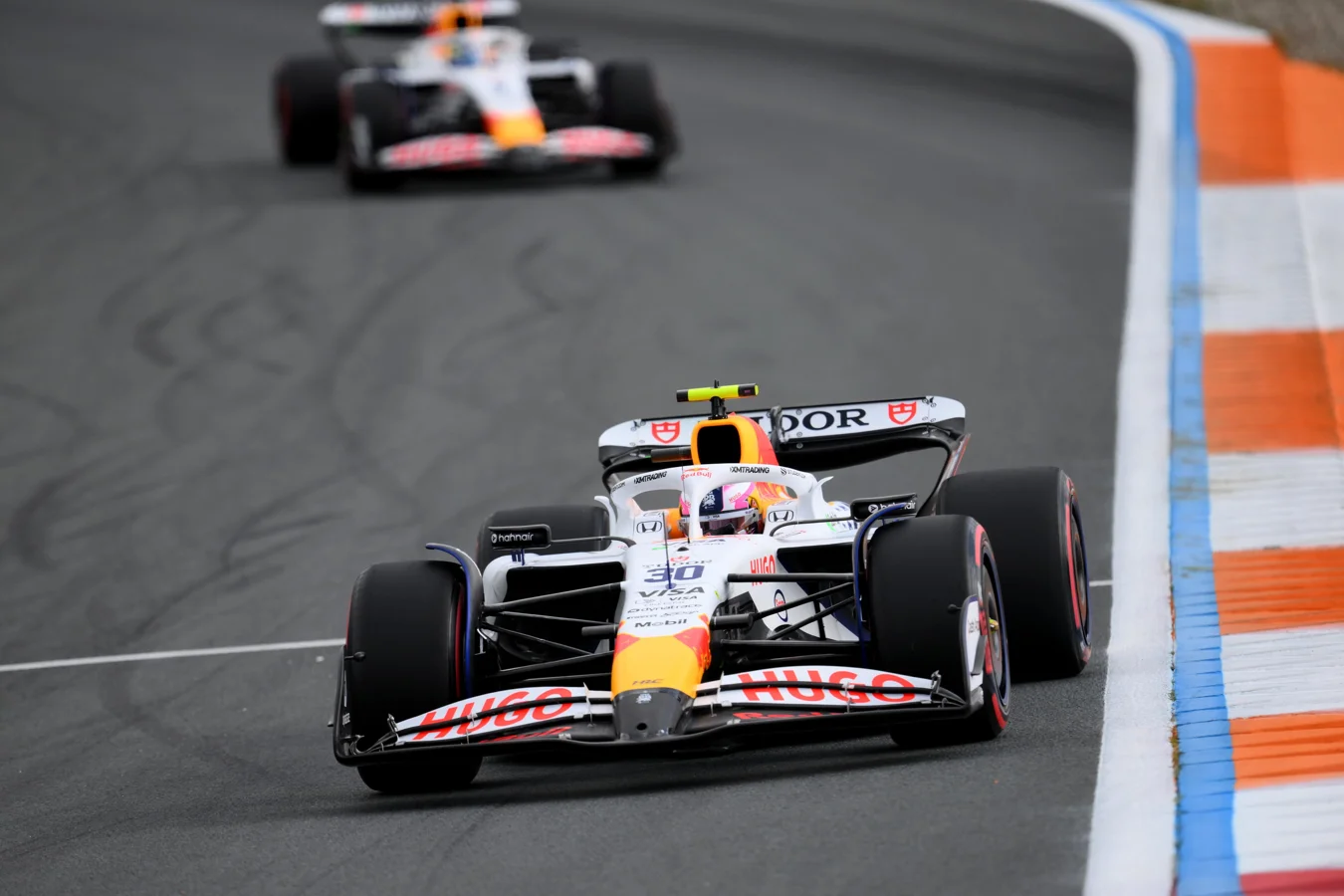
Since Sainz did not meet the first condition to have his front axle ahead at the apex, the stewards ruled that Lawson was permitted to move outward, expecting Sainz to back off the challenge. This has sparked frustration from Sainz, who criticized the penalty as unfair and referred to Lawson’s approach as reckless.
Driver Reactions Reveal Unease with Current Interpretation of Rules
Sainz described his penalty as “a complete joke” and voiced annoyance at Lawson’s tendency to exploit the letter of the regulations, calling him “stupid” for widening his steering angle and risking the collision. This sentiment reflects broader driver concerns about the complexity and fairness of current racing rules.
Alex Albon, Sainz’s Williams teammate, also highlighted the confusion surrounding these regulations, recalling a previous incident with Lawson in Barcelona where Lawson forced Albon off the track. Albon expressed his view that Lawson was at fault in the recent clash, saying,
“I was the car behind, so I would say I had the best view of it, Liam was clearly at fault, from my point of view.”
He was surprised by the penalty against Sainz and questioned the clarity of the stewards‘ decisions, adding,
“As a driver you have your version of the inter-combat rules on top of what the FIA had. And it looked to me like, at best, a racing incident, and then, if anything, a penalty towards Liam.”
Albon mentioned that the matter was scheduled for further discussion during the drivers‘ briefing at Monza, where drivers plan to debate the racing rules extensively. He also pointed out the apparent imbalance in the regulations, stating,
“Realistically, it feels like the inside driver just has far too much power in the rulebook, and is almost completely in control of his destiny, whereas the outside driver just needs to comply.”
Liam Lawson Defends His Actions Amidst Stewards‘ Controversy
Lawson acknowledged Albon’s frustration regarding a similar incident in Spain but maintained that the collision with Sainz at Zandvoort did not warrant criticism. Lawson emphasized understanding and acceptance of the current regulations, stating,
“The regulations are written as they are. As drivers we all know that. Sometimes we don’t agree with it or sometimes we feel like it doesn’t feel right.”
He recalled previous occasions where overtakes around the outside were not granted space despite his car being further alongside than in the Sainz incident, but affirmed that the rules must be respected. Lawson added,
“If you don’t have your front axle ahead of the car on the inside, I don’t know why you’d expect to be given space because it says that you don’t have to.”
He concluded by questioning why a driver would voluntarily give space when the regulations explicitly allow refusal, saying,
“If the guidelines say I don’t have to give them space, why would I give them space and let them pass me? That doesn’t make sense.”
Other Drivers Voice Concerns Over Increasing Complexity of Racing Rules
The debate over the regulations extends beyond Lawson and Williams, with many drivers expressing unease at the growing complexity of racing rules. Aston Martin‘s Lance Stroll pointed out the evolution from simpler etiquette to more detailed technical requirements, remarking that the existing standards had become “pretty complex.” He explained the older practice of always leaving a car’s width on the track when side by side has given way to nuanced rules about when a driver’s front axle is ahead.
Stroll said,
“It’s gotten probably too complicated, so I think it’s not surprising if we see these funny outcomes with incidents and decisions because of the rules.”
Meanwhile, Alpine’s Pierre Gasly stressed the importance of preserving competitive and close racing without harsh penalties that discourage aggressive driving. He said,
“What we don’t want is big consequences on someone’s race, whether it’s led by a driver’s driving or whether it’s a false penalty, which can be too harsh for a situation.”
He added,
“But at the end we all want to see close racing. We don’t want to back off from it and that’s better for the drivers and also from a fan point of view.”
Implications for Stewarding and Future Races
Williams‘ formal objection to Sainz’s penalty is widely expected to be dismissed due to the stewards’ alignment with the guidelines and lack of new evidence. However, the team’s use of the right of review appears directed at initiating broader discussions on stewarding consistency and racing behavior standards in Formula 1.
The upcoming drivers‘ briefing in Monza is anticipated to involve significant debate over the interpretation and application of the evolving rules, reflecting a shared desire among competitors to achieve clearer standards and fairer outcomes. How these discussions influence future regulations and on-track dynamics remains critical as F1 continues to balance competitive racing with safety and fairness.
