
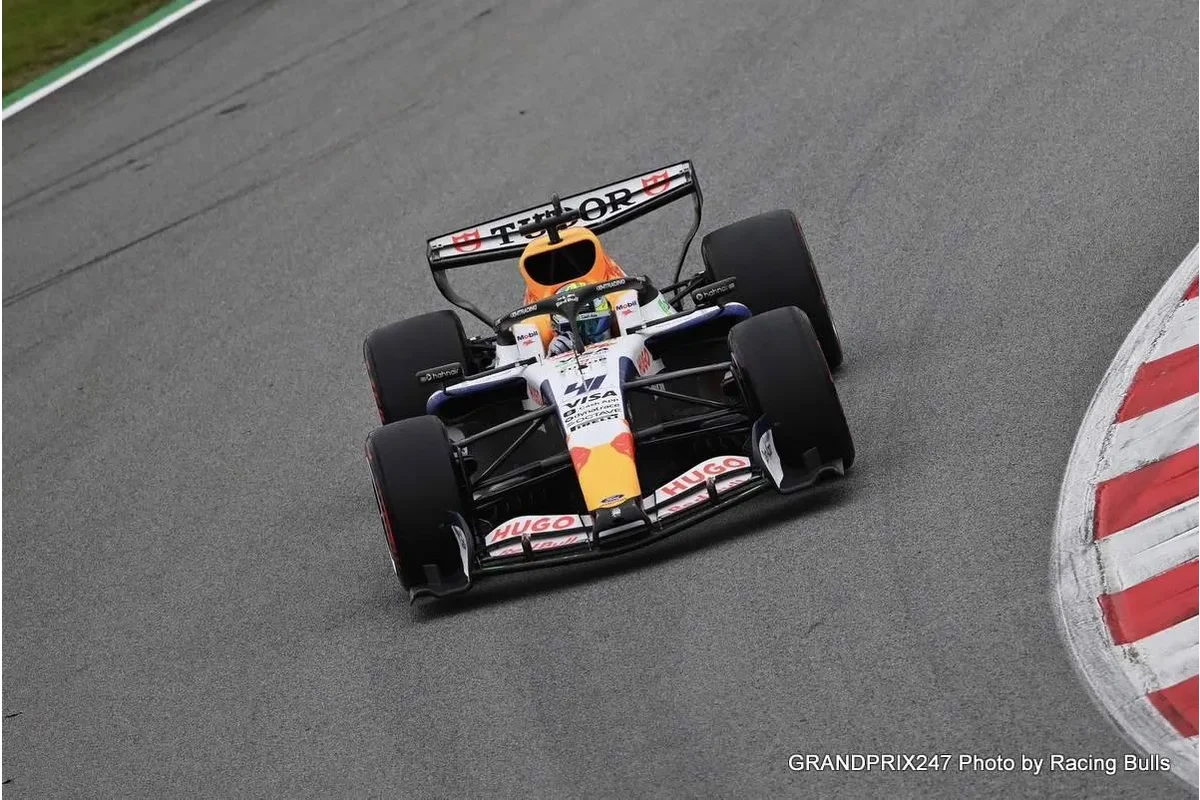
Racing Bulls are preparing for the 2026 Formula 1 season with a new car that features a striking design choice, catching the attention of experts and teams alike. During a recent shakedown at the Circuit de Catalunya, drivers Liam Lawson and Arvid Lindblad completed over 300 laps combined, demonstrating the car’s potential despite Racing Bulls’ position as Red Bull’s junior team.
Although not expected to compete as frontrunners, Racing Bulls’ development efforts have revealed innovations that could influence the wider grid, particularly through a distinctive roll hoop inlet that sets their vehicle apart from competitors.
Distinctive Technical Approaches in Racing Bulls’ New Formula 1 Car
Technical analyst Craig Scarborough shared insights on the VCARB 03 on a segment hosted by Peter Windsor, highlighting that while the car shares Red Bull’s powertrain and suspension components, the team has pursued unique design directions. This divergence is particularly evident in the car’s massive roll hoop inlet, which stands out visibly and recalls similar features from previous Racing Bulls cars dating back to 2014.
Scarborough emphasized that this design is not just aesthetic but relates to how the car manages cooling and energy flows.
“It’s an interesting car, and I think other teams can learn a few details from it to apply to theirs,”
he said, suggesting that Racing Bulls may have found subtle technical advantages worth noting.
Positive Feedback from Pre-Season Testing and Driver Performances
Despite some setbacks such as Arvid Lindblad’s crash during an earlier demonstration run at Imola, the team’s recovery and reliability during the Barcelona shakedown were notable. Team principal Alan Permane praised the drivers and their collaborative efforts throughout testing, highlighting how the team has efficiently adapted to new power unit regulations.
Permane stated,
“We have had very productive three days here at Circuit de Barcelona-Catalunya. We feel we hit the ground running with the new car and power unit, and they’ve both run very reliably since the first run.”
He also pointed out how the energy management strategies being developed are essential for the upcoming season’s new generation of power units.
On the drivers’ dynamic, he added,
“Both Liam and Arvid have worked hard this week, and it’s been really good to see them following each other’s runs on track; there’s already a great collaboration between them, and we’ve seen them always ready to help each other.”
Racing Bulls’ Position and Future Prospects in Formula 1
Racing Bulls find themselves in an intriguing place as they head into 2026. While the team is effectively Red Bull’s sister outfit and unlikely to challenge top teams immediately, their efforts to innovate and refine key features like the roll hoop inlet raise questions about their long-term trajectory. There is ongoing speculation about how far Racing Bulls can progress within Formula 1’s competitive landscape and whether Red Bull might reconsider the team’s future ownership.
Experts like former driver and commentator Martin Brundle have noted positive reports regarding Lindblad, and Lawson appears poised to approach pre-season testing with more stability than last year, when circumstances hampered his preparation.
Ultimately, whether Racing Bulls’ unique technical choices give them an edge or require adjustments to remain competitive remains to be seen as rivals also advance their designs under the 2026 regulations.
