
Former Formula 1 driver Marcus Ericsson recently addressed the challenges facing his former teammate Colton Herta, who is pursuing his dream of racing in F1 by competing full-time in Formula 2 in 2026. Ericsson expressed confidence in Herta’s abilities but highlighted the key adaptation challenges that will determine Herta’s future in the sport.
Colton Herta, after being linked with the Cadillac F1 team during the 2025 season, currently serves as a reserve driver for a new F1 team. However, he did not accumulate enough superlicence points to compete in F1 outright, which led him to commit to a full season in Formula 2 next year to qualify for these points and advance his career.
Ericsson’s Career Path and Perspective on Herta’s Move
Marcus Ericsson began his racing career in Europe’s formula ladder and debuted in Formula 1 in 2014 with Caterham. Following Caterham’s exit from the sport, he moved to Sauber for several years before transitioning to IndyCar racing in the United States in 2019. His varied experience in both European and American motorsport contexts gives him a unique view on Herta’s unusual decision to move back from the U.S. open-wheel series to Europe.
During a recent press event, Ericsson observed that most drivers typically progress in the opposite direction—from Europe to the U.S. to compete in IndyCar. Colton Herta’s choice to return to Europe and compete in F2, therefore, represents a significant and challenging reversal in the usual career route.
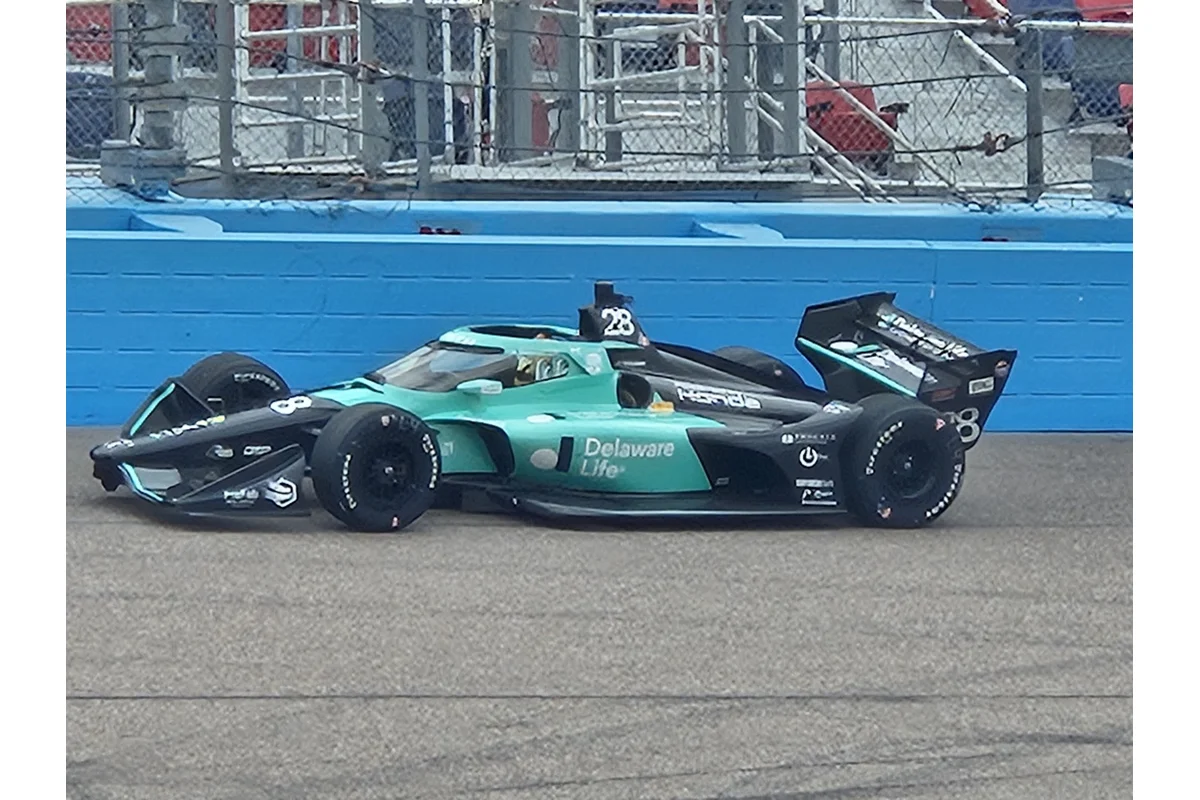
Ericsson Highlights Challenges Herta Faces in Transitioning to F2
Ericsson emphasized that while Herta has the talent required to succeed in Formula 2 and eventually Formula 1, adapting to new car technologies, race tracks, and tire compounds presents the main hurdles. Differences between F2 and IndyCar cars, especially the tires, require adjustment.
“There is no doubt in my mind that he has the talent to succeed in F2 and ultimately in Formula 1. There’s no doubt in my mind about that. It’s more a question about getting used to the cars, the tracks over there. The tires are very different to what we have in INDYCARs. I think that’s some of the things where he needs to adapt and learn,” said Marcus Ericsson
“Again, I think from what I’ve seen from Colton, I’m sure he will do that. The question is more: does it take a year, two years, what’s the timeline. Again, with Formula 1, it’s all about timing, as well, timing your next move and all those things. Yeah, it’s going to be really cool to see and watch and follow. I wish him all the best,” added the Andretti Global driver.
Marcus Ericsson Reflections on His Own Career and 2026 Ambitions
Alongside discussing Herta, Ericsson openly reflected on his own recent struggles. Once a strong contender for wins and podiums with Chip Ganassi Racing, Ericsson has experienced a downturn since joining Andretti Global, citing underwhelming results in the 2024 and 2025 seasons.
He expressed motivation and determination ahead of the 2026 season as he looks to bounce back and recapture the form he knows he is capable of.
“I definitely feel like I have a chip on my shoulder going into this season. I felt like the first year with Andretti was promising. We just didn’t manage to finish a lot of races. We sort of lost a lot of points. We still had good speed. Was a promising first year,” said Ericsson
“Really last year should have been a better year. It was just going the other way. Was a really disappointing season. It’s been a lot of sort of looking at myself in the off-season trying to figure out how I can get back to the level I know I can be at, like you said, I know I can be at,” he added
With his contract at Andretti Global ending after the 2026 season, Ericsson faces additional pressure as the upcoming year could determine his future with the team.
Significance of the Upcoming Seasons for Ericsson and Herta
The contrasting journeys of Marcus Ericsson and Colton Herta highlight the complexity and demands of professional motorsport careers. For Herta, succeeding in Formula 2 and securing the superlicence points is critical to realizing his goal of competing in Formula 1, where timing and adaptation will be key. Meanwhile, Ericsson’s personal drive to rebound after disappointing seasons will shape his next phase in IndyCar racing as he aims to prove his worth before contract decisions loom.
Both drivers’ paths in 2026 will garner significant attention from fans and teams alike, as their performances could influence opportunities and shape the evolving landscape of open-wheel racing across both sides of the Atlantic.
