
Max Verstappen has raised doubts about Mercedes’ actual speed following the initial 2026 Formula 1 testing week at the Bahrain International Circuit. He suggested that Mercedes might have been deliberately underperforming, or “sandbagging,” to conceal their real capabilities ahead of the upcoming season.
The testing sessions took place earlier this week, with many observers speculating that Mercedes, led by George Russell, could emerge as the top contender for the 2026 championship. Mercedes team principal Toto Wolff, however, acknowledged Red Bull as the benchmark after the first day of testing, highlighting their superior straight-line speed.
Leadership Comments and Verstappen’s Response
Toto Wolff emphasized Red Bull’s strength, saying,
“They are able to deploy far more energy on the straights than everybody else. You are speaking a second, over consecutive laps.”
He further confirmed,
“I would say that as per today, on the first official day of testing, which is always with the caveat of that, they have set the benchmark.”
Verstappen, on the other hand, remained skeptical about Mercedes’ showing. He claimed,
“Well, I can tell you one thing: just wait until Melbourne and see how much power they suddenly find. I already know that right now.”
He also added,
“They are obviously trying to shift the focus to us because we did so many laps on Wednesday. But you have to look at it from both sides. Just wait until Melbourne and see how fast they suddenly go on all the straights.”
Comparing Lap Times Between Mercedes and Red Bull
Analysts have examined lap times from both teams to determine the validity of Verstappen’s sandbagging claim. According to GP Blog, Verstappen showed significantly faster times than George Russell while using soft tyres.
Russell’s lap times tended to slow down during race simulations across various tyre compounds, which was a consistent pattern. Verstappen’s average on soft tyres was approximately 1:38.340, whereas Russell’s average was closer to 1:40.675.
During shorter long runs on hard tyres, Verstappen averaged 1:37.876, outperforming Russell’s 1:39.904. Additionally, Mercedes driver Kimi Antonelli posted stronger and steadier long-run times on hard tyres at an average of 1:38.631, while Verstappen’s teammate Isack Hadjar averaged 1:39.146.
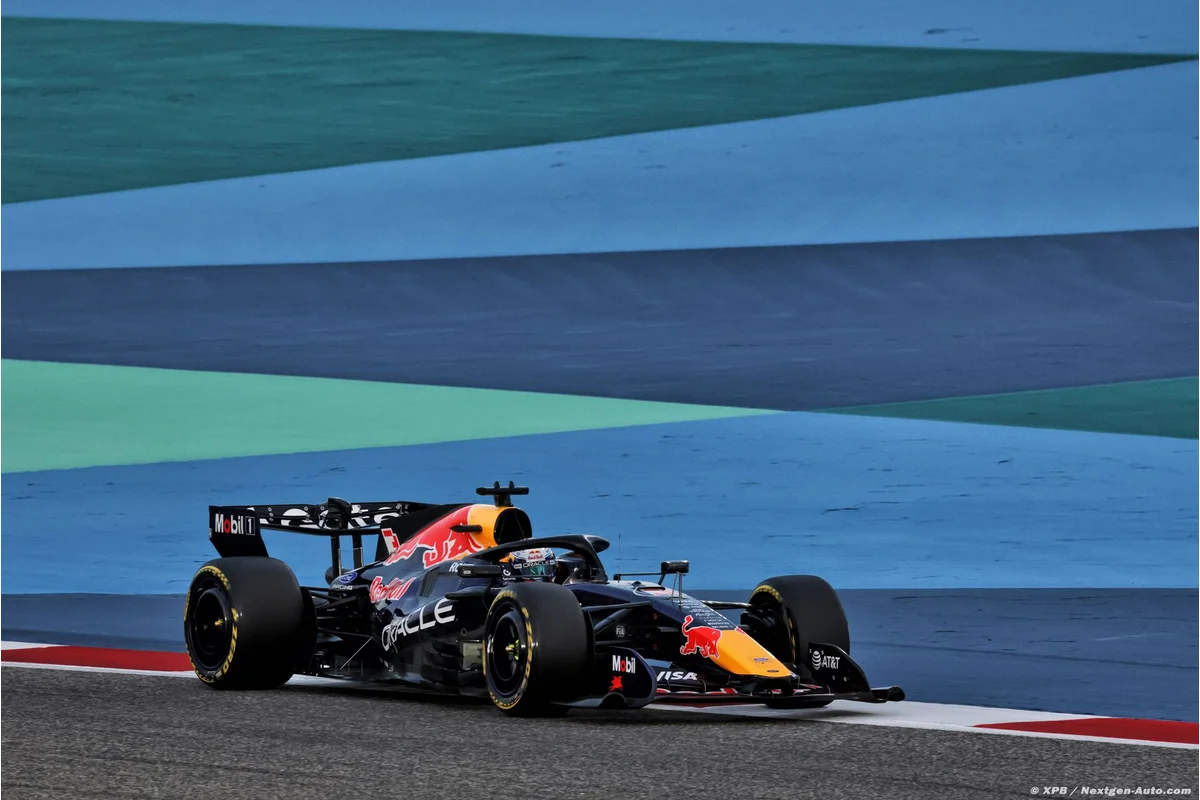
Despite these comparisons, the significance of the times remains limited because details on fuel loads and engine modes were not disclosed by either team during the tests.
Mercedes’ Late Testing Pace Raises Further Questions
By the end of the week, Mercedes drivers claimed the two fastest laps of testing. Kimi Antonelli recorded the quickest lap of 1:33.669, followed by George Russell with 1:33.918. In contrast, Verstappen’s top time for the week was 1:34.798, ranking him seventh.
Addressing the sandbagging allegations, Sky Sports’ Ted Kravitz asked Russell directly if Mercedes had been sandbagging. Russell’s response was straightforward: “No.”
Potential Implications and What Lies Ahead
The ongoing debate regarding sandbagging highlights tension amid the early stages of the 2026 Formula 1 season preparations. Verstappen’s suggestion that Mercedes might reveal unexpected power in Melbourne could signal intense competition ahead. Toto Wolff’s acknowledgment of Red Bull’s current superiority demonstrates an honest assessment but leaves an open question about Mercedes’ strategy.
Fan and analyst focus will now shift to the Australian Grand Prix, where true performance capabilities are expected to surface. This testing phase, although inconclusive in some respects, has already sharpened rivalries and set the tone for an absorbing season ahead.
